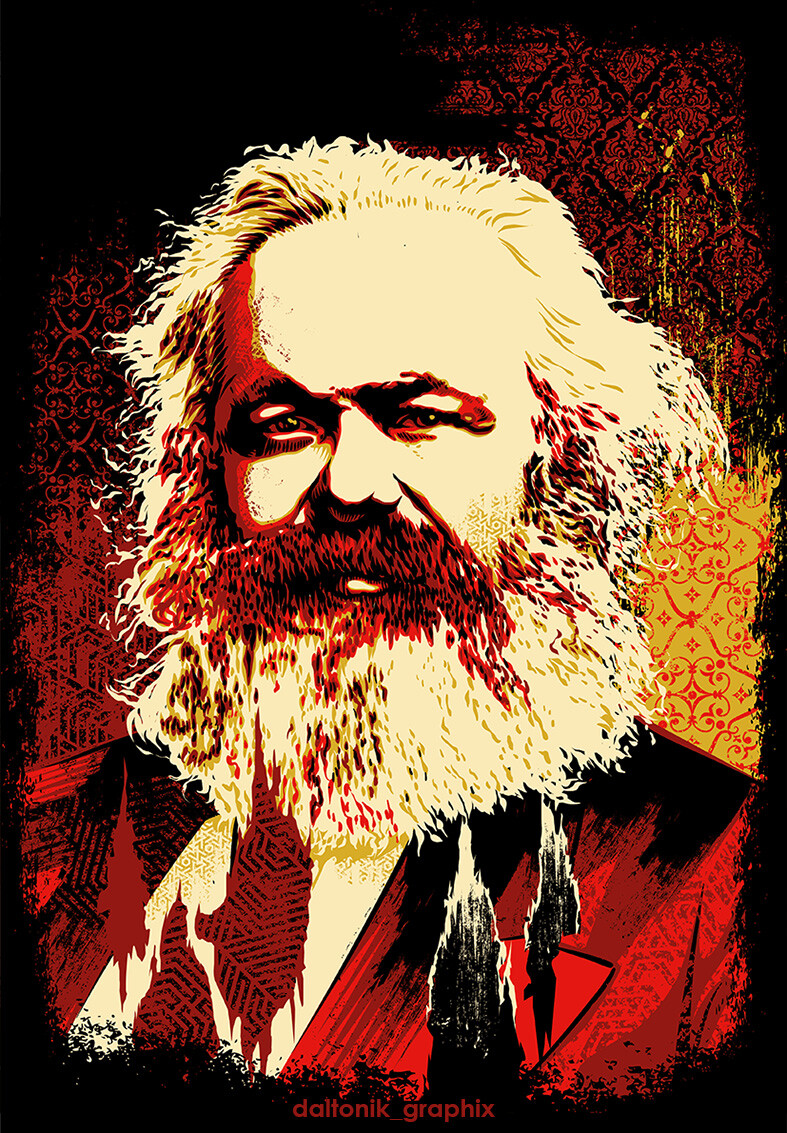
Hello everynyan, we’re studying Marxism-Leninism. Here is a link to the list
This week we’re reading:
-
Why Socialism? - A. Einstein (1949)
Webpage | Audiobook [~10 min / 22 min] -
Why Marxism? - R. Day (2020)
Webpage | Audiobook [~15 min / 21 min] -
Why do we Have to Study Theory? - Ho Chi Minh (1957)
Webpage | Audio book [~10 min / 11 min] -
General Rules for Independent Study - N. Krupskaya (1934)
Webpage [~5 min] -
“Tankies” - N. Frome (2020)
Webpage | Audiobook [~5 min / 11 min]
Next week we will be watching 6. US Interventionism, the Third World, and the USSR - M. Parenti (1986)
Webpage Transcription of Speech | Original Speech [~1 hr / 1 hr 33 min]
Why Socialism: Einstein was one of those kibbutz zionists so blegh and I disavow but he does have the reputation of being the Mickey Mouse of the scientific community. Having a figure like him write a defense of socialism in his approachable but still scientific prose is probably the best first work to give someone un-radicalized. What are they supposed to say? That Einstein doesn’t know what he’s talking about? It’s literally fucking Einstein.
- “Hey you should read about socialism”
- “Hmm, so what should I read?”
- “Why Socialism by Albert muthafuckin Einstein”

Why Marxism: Academics tripping themselves over Marxism is a very clear example of propaganda and repression at work. We understand that there exists classes in society but insofar as there have always been classes in society and they happen to be organized in this way (the “proto-capitalism”). Day asserts that Marx is real, we must study Marxism because Marxism is non-negotiable with the revolution.
Why do we Have to Study Theory?: Uncle Ho tells his kids that they have to start cracking the books since no one is going to do the socialist organization for you. We socialists will have to inherit a capitalist, backwards society and be compelled to come with answers to the masses of people who now are being threatened by the boomerang effects of capitalism in total revenge. So start hitting the books.
General Rules for Independent Study: Really good, probably could apply these rules to non-theory stuff too. I really got to start reading my stuff at libraries and not in my musty room (thanks for callling me out Krupskaya)
**“Tankies” **: I was a bit confused about the inclusion of this work in the beginning section but I then realized that this is basically what any student of Marxist-Leninism faces when they start sharing what they learned. I liked Frome’s conceptualization of Stalin as the specter to all communism and leftist tendencies. If the student of Marxism cannot answer the Stalin question then they will drowned by Capital who has made him the original sin of leftists everywhere.
I could put quotes here but then this post would be huge, so I’ll hold out for this week.
I’ve already read this first portion of the list, but I’m happy to revisit it. I still haven’t made it very far into it.
Why Socialism - I really like this piece. I think Einstein poses some really interesting questions about our relation with society and how capitalism acts as a barrier to our very nature. This passage is especially striking:
All human beings, whatever their position in society, are suffering from this process of deterioration. Unknowingly prisoners of their own egotism, they feel insecure, lonely, and deprived of the naive, simple, and unsophisticated enjoyment of life. Man can find meaning in life, short and perilous as it is, only through devoting himself to society.
I think this essay acts as a good and short introduction to the problem of capitalism vs socialism. As others have stated, the fact that it’s written by Einstein is certainly a plus.
Why Marxism - I like Day’s arguments in this one. He writes for a modern audience, using examples that clearly show what marxism looks like today. I like how he addresses the pitfalls of anarchism / social democracy.
Why Do We Have To Study Theory? - I think there are a few good tidbits in there, but overall it’s too anchored in Vietnam’s history to be that useful to us. I wouldn’t mind this being cut.
General Rules for Independent Study - A general overview of what studying entails. Old-fashioned, but still sound.
Tankies - I think this is a wonderful, succinct closing piece. It sets up what it means to a ML and why we believe what we do. Frome expertly rebukes the propaganda about AES. The closing statements about having powerful enemies is very well put.
Overall, I don’t think this section needs much change. I think the goal was to show the reader, who is potentially a liberal, that the lies about communism run far and wide and that the ML alternative is sound and viable. It introduces the reader to the basic idea of communism, without getting too deep into theory just yet. This week and next week’s piece really hype you for proper theory.
Are the prolwiki links working for folks?
An alt link for the first essay: https://monthlyreview.org/articles/why-socialism/
Not right now. Prolewiki has had some problems lately. You can find Why Socialism on e.g. Monthly Review or many other places.
ⓘ This user is suspected of being a cat. Please report any suspicious behavior.
Hello! I’ve been procrastinating, so I’ve started reading through these with my girlfriend. I’ve read a lot of theory, however she has only ever read the Communist Manifesto. When we met, she had a distaste of people who called themselves leftists because they’re the type of people I’d call vibes based leftists. No real information or thought behind them, just taking their emotions and considering them objective fact instead of digging any deeper. This reading list will be her first exposure to theory
We read the Einstein piece last night, while it was suited to getting me into socialism a decade ago, it was not great for my girlfriend. I am the type to want scientific, more logic based arguments like Einstein’s, while I feel like she’s going to be more moved by the more emotionally charged arguments. She liked Why Socialism, but I’m really excited for her and I to read Roderic Day together because I think she’ll like that a lot more
Keep us updated! I think she’ll like Parenti a lot when we get there next week, if she enjoys biting rhetoric.
I’ve definitely mentioned Parenti in passing to her, she’s at the point where she understands a lot of what she knows about the world/leftism is tainted by capitalist propaganda, but doesn’t really understand what is western propaganda and what’s the truth about these socialist nations.
I often tell her that her and I dislike Stalin for very different reasons, because she has standard western anti-stalinism. I’ve always been slow pushing this issue because of how evil westerners believe Stalin was, but I have been challenging her on it lightly our whole relationship. I also told her about the 4 pest campaign and the context of Mao’s leadership. Pretty much setting up the idea that these people can be criticized and I don’t necessarily expect her to agree with everything they say, but letting her know that what Western propaganda says about them simply isn’t true.
I even explained some context behind North Korea she seemed receptive to. Pointing out that after the Korean war, they had practically suffered an apocalypse set on by America, then were cut off to the rest of the world by America. Pretty much told her the one thing that’s true from reading their state media is they definitely do hate America, but with the history that’s there can you even blame them? She also understands that these smaller countries fighting for their own sovereignty need nukes, so she isn’t inherently against North Korea having a nuclear program even with knowing very little about their society except for what the West has told them.
Good luck with your continued efforts! People absolutely have the capacity to grow and change, and it sounds like her heart is in the right place to do so!
Ive read all of these individually before, and in the past days ive read all but Einstein again. They are solid. And I appreciate them. The focus on humility and recognition of where youre at in why do we have to study theory is really nice. tankies is very important I think, for any lefty person whose even the slightest bit online. Unfortunately I have heard the tankie redfash arguments IRL, and they suck (and have only been levied by aesthetic anarchists (I dont like it when people tell me what to do therefore anarchism is good cause anarchism is when no rules type folks). The anarchists I know who actually do shit and engage in praxis are universally cool, even if I dont agree with them on some stuff). So having an introduction to a rhetorical framework that allows for criticizing these AES figures and systems, while protecting from the red scare propaganda and unfair/inaccurate/noncontexted criticism is very useful and grounding, and provides solid ground to engage with and from.
I wish I had taken more notes when reading, and I’ll try to do so this week, and read them again with a pen and paper next to me.
My goal in reading through these first few sections again is so that I can better organize and supplement my notes for my own “guide to deprogramming” I’ve been working on specifically to target disillusioned liberals (of which my family and a few friends remain firm) into completely breaking the myth of american exceptionalism/chauvinism, the faith in voting, and bipartisan imperialism, then pivoting towards basic socialism and revolutionary optimism in the last half. These early sections of Cowbee’s basic guide will be things I’m considering to ease this pivot point since people who have been propagandized all their lives turn off their ears when they hear the word socialism or communism, so my notes below will reflect this intention.
I also recently made for myself a huge epub of the entire reading list by copy/pasting literally every work into a text document (also I was freaking out because prolewiki was down for a while and I couldn’t access the works easily for a while). So I do have a slight bias in my opinion on the inclusion/order of items in your list, because if you change your reading list, I might have to update my epub and I’d prefer not to do that lol. But the plan is to highlight things in a single document and track the progress of the entire list on my ereader.
Anyway, on with the individualized notes and quotes I liked:
Why Socialism?
“Since the real purpose of socialism is precisely to overcome and advance beyond the predatory phase of human development, economic science in its present state can throw little light on the socialist society of the future. ”
“Man is, at one and the same time, a solitary being and a social being.”
“It is on this that those who are striving to improve the lot of man may ground their hopes: human beings are not condemned, because of their biological constitution, to annihilate each other or to be at the mercy of a cruel, self-inflicted fate. ”
“The economic anarchy of capitalist society as it exists today is, in my opinion, the real source of the evil. We see before us a huge community of producers the members of which are unceasingly striving to deprive each other of the fruits of their collective labor—not by force, but on the whole in faithful compliance with legally established rules. ”
“Moreover, under existing conditions, private capitalists inevitably control, directly or indirectly, the main sources of information (press, radio, education). It is thus extremely difficult, and indeed in most cases quite impossible, for the individual citizen to come to objective conclusions and to make intelligent use of his political rights.”
“This crippling of individuals I consider the worst evil of capitalism. Our whole educational system suffers from this evil. An exaggerated competitive attitude is inculcated into the student, who is trained to worship acquisitive success as a preparation for his future career. I am convinced there is only one way to eliminate these grave evils, namely through the establishment of a socialist economy, accompanied by an educational system which would be oriented toward social goals.”
I do love how seemingly every paragraph touches on some aspect of how either capitalism has fucked us or how this isn’t an inevitability innate to our “nature” and how there’s actually an answer to the problems of today.
Seeing as this is written by Einstein, I do think its text would carry more weight among those liberals for which I’m targeting my guide. It is short and easy to understand. While I still expect I’d likely have to distill this down even further since it seems impossible to get the liberals in my life to interact with anything political that isn’t a podcast or TV news, the brevity of this likely makes quoting sections much more impactful.
As for its place in this guide, I think it works pretty well! The name recognition and short length alongside its critique of capitalism is a pretty good primer for getting people in the door.
Why Marxism?
A lot of the quotes I saved from this work are actually quotes from other people so I’ll just share a few really good ones haha.
“The mass popular election of the supreme executive of a nation is a ritual so deeply ingrained in the western psyche that it is possible that any kind of Socialism with Western Characteristics will simply opt to maintain it indefinitely. We should, however, understand that under the dictatorship of the bourgeoisie, it is simply a pressure valve for discontent.”
“[…]in 2013 Xi Jinping asserts that “to repudiate Lenin, to repudiate Stalin was to wreck chaos in Soviet ideology and engage in historical nihilism” and that “this is a lesson from the past.” [23] We need to recover this tradition. As long as socialists’ main concern is to rhetorically distance themselves from these experiences, we will fail to learn anything more profound from our predecessors than “don’t take power.”
“To defeat Capital, we must understand how it works, so we can exploit its weaknesses. As Huey Newton put it: “You cannot oppose a system such as this without opposing it with organization that’s even more extremely disciplined and dedicated than the structure you’re opposing.”
I personally enjoyed reading Why Marxism?. I also felt like it was written in such a way that it acts as modern reinforcement and an addendum to Why Socialism?. So they act in tandem together pretty well even though they cover some similar things. Though I almost got the feeling like Why Marxism? is written like the average “correct the record” lemmy.ml copypasta comment in both length and number of quotations. This isn’t a bad thing though! It just means it’s a more competitive space for my own guide when it comes to quote-and-source-blasting someone about why we critically support AES states (and what it means to critically support) and have many irreconcilable issues with DemSoc politicians. Unfortunately, and I’m sorry if I’m unable to adequately explain this, but Einstein hopping around to different-but-related topics felt more easy to follow than Roderic Day doing about the same thing. I don’t know why- maybe the quotes pause the natural flow of thoughts?
I do like how the heat gets turned up pretty fast after reading Einstein though. I also really like his bringing up the COVID response and how we can analyze those differences.
Why Do We Have To Study Theory?
“Lenin, our great teacher, summarized the importance of theory in the following sentences: “Without revolutionary theory there can be no revolutionary movement,” and “The role of an advanced fighter can only be fulfilled by a Party guided by an advanced theory.”
I do think this one is a bit odd out in the guide, but it’s so short, it could probably be summarized or quoted fairly easily and included at the start of your guide.
General Rules for Independent Study
I have a similar opinion of this to Why do we have to Study Theory?. It could likely be summarized or quoted and placed in a pre-chapter-one sort of section.
Tankies
Yes… Ha Ha Ha YES!
[…]it’s not tankies but normies[…]
If I showed my megalib dad this, he’d have so many issues parsing sections of this haha
“Anyway, the basic point is that socialist revolution is neither easy (as the Trotskyists and ultraleftists would have it) nor impossible (as the liberals and conservatives would have it), but hard.”
Is this where that line comes from?? I was searching for this line the other day on lemmy and couldn’t figure out the source of it, but I guess it was right here in the guide this whole time (if Frome is the originator)!
Both Tankies and Why Marxism seem to come from a “defend our standpoints” position, but IMO Tankies does a bit better at handling it and not seeming like it was written in a defensive tone. Of course Tankies covers fewer topics, but explains things while speaking generally, which probably prevents a sort of liberal counter-defensiveness which would halt progress in the reading guide (not that we should cater the guide to liberal sensibilities, but just to keep in mind for how to order this guide at the start to prevent as much stumbling as possible). But overall I really like this one.
Quick recap of what I think of the guide structurally so far:
Overall, while I do think that you could cut some things from this section, I’m not sure if it is necessary since it really didn’t take too long to get through. I have spent more time composing this message than reading the works today. I do think Why Socialism being in front of Why Marxism is a good choice and I do like the inclusion of Why Socialism. I think the two sections on studying are nice and extremely short (which makes it hard to recommend cutting one or both), but I do think they could be distilled down into a sort of intro-to-the-intro section. I think tankies being included in this list as it is is great (contextually since people on lemmy where this lives tend to know what the word Tankie means).
Thanks again for the reading list! Excited to continue
Though I almost got the feeling like Why Marxism? is written like the average “correct the record” lemmy.ml copypasta comment in both length and number of quotations.
 calling me out here lol
And I’m not sure if Frome is the originator of the quote on the difficulty of revolution, but she’s certainly the source of where I got that from! Her work is really quite a fantastic display of rhetoric.
Thanks for the feedback! I enjoyed reading it. I think the consensus thus far is very pro-Why Socialism? and more mixed on Why Marxism? and Why do we have to Study Theory? The reason I put General Rules for Independent Study after the Why? section is because it isn’t an effective hook, while in my opinion the 1-2 punch of the first 2 *Why?*s hooks the reader in much better. It’s provacative and yet explanatory for why we have the positions we do and why the reader should engage.
I understand the idea of making your curriculum concise, but it might be more difficult to strictly avoid redundancy. Reinforcement helps understanding. Something might not sink in the first time. One author could explain it in a way another cannot.
That’s something I try to keep in mind, I do have far more sections to cover in this reading circle and many points are reinforced.
Bonus - LoFi Parenti
will this be on the test?
Nah I just like it lol
I found Why Socialism? in a collection called Essays in Humanism a while ago and I went through about the first half of it. Interesting are subsequent sections: 9 Open Letter to the General Assembly of the United Nations (1947), 10 Dr. Einstein’s Mistaken Notions—An Open Letter from Sergei Vavilov, A. N. Frumkin, A. F. Joffe, and N. N. Semyonov (1947), A Reply to the Soviet Scientists (1948).
Which is a debate about the nature of the UN, whether it is unduely controlled by the US, and how the USSR can or cannot work within it. I don’t know about counterfactuals but the soviet position makes a lot of sense and it kind of seems that even though Einstein was able to write an essay laying out the basics, he kind of struggled to apply it. And fell victim to “chasing the mirage of a “world state””. Today I feel confounded by the same mirage.
This link worked for me to get the PDF https://sci-books.com/essays-in-humanism-b004q9u0my also including Why Socialism if prole wiki doesn’t work (which it doesn’t for me right now). there is also an audio book which is what I actually used.
That’s an interesting debate, and I’m not sure how clear-cut the answer actually is. Today, there are many resolutions in the UN that pass the general assembly, often with overwhelming support, with the US voting alone or with Israel or Ukraine backing it up. A world government led by the general assembly doesn’t seem inherently worse than what we have today. However, before decolonization, I can see the Soviets’ arguments.
It’s odd that Einstein doesn’t answer at all the question of how to ensure that voting in all constituent countries is legitimate. That question is fundamental to that kind of organization. A body where a dictator or colonial governor can just stuff a ballot box and send it in is not a reasonable foundation for a world government.
On the other hand, it’s worth noting that the Soviets did eventually come around to participating in the UN, in the more limited role of fostering international discourse, which Einstein suggests at the end. They also adopted a general policy of “peaceful coexistence” with the West, which included signing international arms control treaties. With no such treaties, and no precedent to know that MAD would actually work, I think Einstein’s position is understandable.
Also, my impression is that it’s more about the idea in principle, as something to work towards, rather than as a practical suggestion, and it’s more common in the intellectual tradition of the West and of social democrats to focus on agreeing to lofty ideas in principle, with the view that disagreements about how to achieve those views in practice can be reasoned out. Marxist-Leninists, on the other hand, treat ideas as inseparable from their proposed execution. For example, in WWI, social democrats all declared their opposition to the war in principle, but it meant nothing, because they found various ways to justify supporting the war in practice, to protect and advance their careers, for example, saying that they supported “peace without annexations” so they need to keep fighting to reclaim lost territory. This lives on today with social democrats and liberals declaring their opposition to “authoritarianism” on principle, even though they frequently justify actions that contradict that in practice. MLs tend to take a more skeptical view of accepting an ideal “in principle,” without concrete details. Einstein wasn’t an ML, so we shouldn’t really expect him to be above that tendency.
Let’s study Marxism-Leninism
reading group participants
@Damarcusart@hexbear.net @Better_with_Gender@hexbear.net @CascadeOfLight@hexbear.net @PolarKraken@lemmy.dbzer0.com @SockOlm@hexbear.net @RedWizard@hexbear.net @woodenghost@hexbear.net @ConfusedPuppy@lemmygrad.ml @umb_official@lemmy.ml @Mog_Pharou@hexbear.net @Transform2942@lemmy.ml @GoodBleanis@hexbear.net @sleepykitten@lemmygrad.ml @oliveoil@hexbear.net @Jentu@lemmy.ml @prolepylene@hexbear.net @narr1@hexbear.net @CommunistCuddlefish@hexbear.net @rubber_chicken@hexbear.net @Oreb@hexbear.net @mrfugu@hexbear.net @LeylaLove@hexbear.net @grok2028@hexbear.net @pierre_delecto@hexbear.net @StillNoLeftLeft@hexbear.net @hello_hello@hexbear.net @ghost_bug@hexbear.net @lilypad@hexbear.net @cso77w9t@hexbear.net @YellowParenti@hexbear.net @diamath@hexbear.net @MLRL_Commie@hexbear.net @TheoryofChange@hexbear.net @umbrella@lemmy.ml @monocles@lemmy.ml @The_Grinch@hexbear.net @shallot@hexbear.net @ShimmeringKoi@hexbear.net @kittenzrulz123@hexbear.net @inoxerable_doubt@hexbear.net @CrispyFern@hexbear.net @cosmosaucer@hexbear.net @jarntotheelder@hexbear.net @bonzatron3000@lemmy.ml @BaggedEarful@hexbear.net @dil@hexbear.net @donacello@lemmy.ml @TiredTiger@lemmy.ml @DespairButArousalToo@lemmy.ml @Omegamint@hexbear.net @into_highest_invite@lemmygrad.ml @faded@hexbear.net @kekino@hexbear.net @pineapple_@lemmygrad.ml @RedPartisan@lemmygrad.ml @starsoaked_lily@lemmy.ml @shmoz_@lemmygrad.ml @Objection@lemmy.ml @CommiePoutine@lemmygrad.ml @sunsoaked_lily@lemmy.zip @TheTaglineToldMeTo@hexbear.net @casskaydee@hexbear.net
I missed the original thread, can I join the list?
sure
Welcome, everyone!

Each week I will be reading along with the rest of you, trying to examine my list for weak points. Essentially, I wish to trim out any and all redundancy, so the list can be as trim and lean as possible, and serve to take in anyone and have them pipelined into joining an organization and equip them with a basic Marxist-Leninist toolkit to help them on that journey. This list is not comprehensive, nor is it trying to be, as the point is for readers to be able to understand where they wish to pursue more learning on their own, as well as to be trained by whatever org they join, as any org worth its salt will have dedicated cadre training programs to take over from where this list ends.
For this week, we have a series of entries meant to answer the following questions: why socialism, why Marxism in particular, and why do we have to study theory at all? It then leads from that into how we organize our study, so the reader can get the most out of this list, and then addresses the problem of liberal opposition to what they call “tankies” that seems to plague every leftist space online these days (but rarely IRL in my experience). “Tankies” also serves as a short work to begin taking notes on, if you haven’t already! I personally take them in Markor, markdown format, and am setting up Syncthing on my new Void Linux install so I can take notes on my phone or laptop and access them either way. Neat!
I also want to draw your attention to the header image I selected for this section. It’s a work that shows a future, highly developed city. I think it’s useful to show the reader what we can accomplish, and get them excited about where we can go if we organize!

As for the specific works, Why Socialism? is one I would be okay with trimming. It’s useful, but redundant with Why Marxism? in many ways. Einstein isn’t exactly an ML. I still believe the work is useful to link to liberals and social democrats, even conservatives, but I don’t know if it strictly serves a complete purpose on its own. It has a short overview of historical materialism, which is nice, but that will be far more developed later.
Why Marxism? is spicier. It directly supports Deng Xiaoping, and directly counters anarchist and reformist groups. This one might draw contention on Hexbear, along with later works by Cheng Enfu, though I don’t think it will be too bad. I love this work because it introduces the reader to much of what I consider to be directly relevant today, namely China, reformism, and western chauvanism. It also references many authors and thinkers I really like, like Losurdo and Ian Paul Wright. For extra credit, read Wright’s Marx on Capital as a Real God, which develops Day’s point on capital controlling capitalism, with capital developed as a “real god” in the form of a control system. Neat!
Why Do We Have to Study Theory? is the second work I may trim. Comrade Ho Chi Minh provides a practical reasoning behind developing cadre, but I’m not sure that it’s strictly necessary. It does go over the relationship between theory and practice, but much of it is also uncle Ho talking about conditions in Vietnam contemporary to his writing of it, so it’s not directly additive in this context. Still love it though!
General Rules for Independent Study is one of the most important works on this section. Do not rush this reading group or treat it as a checklist, use it to develop yourself, which means taking notes and studying properly!
Finally, we end with “Tankies”. I love Nia Frome’s writing, but I also may take this one out. This is immensely useful for addressing concerns of liberals reading this list, but Why Marxism? already addresses most of these concerns. I see this one, like the other two I may take out, as more useful in specific cases that need them, rather than as a part of a reading list.
Those are my thoughts, what are yours? Please critique everything you can! That way I can trim the list and improve it!
I think having a friendly name with creds like Einstein is helpful.
Narratives like to paint revolutionaries as insane, but they don’t with Einstein.
It’s great starting material that helps lower people’s guards.
I started my own curriculum with a book from before Marx was alive, but what you have is a strong start and I’ve also brought it into my beginners section.
Thanks for the feedback! And agreed, that was the original intent, though Roderic Day isn’t hated, Einstein is certainly more widely known.
I think Why Socialism is still useful, Liberals would have a million excuses to dismiss something by Stalin or Mao, but Einstein? While still thinking in a liberal way, with a great man style worldview, they can’t dismiss something written by the guy whose name is a synonym for genius without massive discomfort that they can’t ignore.
Plus, lines like:
Innumerable voices have been asserting for some time now that human society is passing through a crisis, that its stability has been gravely shattered.
Shows a level of relevance to the modern day, a quick counter to common anti-communist claims about it being “outdated.” And the essay counters a lot of arguments about “human nature” as well.
The work also gives a foreshadowing of how theory is going to be going forward. You will have to think, you will have to challenge yourself, your brain will hurt, like exercising a muscle.
Why Marxism is better as a Marxist essay, but I would imagine this early stage of the reading list is mainly about challenging and overcoming liberal bias. Both have their role in this, they compliment each other.
Why do we have to study theory? Does feel a little out of place on a beginner’s list, it is a little too relevant to Vietnam and not really generalist. On the other hand, it does provide good insight into an era of Vietnam that most westerners would be totally ignorant of and casual discussion of ideas is very useful for “fleshing out” socialist states and having them be less cartoonish and monstrous.
General Rules for Independent Study is calling me out for reading this at 2:30 in the morning and should therefore be removed for making me feel bad about my study habits. Honestly though, it is just a really good overview of how to study in general, I wish I had it back when I was at uni.
Tankies is useful as the “end point” of the start of the list, prepping the reader for what is to come: works written by horrible authoritarian tankies. Without it, people may read less further into the list for fear of “authoritarian dictators”
Overall I’d say that maybe “Why Socialism” is probably the most difficult to read work here and the one most likely to turn people off from reading the rest, but it also isn’t something that a left-curious lib can challenge or deny like they might be able to if the first example on the list was a Red Sails article or something. Overall I’d say “Why do we have to study theory?” is the only one I could see needing to be cut completely, and that’s a big maybe. It still emphasises the importance of thinking for yourself, which is one of the biggest hurdles libs considering theory might face, if they are worried it is “brainwashing” having early works reassure them that the spooky scary socialists only want them to think for themselves makes the rest of the theory easier to read when they’re less “guarded” about it.
Only thing I might do is put “General rules” ahead of it on the list, I can see the logic here of “Answer the why, then answer the how” of studying, but “General Rules” is just good to read in general, you don’t even need to be a communist to understand it can be useful and apply it to your own life. Having some direct and applicable wisdom right before reading about “Why study” would help reinforce the point a bit better than reading it afterwards, in my opinion.
Thank you so much for your perspective! I definitely agree 100% with all of your reasoning for why each of these works is beneficial, you nailed exactly why I included them, and the order as well! I think, however, that Why Socialism? is still probably better as a standalone than a necessary stepping stone. I do agree that it’s useful, and the perspective of liberals favoring Einstein is good, but is a liberal going to read a self-described Marxist-Leninist reading list to begin with? I see it more useful to drop into liberal chatrooms and the like than necessary as a pre-organizing cadre preparedness course, as this list is essentially trying to do.
“Tankies” as well also directly challenges the user’s opposition to Stalin and Mao, as they appear in this list, but so does Why Marxism? That’s my biggest hangup, I don’t strictly need them in here, even if they do add to the course the time-cost is frankly something I question. This list isn’t a compendium of essays and books I like, it’s missing works I consider essential like Capital and Wretched of the Earth. In that sense, everything that’s here needs to need to be here.
I’m not dead-set either way, I am waiting for more feedback before I trim.
As for the specific works, Why Socialism? is one I would be okay with trimming. It’s useful, but redundant with Why Marxism? in many ways.
I’d actually argue the reverse. While I don’t disagree with Day’s points, I think he jumps the gun and doesn’t really lay out a solid argument to curious non-Marxists (presumably the target audience of “Why Marxism”) for some of his claims. Particularly:
Anti-imperialism not only means support for the important pro-social projects of states like Cuba, Vietnam, and China; it also means critical support for non-socialist states such as Iran and Russia. Critical support acknowledges that, though instituting various indefensible policies, enemies of empire are not being antagonized because of said policies. The only thing that can drive empire to act in the world is capital accumulation.
“Critical support” is not defined beyond that, so it’s unclear to the reader what it specifically means or under what conditions critical support should or should not be applied. There are conditions that we should refrain from supporting, even critically, countries that just happen to have a common enemy in the West. For example, in the context of WWI, Lenin says: (as I analyzed here)
Germany is fighting not for the liberation, but for the oppression of nations. It is not the business of Socialists to help the younger and stronger robber (Germany) to rob the older and overgorged robbers. Socialists must take advantage of the struggle between the robbers to overthrow them all.
Neither the fact that Britain and France controlled the greater number of colonies, nor the fact that they had ulterior motives in fighting Germany, caused Lenin to critically support the German empire. Therefore, before declaring that we must critically support Russia, we need to establish whether Russia’s actions are similar to (for example) WWI Germany’s, whether or not the war in Ukraine is about acquiring a resource colony for itself. A curious liberal is certainly going to walk into the work with that assumption, and there’s nothing in here that challenges that.
This point is complex enough that it needs to be thoroughly analyzed on it’s own, with an understanding of when to critically support a state, what critical support means in practice, and what the actual conditions of Russia and Iran are. Dropping it casually here means that it’s left to the reader to fill in the blanks, and if they are skeptical of ML, then they’ll likely see it as being “knee-jerk anti-West,” and they may wonder if MLs would say that countries like Germany or like Japan should also be “critically supported” for standing against the West, and if not, why not.
I do feel like Day’s analysis in the rest of the article has merit, and there is some sense in including works that speak in a more modern language, but if you’re looking for weak points, I’d argue that’s one.
By contrast, “Why Socialism” makes for a good introduction, although it is not specifically ML and doesn’t get too deep in the reeds, because it is more approachable. “Why Do We Have to Study Theory,” though somewhat particular to Vietnam’s situation, is also reasonable to include.
As for “Tankies,” there are a few things I’d phrase differently (“normies?”) but it’s probably necessary to answer some of the common criticisms of our side, and there are some insightful parts. It establishes that some figures are controversial because of misinformation surrounding them and that refuting that misinformation is not the same as blindly defending them. That is a crucial point.
I would argue that “Tankies” covers some similar ground to “Why Marxism,” but in a way that is more appropriate to the target audience. Between that and my previous critique, I think “Why Marxism” could be replaced, though I don’t have a suggestion offhand on what to replace it with. I think it’s important to keep in mind that a “Why Marxism” needs to argue for Marxism from a non-Marxist standpoint, as for example Ho Chi Minh was drawn to Marxism, originally from the standpoint of just being concerned with liberating Vietnam. I may look into this and will let you know if I have a suggestion.
Thanks a lot for your perspective! This is the kind of critique I am actually looking for most, something that goes against my own gut feeling and provides fresh perspective. Indeed, critical support isn’t covered much. In a way, it’s a filter and bait for the reader to engage more with the list. This section is essentially laying the psychological desire to engage with Marxism. The provocative nature of Why Marxism? is deliberate, it pulls the reader a bit more into it.
Additionally, it directly sets the stage for the Marxist critique of capitalism and markets, rather than the moralist critique. It explicitly shows that markets can play a progressive role in the construction of socialism, where no other work really sets those same seeds at this point. In trying to trim the guide as much as possible, I am trying to make it essentially a pipeline to join an org, not a substitute for organizing. It cannot be lengthy, and it cannot drive people away by being too daunting a task to follow, so trimming it is still really critical.
In other words, this course isn’t a replacement for a study course on Marxism for cadre training. No org should use this as a replacement for a dedicated cadre training program. Instead, it’s a way to prepare workers for the work they will do in organizations. The target is the radicalized but inexperienced and non-organized working class, to raise the level of ideological development and pipe them into organizing.
Thanks for your perspective! I’ll keep that in mind for later when I actually make adjustments.
It cannot be lengthy, and it cannot drive people away by being too daunting a task to follow, so trimming it is still really critical.
Unfortunately the suggestion I came up with is quite long at 6000 words: Marxism and African Liberation by Walter Rodney, 1975. While the title makes it sound specific to African conditions, a lot of Rodney’s arguments are for the general applicability and relevance of Marxism to different times and places. He directly addresses questions of like, “Why should we care about these old dead white guys?” and explains that Marxist theory is a methodology to be adapted to specific conditions, rather than a set of policies that would be irrelevant in different conditions. It also calls out:
It is particularly true in our part of the world, that is, the English-speaking part of the world, because the Anglo-American tradition is one of intense hostility, philosophically speaking, towards Marxism, a hostility that manifests itself in a peculiar way. It manifests itself by trying to dissociate itself even from the study of Marxism. If you were to check on the continental tradition in Europe, you would find it is not the same. French, German and Belgian intellectuals, whatever their perspective, understand the importance of Marxism. They study it, they relate to it, they understand the body of thought which is called Marxism and they take a position vis-à-vis that body of thought.
In the English tradition, which was also handed down to this part of the world, to the Caribbean, to many parts of Africa, it is fashionable to disavow any knowledge of Marxism. it is fashionable to glory in one’s ignorance, to say that we are against Marxism. When pressed about it one says - but why bother to read it? It is obviously absurd.
So one knows it is absurd without reading it and one doesn’t read it because one knows it is absurd, and therefore one glories in one’s ignorance of the position.
It is rather difficult to seriously address the question of the relevance of Marxism unless one does the basic minimum of accepting that one should attempt to enter into this full body of thought, because it is a tremendous body of literature and analysis, and from the outside as it were, it is extremely difficult.
I’m not sure if it belongs in the introduction because of it’s length, and it’s fairly dense. Part of it does depend on what the list is aiming to be, and who the target audience is. I think that there’s value in getting people to understand and consider Marxism, even from a neutral, academic standpoint. To adopt Marxism, you have to evaluate it, and to evaluate it, you have to understand it. Even if someone does not adopt Marxism and does not join a Marxist org, having people in other organizations who are not actively hostile to understanding what Marxism even is, is still potentially useful. But it’s a question of what the goal of the list is and who the target audience is.
As a Rodneyist, I heavily support such a reading, too (MLRL stands for Marxist Leninist Rodneyist Losurdoist lol). But, I think Day’s Why Marxism is sufficient for the list as Cowbee makes it. Rodney is amazing, but I would consider this work of his aa something to supplement this smaller reading list… but I find it hard to say such because of how valuable Rodney is!
I actually didn’t know who Rodney was until I did some digging looking for someone who made the case for Marxism and came across this. I was really impressed by his analysis and style. I started listening to “How Europe Underdeveloped Africa” and as good as his analysis of the specific conditions is, again I think it’s useful generally, as an example of how Marxist analysis works and how to apply it.
And I’m pissed that he was assassinated, so young! They deprived the world of a generational talent, we could’ve had so much more of his work.
I wondered about if it’d be possible to trim the length to make it more approachable, but it’s hard because everything flows so naturally and logically. I wish people were just patient enough to appreciate it, but what can you do?
Rodney is GOATed. His work was incredible and he was assassinated so young precisely because he was a threat to power.
Thanks for the recommendation, I’ll give it a read! And yes, there is merit in protecting Marxism from vulgarization while simultaneously promoting it within broader context. I’ll summarize the target audience and goal of this list then:
The target: radicalized workers around the world, but primarily those that speak English (due to my own monolingual experience).
The goal: equip the reader with a basic Marxist-Leninist toolkit to use, and pipeline them into an organization to apply that toolkit.
To those ends, length is fatal. It needs to grab the reader and not feel a chore to complete. It needs to not scare away liberals, while also providing a riposte to any liberal anti-communism. This list is not a template for an organization to use for training cadre, it’s a pre-cadre list designed to help plant seeds for cadre training.
Agreed, referencing this work from Rodney as a more fleshed out explanation is good, but the length of Why Marxism is incredibly useful
Agreed.
I liked “Tankies” in addition to “Why Marxism”, because it prepares more directly for the emotionally exhausting task of having to go against all that anti-communist conditioning both in oneself and others.
I do too! Sadly there’s a difference between the list I’d make if I could force everyone to read it from beginning to end, and the list I’d make if I can’t and instead need it to be short enough to voluntarily complete for the majority of people. That’s why I may make a supplemental list of recommended essays and books that’s far more comprehensive.
I don’t feel Why Socialism is redundant. I feel like it does a pretty good job at explaining many things, if shallowly.
ⓘ This user is suspected of being a cat. Please report any suspicious behavior.
Point taken! These are all thoughts that developed after reading this week’s material (and I need to read Soviet Democracy still so I’ll do that over lunch most likely). My goal is to invite as much feedback as I can and make a judgement call after we wrap up each section, so after next week’s viewing will be when I start trimming the first section and adjusting. Thanks for the input!
I think Why Do We Have to Study Theory? could be shortened, or maybe replaced with something of your own making. As you say there is some good stuff in it, but there is also a bunch of (to us) unnecessary text about the contemporary conditions. I think the latter takes up at least half the text.
ⓘ This user is suspected of being a cat. Please report any suspicious behavior.
Good points. I could perhaps put something in the preamble to the list itself arguing for its necessity, or like you said, write something of my own (which is another ambition I have, making a WordPress or other kind of account to write my own essays and sharpen my own analysis). Thanks!
I think Why Socialism? works surprisingly well here as a sort of preface to the whole list, it’s at least tangential to most main topics. I was so ready to criticise its inclusion from the perspective of its target audience being completely different than the readers of this list, but I think it gives the list structure in a great way.
While it is nice to have Uncle Ho on the list, I don’t think Why do we Have to Study Theory? quite does the thing a text about theory in the abstract should do here. I strongly believe there should be such a text here, but I can’t recommend one off the top of my head, sorry.
I hadn’t read General Rules for Independent Study before, it’s pretty great. I would put it second on the list after Why Socialism? for practical reasons.
Maybe “Tankies” would work better as the first thing in the section about imperialism? I think it feels a little repetitive here, with Why Marxism? making similar points, and the first two thirds of Lenin’s Imperialism are IMHO pretty dry and could use something like this to wash it down. There could be something short about social liberation here instead, but sadly I have no recommendation this time either.
I think Why Socialism? works surprisingly well here as a sort of preface to the whole list
Seconding this. I used it in my book club as the first part of a very short into to Marxism. The audience was part leftish libs and part aspiring marxists and it worked quite well as a motivating start. Especially for the libs as Einstein’s name has some pull.
Thanks for the feedback! I go back and forth on Why Socialism?, and will continue to oscillate. If I’m undecided, I’ll side with trimming it, most likely, but others have made good points on its continued inclusion.
The reasoning for the placement of General Rules for Independent Study is to take place after the reader has developed the ideological reason to study in the first place, which is why it’s right after the Why X? trio. It’s as early as it can be without interrupting the “hook” section.
before i reread the article this morning i was thinking that the article wasn’t appropriate for this reading group. but after having read it again, i have to say, i hope you keep it as the first article of the list. besides that there would be something missing if the intro had why marxism but not why socialism, i think the parts about the relation of the individual to society are really important for a readership almost certainly starting from a position of rabid individualism. a lot of people who could benefit from this list are starting from the impression that production is somehow separate from politics, that the state is a neutral institution separate from and above class struggle. why socialism lays the appropriate groundwork to dismantle that notion. in my opinion, this whole section would have to be reworked to account for its absence.
also, the name recognition might make people more open to reading the article who otherwise would have ignored the list entirely.
I’ll probably keep it at this point, the feedback is loud and clear, and that was the point of me front loading with my own criticisms. Maybe for next section I’ll provide my thoughts on cutting after discussions have taken place? Who knows.
I think it’s funny that much of this thread is people debating me in defense of the list as it presently exists. This is good! I’m happy people are engaging with the material earnestly!
It’s a sign that things are pretty solid already, be sure not to fall into the trap of over-valuing criticism because it is rarer than positive reactions. You’ve already spent a lot of time and hard work organising this list and it shows.
Thanks for the advice! And yea, I’ve already had plenty of positive feedback, and most of the ferdback here is in support of the guide as it is anyways (with the possibility of removing Why do we Have to Study Theory and “Tankies” potentially on the chopping block). I appreciate the advice, I won’t overvalue critique.
Reading now, will post questions as I think of them.
From Roderic Day’s Why Marxism?
What we see during COVID-19 is stark operational differences between nations where politicians are the top authorities, and nations where Capital is the top authority. We are endlessly told that nations with activist governments are unfree, and that any support for these governments must come from either a pathological culture of obedience or the threat of state violence. And yet socialist nations plainly outperformed capitalist ones in terms of fighting the virus.
Did this age well? A common doomerist sentiment I’ve seen in zero covid communities , especially when I was on reddit, was that even China abandoned covid precaution as a national policy and had to walk back from zero covid.
Now I think the critique of “therefore even China bad” is ridiculous. At the same time: widespread masking is the most effective intervention against the ongoing mass-disabling event that is the Covid pandemic, and all nations I know of have relegated that to individual “choice”.
The central point is that the socialist countries and the countries nearby handled COVID far better than the capitalist countries. There are limits to this, and weaknesses that we can analyze much better in retrospect, but on the whole comparing China to the US it’s clear which one was more correct. That’s the point, and to borrow from Parenti who was borrowed by Day, they handled it differently.
Thank you! Yes, that makes sense.
I suppose the caving to covid and walking back from Zero Covid as a national policy is also one of those compromises forced by existing as a socialist state within the global capitalist system, too
Yep, that’s another great way to put it. Was it a perfectly correct way of handling the situation? No. Was it much, much better than how the vast majority of capitalist countries? Yes. Was it enabled because of socialism? Also yes!
deleted by creator
alright, i very much appreciate the narrated audiobooks! makes things so much easier.
-
i can see why some people here like recommending this einstein essay for newbies. it neatly overviews how capitalism hinders progress and the mechanism by which it keeps ideological control, then economic control to the benefit of the owner class.
-
the author on this one explains a bit further how the capital god keeps control, highlights to mutualists how marxism takes a scientific thought-out approach and underscores the importance of imperialism to socdem leaning libs.
-
on the importance of theory. we get to understand our previous attempts at socialism and how they went wrong, we get to know what to do and how to apply the method for a successful revolution. we learn how to humble ourselves over the knowledge we built and learn to think critically.
-
general guidelines on studying. not bad but has to be updated to the internet age. finding reliable information online, spotting fake news, pirating information when needed and observing media (incl. algorithm) bias are all things we lack very much and would be very useful to teach. i’d suggest a resource like that on this list instead!
-
general counterarguments and explainers for the ree tankie stalin 10 gorilon type of arguments that will invariably come up. nowadays, i like pointing out the origin of the term in the first place and how the tankies were right by the empire’s own admission. and though ‘tankie’ type words are more of a western thing, their propaganda isn’t as limited to the west as the author says, it’s just less pervasive. still useful almost everywhere.
overall looking forward for moar
Thanks for the feedback! Regarding the bit on studying, I actually have a bit on propaganda and cultural hegemony later in the list. It makes most sense after the foundations are set, but should help the reader.
-