
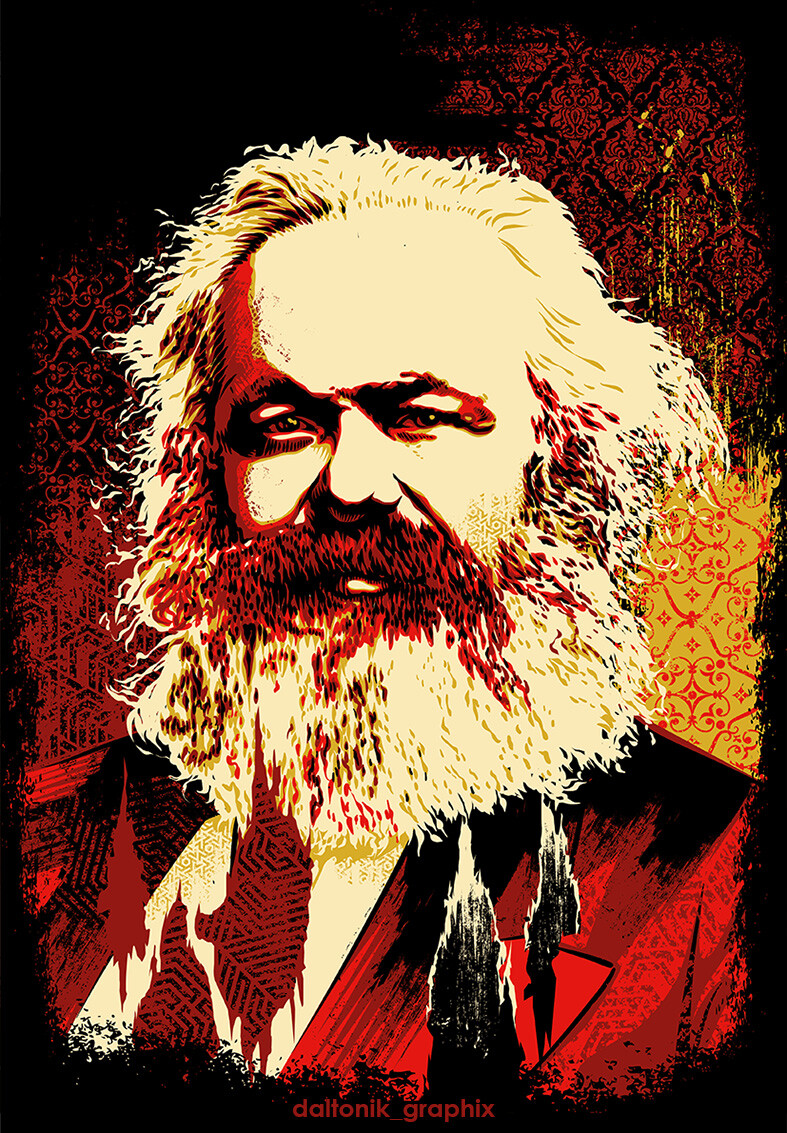
Hello everynyan, we’re studying Marxism-Leninism. Here is a link to the list
This week we’re reading:
-
Why Socialism? - A. Einstein (1949)
Webpage | Audiobook [~10 min / 22 min] -
Why Marxism? - R. Day (2020)
Webpage | Audiobook [~15 min / 21 min] -
Why do we Have to Study Theory? - Ho Chi Minh (1957)
Webpage | Audio book [~10 min / 11 min] -
General Rules for Independent Study - N. Krupskaya (1934)
Webpage [~5 min] -
“Tankies” - N. Frome (2020)
Webpage | Audiobook [~5 min / 11 min]
Next week we will be watching 6. US Interventionism, the Third World, and the USSR - M. Parenti (1986)
Webpage Transcription of Speech | Original Speech [~1 hr / 1 hr 33 min]
Unfortunately the suggestion I came up with is quite long at 6000 words: Marxism and African Liberation by Walter Rodney, 1975. While the title makes it sound specific to African conditions, a lot of Rodney’s arguments are for the general applicability and relevance of Marxism to different times and places. He directly addresses questions of like, “Why should we care about these old dead white guys?” and explains that Marxist theory is a methodology to be adapted to specific conditions, rather than a set of policies that would be irrelevant in different conditions. It also calls out:
I’m not sure if it belongs in the introduction because of it’s length, and it’s fairly dense. Part of it does depend on what the list is aiming to be, and who the target audience is. I think that there’s value in getting people to understand and consider Marxism, even from a neutral, academic standpoint. To adopt Marxism, you have to evaluate it, and to evaluate it, you have to understand it. Even if someone does not adopt Marxism and does not join a Marxist org, having people in other organizations who are not actively hostile to understanding what Marxism even is, is still potentially useful. But it’s a question of what the goal of the list is and who the target audience is.
As a Rodneyist, I heavily support such a reading, too (MLRL stands for Marxist Leninist Rodneyist Losurdoist lol). But, I think Day’s Why Marxism is sufficient for the list as Cowbee makes it. Rodney is amazing, but I would consider this work of his aa something to supplement this smaller reading list… but I find it hard to say such because of how valuable Rodney is!
I actually didn’t know who Rodney was until I did some digging looking for someone who made the case for Marxism and came across this. I was really impressed by his analysis and style. I started listening to “How Europe Underdeveloped Africa” and as good as his analysis of the specific conditions is, again I think it’s useful generally, as an example of how Marxist analysis works and how to apply it.
And I’m pissed that he was assassinated, so young! They deprived the world of a generational talent, we could’ve had so much more of his work.
I wondered about if it’d be possible to trim the length to make it more approachable, but it’s hard because everything flows so naturally and logically. I wish people were just patient enough to appreciate it, but what can you do?
Rodney is GOATed. His work was incredible and he was assassinated so young precisely because he was a threat to power.
Thanks for the recommendation, I’ll give it a read! And yes, there is merit in protecting Marxism from vulgarization while simultaneously promoting it within broader context. I’ll summarize the target audience and goal of this list then:
The target: radicalized workers around the world, but primarily those that speak English (due to my own monolingual experience).
The goal: equip the reader with a basic Marxist-Leninist toolkit to use, and pipeline them into an organization to apply that toolkit.
To those ends, length is fatal. It needs to grab the reader and not feel a chore to complete. It needs to not scare away liberals, while also providing a riposte to any liberal anti-communism. This list is not a template for an organization to use for training cadre, it’s a pre-cadre list designed to help plant seeds for cadre training.
Agreed, referencing this work from Rodney as a more fleshed out explanation is good, but the length of Why Marxism is incredibly useful
Agreed.