- cross-posted to:
- slop@hexbear.net
- hackernews@lemmy.bestiver.se
- cross-posted to:
- slop@hexbear.net
- hackernews@lemmy.bestiver.se
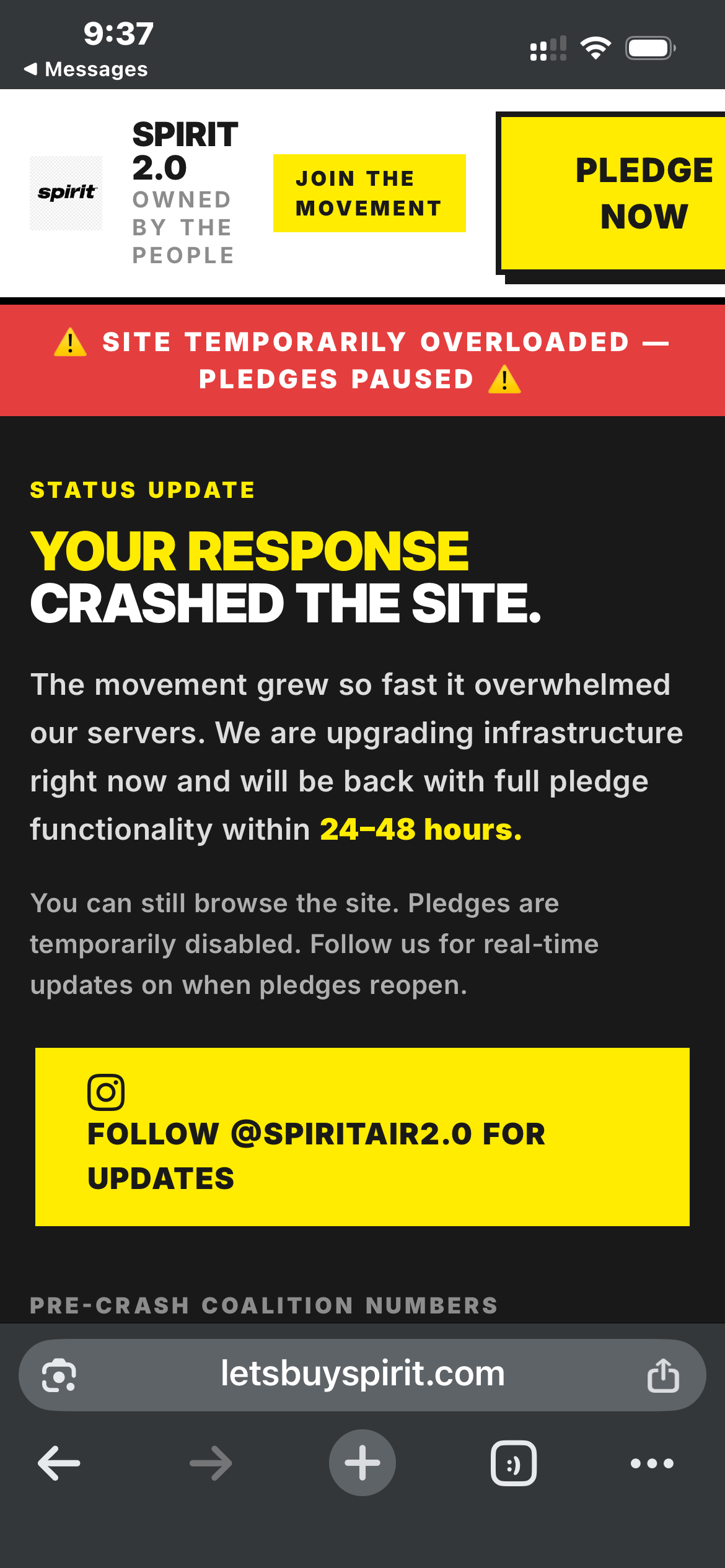
The concept is explained much better in the link, but TLDR: People are trying to organize and crowdfund the purchase of spirit airlines assets with the goal of running it as a worker owned business similar to winco or rei. Seems at least tangentially relevant to this community
You must log in or # to comment.
This is not your point but unfortunately REI is no longer run that way. New leadership a couple years ago who quietly turned it (are turning it?) into your run of the mill corporate enterprise like any other.
Just like they did with MEC in Canada.
Yeah, isn’t the union protesting right now?
REI was never worker owned or operated; it was a member coop (meaning anyone who bought a membership got one vote on the board), not a worker coop.
That fucking sucks, I used to love REI…
I would fly the hell out of an airline that had anything but single-minded, relentless shareholder profit in mind. It would be so easy to not suck as a carrier, employer and business when you allow yourself to consider some of those things as also important.
I have questions about why you think airlines are actually “shareholder profit minded”. The day to day operations of an airline don’t make enough money to sustain an airline. This is why so many airlines go bankrupt.
Fundamental problem: Flights don’t make money. Airlines actually make all of their money through loyalty programs and credit card payments. They basically should have turned into regulated utilities long ago, but loyalty program revenue saved them.
Unless this initiative will turn into a credit card company (which nobody likes or wants to do) it won’t go anywhere
Private equity will likely sell the company for parts. There is no operational improvements for cash flow that they can do.
Useful watch (skip to 2:20): https://youtu.be/ggUduBmvQ_4
The airlines operations, shit as they are in the US, agreed aren’t that “profitable” on the whole, with some exceptions like Delta and Alaska…but you’re leaving out the fact that their immensely profitable “division” let’s call it, where does that money go? Shareholder buybacks, stock grants–and certainly not making the flight experience suck less which might actually induce demand. Airlines are expensive and cyclical to run, but when they are profitable it’s not used prudently because they know they can just get a government bailout so why not pay off their rich friends in the meantime and juice stock price?
Your line of thinking is like saying all products in a business are equally profitable. Grocery stores have higher margin products and lower but it doesn’t mean they don’t need them all to compete in the marketplace–they can’t just have a loyalty program without the airline. If they could they would have long ago done it (and to a degree they have selling huge amounts of forward miles to banks) but at that point there would be no argument left that they are operating independently of government backing.
They were regulated utilities, then the champion of “free markets” Reagan, deregulated them leading to the front capitalism we have today; private gains and public-vscled bailout losses. Funny the government never gets called into the fat years to take dividend checks from airlines…
The airlines operations, shit as they are in the US, agreed aren’t that “profitable” on the whole, with some exceptions like Delta and Alaska…but you’re leaving out the fact that their immensely profitable “division” let’s call it, where does that money go? Shareholder buybacks, stock grants–and certainly not making the flight experience suck less which might actually induce demand. Airlines are expensive and cyclical to run, but when they are profitable it’s not used prudently because they know they can just get a government bailout so why not pay off their rich friends in the meantime and juice stock price?
What is their immensely profitable division?
Your line of thinking is like saying all products in a business are equally profitable. Grocery stores have higher margin products and lower but it doesn’t mean they don’t need them all to compete in the marketplace–they can’t just have a loyalty program without the airline. If they could they would have long ago done it (and to a degree they have selling huge amounts of forward miles to banks) but at that point there would be no argument left that they are operating independently of government backing.
This comment was made in context to buying an airline. In that context, where we the people are creating an airline co-op, how do we make it profitable so that’s it doesn’t have to again file for bankruptcy and go out of business?
They were regulated utilities, then the champion of “free markets” Reagan, deregulated them leading to the front capitalism we have today; private gains and public-vscled bailout losses. Funny the government never gets called into the fat years to take dividend checks from airlines…
From its deregulation in 1978 to the end of 2025, the airline industry has cumulatively lost money: its net profit over those 47 years sits at negative $37 billion.
When airlines were regulated this way their routes were determined by the government and that literally meant that an airline might “own” a specific route meaning no other airline could fly that route and they didn’t have to compete.
This is one of the many reasons that air travel was so expensive back then and deregulation made airline travel cheaper.
So what were talking about here is buying and running a budget airline without mileage plans or credit cards to subsidize it, and we’re buying it saddled with its debt. And and we’re going to run it somehow magically as a budget airline competitive in the market with other airlines without doing any of the stuff you list above, and and and we expect to pay a board to run this thing and and and and we expect it to be successful (not even profitable, just able to cover its costs as a budget airline). Not to mention we don’t want shareholders to profit (and we would be the shareholders in this instance, right?)
Oh and to make it a good airline to work for as you said in your first comment the employees would have to be able to unionize which comes with its own costs. Do I have this right?
Like. I took all this into account when I made my comment and I was therefore confused by your first comment and your response makes me ask further questions.
One of which is, the main mitigating factor in why Spirit went out of business in the first place is fuel prices skyrocketing due to Traitor Trump’s “not a war” with Iran. So there’s that.
From reading their website, it seems like they are advocating for a consumer cooperative rather than a worker cooperative, with the main difference being the consumers get voting rights as opposed to the workers, which is a very important distinction.
The employees would be granted an ESOP (Employee Stock Ownership Plan), which is great, but is not the same thing as the workers having complete and final control over the company they work for.
For public facing companies I kind of prefer this tbh. It also makes sense from a raising funds perspective (more owners to pay in). Employees should have voting rights and Coop or not, the union needs to exist to protect their interest too
I’m so fucking in. Where do I sign up?
I was going to make a joke about not reading the link.
But then the link didn’t work for me. Not sure why. 🤔
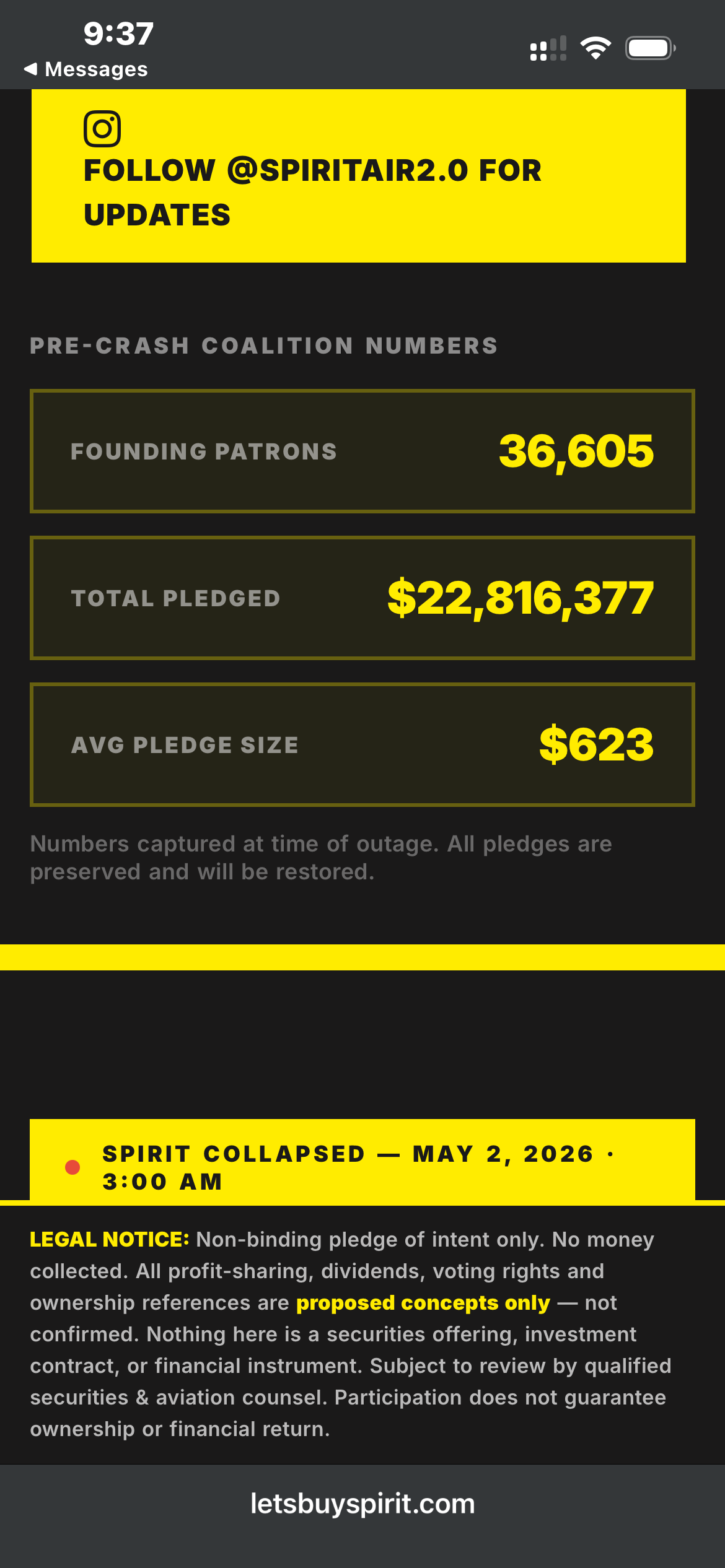
I’m intrigued, but I’d need to know more. Do I have to be an “accredited investor”? Would we be buying the entire airline, debt and all, or just its assets? How are day-to-day decisions handled; surely there will be some kind of leadership structure rather than pure democracy on the smaller details, right? And if there is, is democracy enough to prevent corruption, like we’ve seen in the supposedly democratic American government, or has there been any thought to the game theory behind the bylaws? I know they’re not collecting actual money yet, but what are the chances this whole thing is a scam?
I have one major question. What assets? A fair number of airlines don’t actually own their planes. They lease them. Mostly airlines buy each other not for the planes but for the routes. So are we the people going to coop routes? This only makes sense if the airline we buy goes everywhere. Spirit Airlines doesn’t go everywhere. So the people who’d benefit are the ones who live work or travel to/near the routes that Spirit Airlines services. But you’d probably need more than those people to invest in the coop to keep it operational.
I’ll invest just because I want to see this business model succeed and spread.
I’m sure it would be ran like any other non-profit. Day to day handled by execs, bylaws/policy set by the voting share holders (however that is decided), then likely quarterly reviews/votes.
Basically like a buisness that doesn’t need to make money
Largest market chain where i live is run like this.
A consumer cooperative (or customer-owned cooperative).
Its a business owned directly by its customers, who usually become members by paying a small membership fee. Profits are returned to members as bonuses, discounts, or dividends, and major decisions are made democratically, but there is the normal corporate hierarcy running the day to day operations.
Noice!!
It would get sabotaged fooor sure.
While there is a small crowdfunding effort online by fans to “save” the airline, for all practical purposes, Spirit Airlines is no longer in business.
Now, that’s an interesting turn of events.