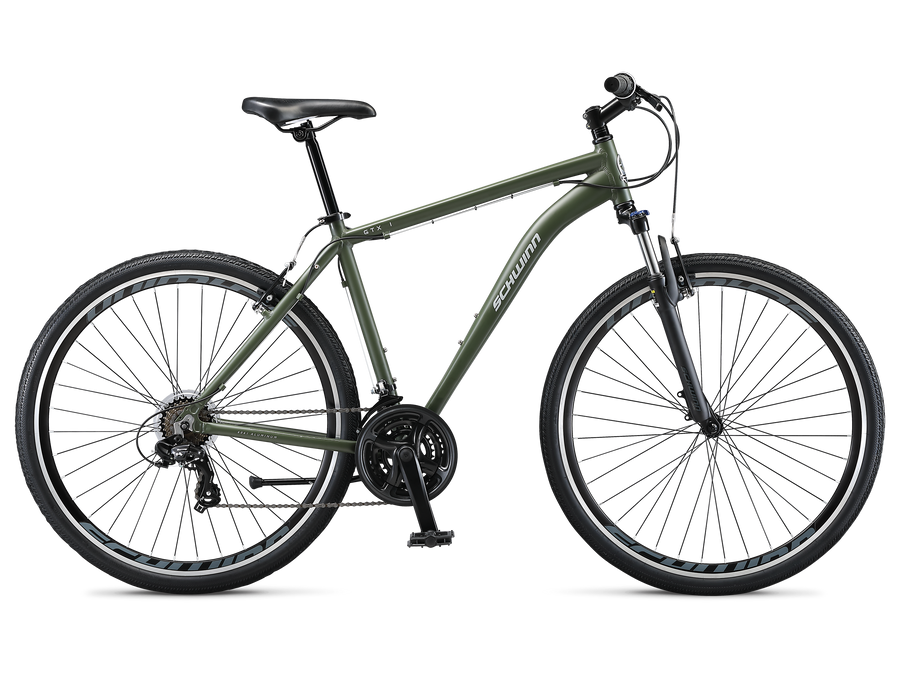
I am trying to get back on my bike after about 6 or so years of neglect in my shed. It’s a Schwinn GTX1. I Am decent with working on things, but I know nothing about tools specific for bikes or things that are recommended to keep with you on longer rides. I have some new tires and tubes to put on due to dry rot on the existing tires. I realized I don’t have any idea how to put a bike tire/tube on either. What is the right process? What tools should be kept in a kit with the bike? What parts? (A tube or patches, etc?) What maintenance should I look into? I also have some degreaser to clean the chain and Muk-off chain lube to go on it. The brakes seem ok and most rubber appears to be in good condition, except the tires. Sorry, I know it’s a lot, but I am wanting to get back onto this bike for weight and health reasons.
Agree on park tool videos, they’re amazing. Get comfortable with removing and replacing wheels, tyres and tubes first as it’s what you’ll most likely need to do the most.
Keep going until you get it!
On rides I have:
- mini-pump
- tire levers
- patch kit
- multitool with hex bits, spoke wrench, Phillips head bit etc
- spare tube/s
Then the extra stuff I have at home, in rough order of importance:
- track pump with reversible head for Schrader and Presta valves (way faster than handheld)
- bike stand (doesn’t need to be super nice as long as it holds your bike up)
- cleaning stuff (brushes, degreaser, chain lube)
- full set of hex wrenches (5mm the most commonly used by far, but also 4mm and 6mm quite frequently)
- multi size cone wrenches for wheel nuts
- cable/housing cutter with cable end crimper
- brake cables and housing
- gear cables and housing
- grease
- needle nose pliers
- chain whip
- cassette tool
- bottom bracket tool
- torx wrench set
- headset cup remover
- headset cup press
Spoke wrench with you? I haven’t needed one of those yet. Chain breaker, on the other hand…
Yeah my multi tool has the chain breaker and spoke wrenches built in to it.
I do have dedicated spoke wrenches too but if you’re just getting a starting set of tools then the multitool makes sense.
I used the multi tool spoke wrenches for ages before buying a standalone one. I still use the multi tool for the chain breaker…
I dont have much to add to your reply other than that if you dont have room for a bike stand, you can get tabletop stands that you can either screw into a workbench, or just clamp onto a kitchen table temporarily.
Also, check libraries for tools. Getting a niche tool from Park Tool at the library once every few years is a lot better than buying some unbranded crappy tool that doesn’t quite work right.
Being able to get the bike into a comfortable working position honestly makes such a huge difference. I got mine from lidl but you do need space, that’s a great tip for alternatives!
I didn’t buy one for the longest time cause you never really need one, but if you dont have one, tasks take 3 times as long with a lot of swearing.
If I get it correctly you want to know 2 different things:
-
How to service your bike at home - what tools to buy, what is needed to maintain…
-
What tools to bring with you on bike ride.
-
Is quite easy everything you want to maintain. I would start looking in to ParkTool YouTube channel where are the steps nicely explained with every tool you need so everyone can follow it. For me it is everything and I got tools for all my specific parts but it isn’t true for most people and some things are better to leave on bikeshop (tools are expensive, you can badly mess it up…)
-
This depends on your type of riding - you have to be able to at least limp back home. So at least tools to change the inner tube with spares and pump.
-
More specific answer - multitool, tire leavers, pump, hex wrench set, patch kit (for patching at home) and then if you want to do more specialised task think about the purchase of the tools or if it’s ok for you to bring the bike to the shop.
Exactly what I wanted to know. Thanks! The nearest bike shop is 30+ miles away, so I’m mostly on my own working on it.
I looked up the bike and you shouldn’t need that much tools for “everything”. You should be mostly fine with chain whip and cassette tool for changing a cassette, headset wrench, crankset tool and maybe bearing wrenches for wheel bearings.
Most of the little tools like spoke wrench or chain splitter are included on larger multitools. I use some from Lezyne and works just fine even long term. And if you don’t ride that much terrain tracks you don’t need to worry that much about the suspension fork.
-
I assume your 6+ year old Schwinn GTX1 looks pretty similar to this new one in terms of having the same kinds of components and whatnot.
To change the tire(s), you’ll want to:
- Release the V-brakes (squeeze the arms together and pull the little curved piece of metal sleeve containing the cable out of the bracket attached to one of the arms) so that you can get your tires past the brake pads.
- Open the quick release lever and unscrew the other end of the axle until it is loose enough on the dropouts, then pull it off the bike (untangling it from the chain if it’s the rear wheel).
- If it isn’t already, deflate the tire by removing the valve stem cap and pushing on the little metal pin in the middle
- Pull the tire and inner tube off the rim, which should be relatively easy and probably not require tools on your style of bike. If necessary, use a set of bicycle tire levers (or, in a pinch, something like a flathead screwdriver) to lever the tire bead over the hooked edge of the rim.
- Put your new inner tube inside your new tire, and partially inflate it so it isn’t flat and flopping around (which would put it at risk of being pinched against the rim). For bonus points, align the logo on the tire with the valve stem on the inner tube.
- Reverse the previous steps to put the tire back on wheel, and then the wheel back on the bike. Make sure the quick release levers are oriented up and a little towards the back so they don’t get caught on anything, and don’t forget to reconnect the V-brakes or you’ll be in for a nasty surprise when you ride it and try to stop.
The tricky part about changing a bike tire is getting the tire on and off the rim. I didn’t go into any real detail about that, because (again) your style of tire shouldn’t be that difficult, and also because it’s the kind of thing that’s much more easily shown visually than described. I have faith you can manage it.
As for other maintenance after letting it sit for 6 years, in addition to lubricating the chain I’d also maybe put just a little bit of chain lube or 3-in-1 oil on the jockey wheels and hinges of each derailleur. Your brake and shifter cables might benefit from some kind of very light lube where they run through the cable housings, but probably not.
When you ride, pay attention to see if any of the other moving parts are squeaky or “crunchy” feeling or anything like that. If so, make a new thread about it because servicing stuff that gets greased instead of oiled, like the bottom bracket, is a little more complicated.