Iirc, Liverpool had a health crisis due the expansion of the city during the industrial revolution. A lot of streets were very narrow, making it very difficult to clean up waste and provide access to firemans.
If a street was too narrow, they actually would demolish one of the buildings to make space
Edit: or buildings in plural now that I think about it. You couldn’t just demolish one of them if they are so close
It also would’ve been better measured by holding the tape with the numbers facing him and the tip actually against the wall. Kind of reminds me of these stock pictures about any trade with someone lying bricks with the help of a hammer, using a stethoscope without putting it in their ears, or grabbing a soldering iron by the tip and probing into a computer board…
Unless the point of it was a verifiable record of the measurement, I suppose. I don’t really know the state of photography back then, if that would be cost prohibitive for a government to employ or even worth doing.


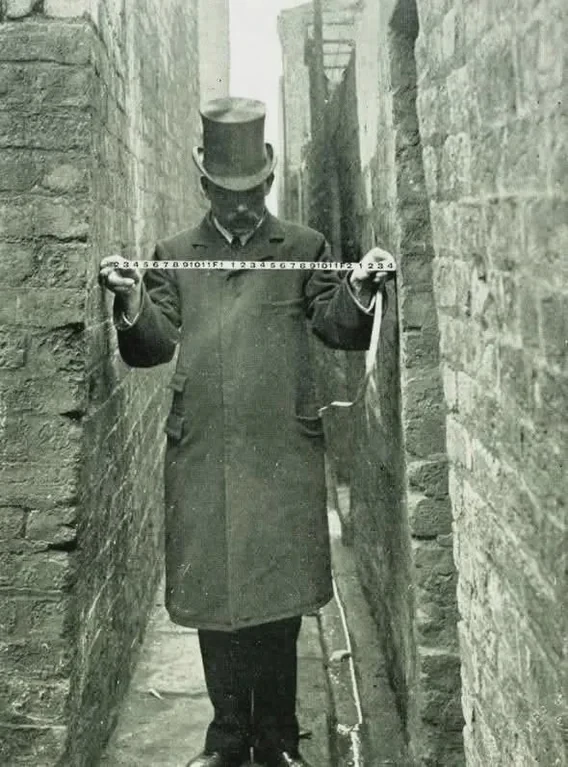
I would think that would have been better measured to establish safety parameters BEFORE the buildings were finalized.
“Hmm, an inch shy… I’m afraid we’ll have to knock them both down.”
‘I say, let’s not be too hasty. Just move this building .5" over, and this one .5" in the opposite direction, and Robert’s your avuncular figure.’
Maybe he’s checking whether a horse can fit through there. That would probably be important when making a city map back then.
Iirc, Liverpool had a health crisis due the expansion of the city during the industrial revolution. A lot of streets were very narrow, making it very difficult to clean up waste and provide access to firemans.
If a street was too narrow, they actually would demolish one of the buildings to make space
Edit: or buildings in plural now that I think about it. You couldn’t just demolish one of them if they are so close
Luckily we contracted the Germans to do a lot of the demolition work, for free, in the 1940s
It also would’ve been better measured by holding the tape with the numbers facing him and the tip actually against the wall. Kind of reminds me of these stock pictures about any trade with someone lying bricks with the help of a hammer, using a stethoscope without putting it in their ears, or grabbing a soldering iron by the tip and probing into a computer board…
Unless the point of it was a verifiable record of the measurement, I suppose. I don’t really know the state of photography back then, if that would be cost prohibitive for a government to employ or even worth doing.
Welp, i’m afraid to tell you that these 12 buildings have to be moved