That depends on a few more factors.The fact that their home values have skyrocketed does go a long way to alleviate that.
Yeah, what may have been a $60,000 upgrade is now $250,000, but they’re also getting another $200,000 for their home when they sell it, which makes up the difference.
The thing is they aren’t going up evenly everywhere. A $400,000 house from a few years back in my area is now selling for $600,000, but a $100,000 house from that same time is now selling for $300,000. So the price difference between the 2 has actually stayed the same.
The institutional investors are targeting the cheaper houses, so they’re the ones skyrocketing the most in value.
I’m not saying homeowners are in a worse position. Just that increasing values also hurt them.
My parents had to move out into the country into a smaller house because their taxes got so high they couldn’t keep up after retirement when they quit getting raises.
Ya but property taxes are still significantly cheaper than rent, and most states have some exemption for a portion of the valuation your first home. The same doesn’t apply to renters, and in many municipalities multifamily zoning has significantly higher property tax rates to begin with. Many conveniences of cities are built around homeowners since they’re the majority of voters. In my old apartment despite trash at the property being taken by the city, apartment residents did not have access to the city dump for recycling and large trash items. Meanwhile residents owning a single family home did and could even get them picked up as part of their regular trash bill, which was $5/mo less than what we in the apartment paid for trash.
Home ownership includes property taxes and maintenance. New roof, new furnace, new water heater, etc. These are big bills every 12-15 years. Boomers did this with HELOCs, but HELOCs are gone as housing values in my region are going down from the peak in 2022.
Another big problem is contracting is unregulated and out of control, before 2020, contracts were typically materials x2 for labor, now they have no upper guidelines, just a rolling scam and they learned in 2020-22 that it’s better to work less and charge more.
I’m not saying homeowners are in a worse position. Just that increasing values also hurt them.
My parents had to move out into the country into a smaller house because their taxes got so high they couldn’t keep up after retirement when they quit getting raises.
And of course they’d taken out extra mortgages on their house to try and keep up with the increasing costs so they could stay in the town they’dlived in for 60 years, so they didn’t actually have a ton of equity despite their home having massively increased in value.
And with all the other old people moving out into the country, the property values where they moved are skyrocketing, so they’re already getting upside down and I’m already having to pitch in to help them pay the mortgage on the smaller home.


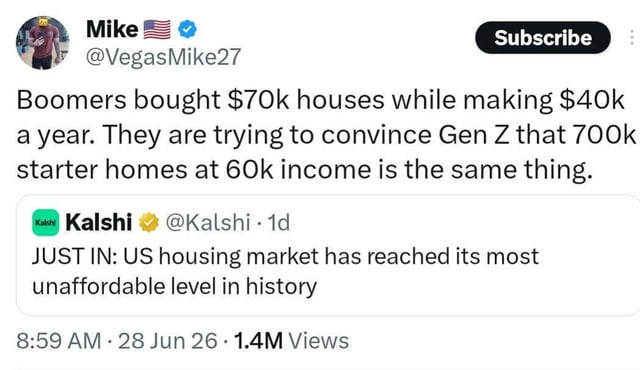
It hurts homeowners who aren’t interested in ever moving as well. Property taxes are based on home value.
Or those who do wish to move, and upgrade while doing so.
That depends on a few more factors.The fact that their home values have skyrocketed does go a long way to alleviate that.
Yeah, what may have been a $60,000 upgrade is now $250,000, but they’re also getting another $200,000 for their home when they sell it, which makes up the difference.
I don’t know how evenly houses go up or how much consistency there is, but going from $100K to $200K is easier than $300K to $600K.
Housing price increases are almost certainly making the gap wider for upgrades.
The thing is they aren’t going up evenly everywhere. A $400,000 house from a few years back in my area is now selling for $600,000, but a $100,000 house from that same time is now selling for $300,000. So the price difference between the 2 has actually stayed the same.
The institutional investors are targeting the cheaper houses, so they’re the ones skyrocketing the most in value.
So still a net loss for those wishing to upgrade.
As you said in another comment:
Ya but property taxes are still significantly cheaper than rent, and most states have some exemption for a portion of the valuation your first home. The same doesn’t apply to renters, and in many municipalities multifamily zoning has significantly higher property tax rates to begin with. Many conveniences of cities are built around homeowners since they’re the majority of voters. In my old apartment despite trash at the property being taken by the city, apartment residents did not have access to the city dump for recycling and large trash items. Meanwhile residents owning a single family home did and could even get them picked up as part of their regular trash bill, which was $5/mo less than what we in the apartment paid for trash.
Do all the math please.
Home ownership includes property taxes and maintenance. New roof, new furnace, new water heater, etc. These are big bills every 12-15 years. Boomers did this with HELOCs, but HELOCs are gone as housing values in my region are going down from the peak in 2022.
Another big problem is contracting is unregulated and out of control, before 2020, contracts were typically materials x2 for labor, now they have no upper guidelines, just a rolling scam and they learned in 2020-22 that it’s better to work less and charge more.
I’m not saying homeowners are in a worse position. Just that increasing values also hurt them.
My parents had to move out into the country into a smaller house because their taxes got so high they couldn’t keep up after retirement when they quit getting raises.
And of course they’d taken out extra mortgages on their house to try and keep up with the increasing costs so they could stay in the town they’dlived in for 60 years, so they didn’t actually have a ton of equity despite their home having massively increased in value.
And with all the other old people moving out into the country, the property values where they moved are skyrocketing, so they’re already getting upside down and I’m already having to pitch in to help them pay the mortgage on the smaller home.