It’s really not his point at all. GRRM is a huge fan of Tolkien’s work. He knows Lord of the Rings would be worse for bothering about Aragorn’s tax policy. His point was really just to show how his books were going in a different direction by focusing on politics over heroism.
Lord of the Rings stands alone because it isn’t really a fantasy novel. Fantasy novels are defined by their conformance to tropes first used in Tolkien’s works: orcs and elves, wizards and dwarves. That’s what fantasy novels are all about! Lord of the Rings isn’t about any of that stuff!
Lord of the Rings is about the modern hero: the ordinary person who has duty thrust upon them and struggles against all odds to destroy power, the ultimate source of temptation and corruption. This is a stark difference from typical fantasy which is about escapism and wish fulfillment: a fantasy about obtaining power, not destroying it.
That’s what levelling up is all about: to get stronger. That’s what slaying the dragon is all about: to loot the massive hoard of treasure. These are childish adventures that derive from the first part of The Hobbit (a children’s novel). Tolkien had harsh words for all of this stuff!
Of course Lord of the Rings is a fantasy novel. Fantasy is a setting, not a story structure or hero archetype. And just because LotR first modeled many modern fantasy elements doesn’t mean it isn’t fantasy, either.
Also, I don’t know what kind of fantasy stories you read or know, but from your description I assume it’s mostly Young Adult Fantasy becauae that particular subgenre plays a lot with elements of escapism and wish fulfillment. There is a whole lot of other stories out there, too, though and reducing fantasy to just one subgenre you also misunderstand is just… wrong.
And while I certainly have not read about everything Tolkien commented, I doubt he had harsh words for many things, though you can of course show me what exactly you’re talking about.
I don’t know, maybe you consider GRRM’s books to be part of the YA genre? I’ve read the first 5 Song of Ice and Fire books and they’re basically a soap opera plus politics in a fantasy setting. Pure escapism. Junk food reading (and an unhealthy obsession with the description of food). Lots of fun to read though!
As for what you call fantasy (just a setting), that’s not what Tolkien had in mind when he wrote Lord of the Rings. Read his essay On fairy stories and realize that his ideas were so much bigger than what fantasy as a genre became. Recognize that he was a deeply religious man and his stories were firmly grounded in morality. No, he was not against escapism and in fact he did make it a feature of his works. However, the genre went way overboard on the escapism angle and largely forgot what Tolkien thought was most important: the human condition.
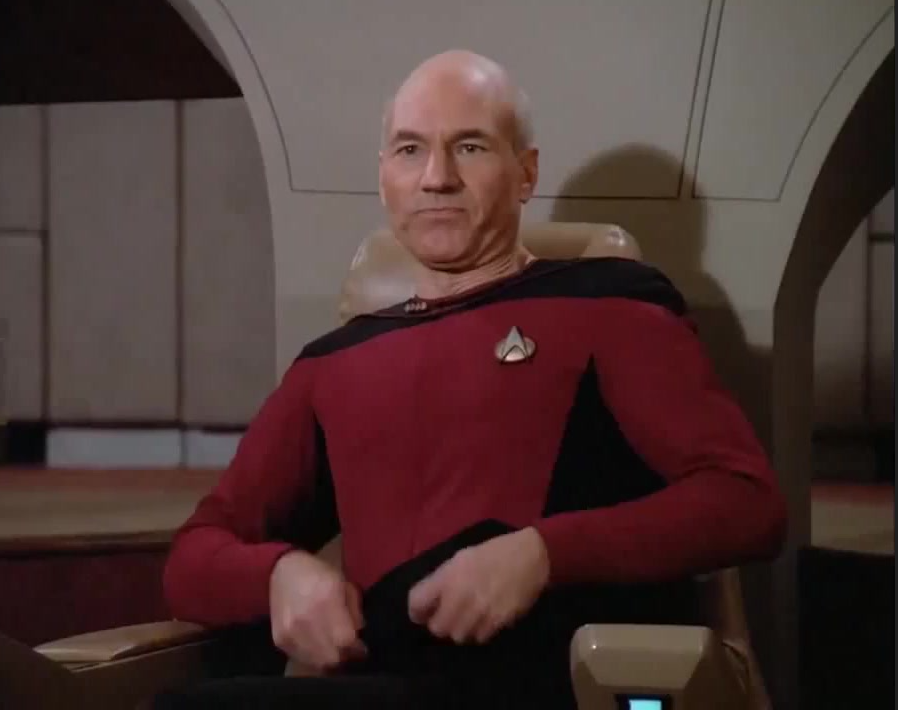
Structurally, the modern fiction I’d say that most resembles Tolkien’s work is Star Trek. That’s another franchise where many of the best episodes use aliens and other sci-fi elements to put humanity under the microscope. Now, I’d be happy to be proven wrong. Can you suggest a fantasy novel with a moral character and emotional relevance to the human condition as some of the best episodes of Trek? Some examples:
I have read a bunch of them. I love them. They’re very funny and entertaining. They have good social commentary. I wouldn’t say they’re on the level of those Trek episodes I named, as far as emotional impact and meaning go.
They’re also not on Tolkien’s level. They say things that are relevant now. Tolkien is relevant now, it would’ve been relevant 10,000 years ago, and it will still be relevant 10,000 years from now.
I don’t know, maybe you consider GRRM’s books to be part of the YA genre? I’ve read the first 5 Song of Ice and Fire books and they’re basically a soap opera plus politics in a fantasy setting. Pure escapism. Junk food reading (and an unhealthy obsession with the description of food). Lots of fun to read though!
I neither consider ASOIAF YA fantasy nor “junk food reading” or pure escapism (though there may be escapist elements and what those are my vary depending on the individuum reading the stories). It’s a political drama about how power is achieved, stories about how humans react to certain (often traumatic) experiences like loss, imprisonment and different threats.
To pull from your own Star Trek comparison: it’s the Deep Space 9 of medieval fantasy.
As for what you call fantasy (just a setting), that’s not what Tolkien had in mind when he wrote Lord of the Rings. Read his essay On fairy stories and realize that his ideas were so much bigger than what fantasy as a genre became. Recognize that he was a deeply religious man and his stories were firmly grounded in morality. No, he was not against escapism and in fact he did make it a feature of his works. However, the genre went way overboard on the escapism angle and largely forgot what Tolkien thought was most important: the human condition.
So what? Tolkien did not write the Lord of the Rings intending to create or redefine a (new) literary genre where every story had to express certain characteristics or be deemed “lesser”.
Also, you seem to reduce Tolkien’s writing down to a single aspect (“the human condition”), which has two simultanous effects: lessening the impact of Tolkien’s other themes (environmentalism for example) and lessen the value of other themes often seen in fantasy (societal criticism for example).
Can you suggest a fantasy novel with a moral character and emotional relevance to the human condition as some of the best episodes of Trek?
Why would I do that? Besides LotR not coming close to neither Measure of a Man nor Paper Moon, I already stated that reducing Tolkien or fantasy to that single theme is restricting and doing a disservice. What about Sapkowski’s Witcher Saga and its discussion of what cosntitutes humanity or LeGuin’s Earthsea cycle about racial diversity and her “Left Hand of Darkness” dealing with gender norms and identity? What about Pratchett’s various themes in his Diskworld books? The list goes on and I don’t understand why you’d dismiss them because they’re not dealing with what Tolkien wanted to deal with (and again, Tolkien never ever said anything about what other’s should write or what fantasy stories should and should not be about).
Thank you! This plot hole business is always taken out of context, too. GRRM was in an interview talking about how Lord of the Rings inspired him to write A Song of Ice and Fire - and part of that inspiration was from these gaps he noticed. And that’s fucking rad!
People always talk like if you love something you should never criticize it, but being critical about something is most often a sign of passion - about the property, the genre, the medium, whatever. And inspiration blooms at the intersection of criticism and passion.

It’s really not his point at all. GRRM is a huge fan of Tolkien’s work. He knows Lord of the Rings would be worse for bothering about Aragorn’s tax policy. His point was really just to show how his books were going in a different direction by focusing on politics over heroism.
Lord of the Rings stands alone because it isn’t really a fantasy novel. Fantasy novels are defined by their conformance to tropes first used in Tolkien’s works: orcs and elves, wizards and dwarves. That’s what fantasy novels are all about! Lord of the Rings isn’t about any of that stuff!
Lord of the Rings is about the modern hero: the ordinary person who has duty thrust upon them and struggles against all odds to destroy power, the ultimate source of temptation and corruption. This is a stark difference from typical fantasy which is about escapism and wish fulfillment: a fantasy about obtaining power, not destroying it.
That’s what levelling up is all about: to get stronger. That’s what slaying the dragon is all about: to loot the massive hoard of treasure. These are childish adventures that derive from the first part of The Hobbit (a children’s novel). Tolkien had harsh words for all of this stuff!
Of course Lord of the Rings is a fantasy novel. Fantasy is a setting, not a story structure or hero archetype. And just because LotR first modeled many modern fantasy elements doesn’t mean it isn’t fantasy, either.
Also, I don’t know what kind of fantasy stories you read or know, but from your description I assume it’s mostly Young Adult Fantasy becauae that particular subgenre plays a lot with elements of escapism and wish fulfillment. There is a whole lot of other stories out there, too, though and reducing fantasy to just one subgenre you also misunderstand is just… wrong.
And while I certainly have not read about everything Tolkien commented, I doubt he had harsh words for many things, though you can of course show me what exactly you’re talking about.
I don’t know, maybe you consider GRRM’s books to be part of the YA genre? I’ve read the first 5 Song of Ice and Fire books and they’re basically a soap opera plus politics in a fantasy setting. Pure escapism. Junk food reading (and an unhealthy obsession with the description of food). Lots of fun to read though!
As for what you call fantasy (just a setting), that’s not what Tolkien had in mind when he wrote Lord of the Rings. Read his essay On fairy stories and realize that his ideas were so much bigger than what fantasy as a genre became. Recognize that he was a deeply religious man and his stories were firmly grounded in morality. No, he was not against escapism and in fact he did make it a feature of his works. However, the genre went way overboard on the escapism angle and largely forgot what Tolkien thought was most important: the human condition.
Structurally, the modern fiction I’d say that most resembles Tolkien’s work is Star Trek. That’s another franchise where many of the best episodes use aliens and other sci-fi elements to put humanity under the microscope. Now, I’d be happy to be proven wrong. Can you suggest a fantasy novel with a moral character and emotional relevance to the human condition as some of the best episodes of Trek? Some examples:
I can suggest 41 of them: The Discworld series by Terry Pratchett.
I have read a bunch of them. I love them. They’re very funny and entertaining. They have good social commentary. I wouldn’t say they’re on the level of those Trek episodes I named, as far as emotional impact and meaning go.
They’re also not on Tolkien’s level. They say things that are relevant now. Tolkien is relevant now, it would’ve been relevant 10,000 years ago, and it will still be relevant 10,000 years from now.
I neither consider ASOIAF YA fantasy nor “junk food reading” or pure escapism (though there may be escapist elements and what those are my vary depending on the individuum reading the stories). It’s a political drama about how power is achieved, stories about how humans react to certain (often traumatic) experiences like loss, imprisonment and different threats.
To pull from your own Star Trek comparison: it’s the Deep Space 9 of medieval fantasy.
So what? Tolkien did not write the Lord of the Rings intending to create or redefine a (new) literary genre where every story had to express certain characteristics or be deemed “lesser”.
Also, you seem to reduce Tolkien’s writing down to a single aspect (“the human condition”), which has two simultanous effects: lessening the impact of Tolkien’s other themes (environmentalism for example) and lessen the value of other themes often seen in fantasy (societal criticism for example).
Why would I do that? Besides LotR not coming close to neither Measure of a Man nor Paper Moon, I already stated that reducing Tolkien or fantasy to that single theme is restricting and doing a disservice. What about Sapkowski’s Witcher Saga and its discussion of what cosntitutes humanity or LeGuin’s Earthsea cycle about racial diversity and her “Left Hand of Darkness” dealing with gender norms and identity? What about Pratchett’s various themes in his Diskworld books? The list goes on and I don’t understand why you’d dismiss them because they’re not dealing with what Tolkien wanted to deal with (and again, Tolkien never ever said anything about what other’s should write or what fantasy stories should and should not be about).
Thank you! This plot hole business is always taken out of context, too. GRRM was in an interview talking about how Lord of the Rings inspired him to write A Song of Ice and Fire - and part of that inspiration was from these gaps he noticed. And that’s fucking rad!
People always talk like if you love something you should never criticize it, but being critical about something is most often a sign of passion - about the property, the genre, the medium, whatever. And inspiration blooms at the intersection of criticism and passion.