germany has about 4-5 truly difficult dialects I’d say. (being an native speaker) I could understand every dialect after being immersed for a couple of hours except for bavarian tho 😅
there are a lot more local accents and dialects but Sächsisch, Pfälzerisch & Bayrisch are the ones that are really difficult to understand even for german natives from other areas. Hessisch partially as well. These are all bound to their local areas.
I’m speaking Hochdeutsch (“plain german” which should be the german y’all are learning in school) but there is also Plattdeutsch (spoken mostly in the north) which is it’s own language that is on it’s way to extinction.
ich bin mir auch ziemlich sicher, dass du kein platt oder allemannisch (aka “schweizerisch”) verstehst. Und ich behaupte mal, heute haben wir sehr viel weniger deutsche dialekte als noch vor 200 jahren.
haha hab ich wirklich noch nie und sorry falls du dich angegriffen gefühlt hast, mein einer Opa sprach hessisch mit polnischem Akzent und hat genuschelt, die Einschätzung beruht entsprechend auf persönlichen Erfahrungen (mit wenig Kontakt, hab den vielleicht 3x gesehen) 😆
Platt versteh ich tatsächlich zu nem gewissen Grad weil Verwandtschaft ausm hohen Norden. Allemannisch bzw Schweizerisch ist n deutscher Dialekt oder ne eigene Sprache? Ich kenn nur Schweizer-Deutsch als Begriff
No idea, if that’s a regional thing that “Hochdeutsch” primarily means Southern German to you, but here in South Germany, I doubt anyone would be aware of your definition and everyone understands “Hochdeutsch” to mean “Standard High German”.
My dictionary does list the Southern German meaning, but it’s listed as the secondary meaning.
Hochdeutsch refers to Standard High German, the “neutral” or “standard” dialect of the German countries. If you go to a village in Bayern and can’t understand them, it’s because they’re speaking Bayrisch instead of Hochdeutsch


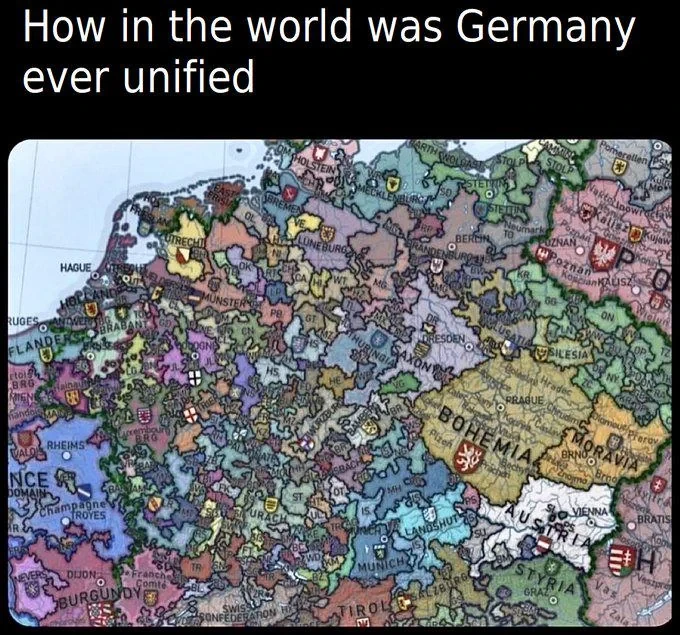
germany has about 4-5 truly difficult dialects I’d say. (being an native speaker) I could understand every dialect after being immersed for a couple of hours except for bavarian tho 😅
there are a lot more local accents and dialects but Sächsisch, Pfälzerisch & Bayrisch are the ones that are really difficult to understand even for german natives from other areas. Hessisch partially as well. These are all bound to their local areas.
I’m speaking Hochdeutsch (“plain german” which should be the german y’all are learning in school) but there is also Plattdeutsch (spoken mostly in the north) which is it’s own language that is on it’s way to extinction.
ich bin mir auch ziemlich sicher, dass du kein platt oder allemannisch (aka “schweizerisch”) verstehst. Und ich behaupte mal, heute haben wir sehr viel weniger deutsche dialekte als noch vor 200 jahren.
& er hat noch nie nen Schwaben getroffen? Wenn er mit Hessisch schon Probleme hat?
haha hab ich wirklich noch nie und sorry falls du dich angegriffen gefühlt hast, mein einer Opa sprach hessisch mit polnischem Akzent und hat genuschelt, die Einschätzung beruht entsprechend auf persönlichen Erfahrungen (mit wenig Kontakt, hab den vielleicht 3x gesehen) 😆
Platt versteh ich tatsächlich zu nem gewissen Grad weil Verwandtschaft ausm hohen Norden. Allemannisch bzw Schweizerisch ist n deutscher Dialekt oder ne eigene Sprache? Ich kenn nur Schweizer-Deutsch als Begriff
hochdeutsch actually refers to the “higher altitude” dialects from the south like bavarian, saxon or swabian…
you actually mean standarddeutsch
well it’s what we call it here in the middle west of germany - hochdeutsch is the opposite to the dialects.
Source: I was born and raised here calling it “Hochdeutsch” lol
No idea, if that’s a regional thing that “Hochdeutsch” primarily means Southern German to you, but here in South Germany, I doubt anyone would be aware of your definition and everyone understands “Hochdeutsch” to mean “Standard High German”.
My dictionary does list the Southern German meaning, but it’s listed as the secondary meaning.
Hochdeutsch refers to Standard High German, the “neutral” or “standard” dialect of the German countries. If you go to a village in Bayern and can’t understand them, it’s because they’re speaking Bayrisch instead of Hochdeutsch
https://en.wikipedia.org/wiki/Standard_German
Standard is a form of high german