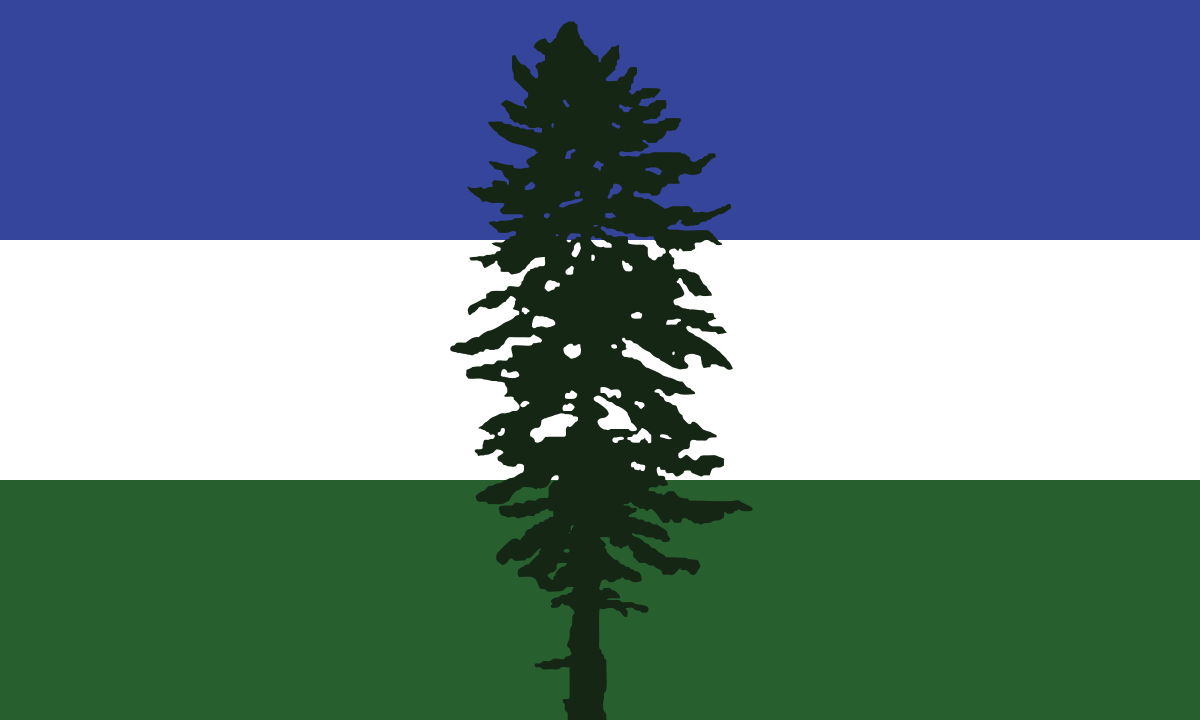
cascadia tries to do independence -> idaho nazis start attacking them with the tacit approval of the federal government -> canada intervenes militarily and libs finally understand the ukraine conflict.
libs finally understand

I was with you until the libs understanding things part
I was with them until the “Canada intervenes militarily” part.
there’s a few places the analogy breaks down, although ~7 years of civil war on your doorstep might change something.
if somebody wants to properly game the scenario out, one complication is that Albertans would want to join Greater Idaho.
Look, the Idaho ultranationalists are a marginal group that does not represent the whole of the Greater Idahoan Reich, the CanadianZZ are attacking an innocent northwest democracy
Oregon has enough home grown Nazis in all the rural areas that they don’t need the support of the Idaho klans. If taken seriously, part of the whole problem of the Cascadia movement is that some people want it to be a “bioregional” movement focused on environmentalism, stewardship of the land, and similarities of climate/natural habitats. Other people also want this, but add more explicit politics to the mix, and argue endlessly on whether certain sections of each state count because they want to understandably cut out all the fascists who are generally against responsible use of land and want it all for “muh cattle”.
on whether certain sections of each state count because they want to understandably cut out all the fascists
yeah, as i understand PNW politics the nazis are mostly east of the rockies and some of them occasionally make noise about wanting to redraw state borders so they can be in idaho and i take that slightly more seriously than texan separatism.
It’s not fun anymore if the NYT is gonna report on it
DisunitedDiscontinued States of America.
The real DSA

lmao
philly is my country
Archive didn’t work, can you post the text?
Here ya go.
Full Text
The revolution begins with a poetry reading.
Last month, a journalist turned organizer named Andrew Engelson invited friends and fellow Pacific Northwesterners to a small club in Seattle’s Capitol Hill neighborhood for an evening of verse, in which his guests would ponder what it means to be from “Cascadia,” the bioregion stretching from Northern California, through Oregon and Washington, into British Columbia.
Odes to volcanoes, woods and rivers would help the audience reach the same conclusion he has: The region might be better off leaving the United States.
Mr. Engelson and his group, Cascadia Democratic Action, are trying to drive conversations that could lead to 2028 ballot measures in Washington and Oregon on secession if things don’t improve. The effort is hardly an outlier in these Disunited States, where frustration on both the left and right has created small but vocal collections of Americans so fed up with feeling disempowered that they’re talking about redrawing state lines or dissolving them altogether.
“The salmon don’t pay attention to the 49th parallel,” Mr. Engelson said, referring to the U.S.-Canada border. “I have way more in common with someone in Vancouver, B.C., than someone in Arkansas.”
Separatism is “in the zeitgeist,” said Ryan Griffiths, a Syracuse University political scientist who wrote the 2025 book “The Disunited States: Threats of Secession in Red and Blue America and Why They Won’t Work.”
Activists in Texas and California continue to push independence. Lawmakers in inland California have pitched splitting the state in two, or three. Organizers in southeastern New Mexico want to join Texas.
Republican lawmakers in Indiana approved legislation last year inviting conservative counties in Illinois to become Hoosiers. A state senator in West Virginia followed suit in late 2025, inviting 30 border counties from Virginia and Maryland to join the Mountaineers.
North of the 49th parallel, conservative Alberta is moving toward a referendum in October asking: Do you want to stay in Canada, or have a separate, binding referendum to secede?
The people Mr. Griffiths interviews often sound remarkably similar, he said.
“Whether they’re libertarian or conservative or liberal,” he said, they complain that government is “in their face, it’s dysfunctional and it’s distant.”
One of the most successful of those efforts is, like Mr. Engelson’s, based in the Northwest, but on the opposite end of the political spectrum. The Greater Idaho movement, a six-year-old campaign to move a large swath of rural, conservative Oregon into neighboring Idaho, has won support in 13 county ballot measures and turned a once-fringe idea into a subject of state capital debate.
“Our system is not quite functioning the way it’s supposed to,” said Matt McCaw, a spokesman for Greater Idaho. Image Snow still dusts a wooded mountaintop shrouded in clouds. The Cascade Mountains separate the lush western counties of Washington and Oregon from the dry, agricultural counties on the eastern half of the states.Credit…Ruth Fremson/The New York Times
Greater Idaho proponents argue that their movement reflects frustrations that date back to Oregon’s earliest days. At the 1857 meeting to draft Oregon’s founding document, 59 of the 60 delegates came from west of the Cascade Mountains.
Today, eastern Oregon makes up roughly two-thirds of the state’s land mass but only 10 to 15 percent of its population. Lawmakers from Portland and the Interstate 5 corridor dominate policy debates and have pushed through gun laws, environmental regulations and tax changes that many in rural Oregon oppose.
As western Oregon transitioned from an economy built on timber, farming and manufacturing to one driven by technology and services, the disconnect has grown.
“They just don’t understand us on the other side of the mountains,” said Dan Joyce, the county judge in Malheur County, Ore., whose voters were among the earliest and strongest supporters of Greater Idaho.
Semir Dzebo, a postdoctoral researcher at Oxford University who worked on a 2025 study on Greater Idaho, said public polling conducted through the study showed that the effort was less a partisan fight than an economic one.
In other parts of the world, efforts to redraw boundaries are often rooted in longstanding ethnic, linguistic or national identities tied to particular places, such as Scotland in the United Kingdom or Catalonia in Spain. Since the Civil War, America has felt “inoculated” against separatist movements, Mr. Dzebo said, “because it rests on a civic understanding of nationalism, that there’s no particular ethnicity that is ‘American.’”
But as electoral politics have become more polarized, and as the gap between the rich and everyone else has grown, the sense of a shared American identity has eroded.
“What propels these movements is when that sense of feeling different really comes with economic consequences,” Mr. Dzebo said.
In that regard, the Greater Idaho movement and the Cascadia secession effort are cousins. Mr. McCaw doesn’t think elected leaders in the Oregon capital represent him. Mr. Engelson feels the same about Washington, D.C.
Cascadians argue that people are often bound more closely by geography, ecology and regional economies than by national borders, particularly when the borders stretch so far in every direction. Mr. Engelson said Washington and Oregon progressives could get more value from their tax dollars if they formed their own smaller political unit and paid for priorities such as universal health care and free college tuition.
A number of states are already engaging in a form of “soft secession,” by conducting multistate public health efforts during the Covid pandemic or forming compacts to address climate change. Image A sign in Eastern Oregon, beneath a dry ridge, reads, “Move Oregon’s Border.” “They just don’t understand us.” Proponents of the Greater Idaho Movement want conservative, agricultural eastern Oregon to break from the Pacific Coast and join Idaho.
But none of the secessionist movements are close to achieving their goals.
The Constitution provides a mechanism for changing state boundaries with the approval of legislatures in both affected states and Congress. But that tends to go only one direction. Neither Virginia nor Illinois has responded to the overtures of its neighbors.
Oregon Democrats have declined to meet with proponents of Greater Idaho, and neither President Trump nor Oregon’s lone Republican congressman, Cliff Bentz, has answered calls for help. And voters in two of the counties that initially embraced the idea have since backtracked.
The Cascadia movement faces an even larger obstacle. In the 1869 case Texas v. White, the Supreme Court ruled that the nation was “indestructible” and that states could not unilaterally secede. The court left open the possibility that a state could leave through “revolution” or with the consent of the other states, but rejected the idea that a state could simply vote its way out.
Hugh Spitzer, a retired University of Washington law professor who began studying separatist movements in law school, laid out a possible path through a treaty negotiated by the president and ratified by two-thirds of the Senate. But that would take decades and require momentum driven by more than a single political moment.
Mr. Engelson said the second Trump administration had convinced him that conversations about separation could no longer remain theoretical.
“We’re in an abusive relationship with the federal government,” he said. “Divorce is a valid response.”
Thank you.
Unfortunately even archive is cut off for me, that’s all I get:
At a moment when even the prospects of dialogue seem far-fetched, movements to redraw state lines to link like-minded regions, or even to secede from the union, are gaining strength.
The revolution begins with a poetry reading. Last month, a journalist turned organizer named Andrew Engelson invited friends and fellow Pacific Northwesterners to a small club in Seattle’s Capitol Hill neighborhood for an evening of verse, in which his guests would ponder what it means to be from “Cascadia,” the bioregion stretching from Northern California, through Oregon and Washington, into British Columbia. Odes to volcanoes, woods and rivers would help the audience reach the same conclusion he has: The region might be better off leaving the United States. Mr. Engelson and his group, Cascadia Democratic Action, are trying to drive conversations that could lead to 2028 ballot measures in Washington and Oregon on secession if things don’t improve. The effort is hardly an outlier in these Disunited States, where frustration on both the left and right has created small but vocal collections of Americans so fed up with feeling disempowered that they’re talking about redrawing state lines or dissolving them altogether. “The salmon don’t pay attention to the 49th parallel,” Mr. Engelson said, referring to the U.S.-Canada border. “I have way more in common with someone in Vancouver, B.C., than someone in Arkansas.” Separatism is “in the zeitgeist,” said Ryan Griffiths, a Syracuse University political scientist who wrote the 2025 book “The Disunited States: Threats of Secession in Red and Blue America and Why They Won’t Work.” Activists in Texas and California continue to push independence. Lawmakers in inland California have pitched splitting the state in two, or three. Organizers in southeastern New Mexico want to join Texas.
It’s gonna be really tacky to throw a second Country Over party after the last one fell so flat.