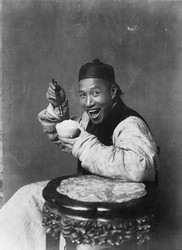
MEN IN DRESSES? NOW EVEN THE PAST GETS WOKE. WTF???
/s (just in case)
Who DOESN’T get laid from that getup
It’s not getting laid that’s the problem, it’s whether you actually wanted to be laid by a person of that gender.
This is implicit male toxicity and homophobia, FYI. (I’m not gay, but I stand against these things in solidarity.)
What, sorry, this is not about genders, just a silly old costume
It was a joke about the types of people who might be attracted to someone for wearing said costume.
Tell us about these “types of people”, why don’t you. Show us what kind of stuff that’s floating around in your brain.
It was a uniform not a costume.
I think that looks weird as fuck, but I recognize I feel that way because of social norms that are different than when that uniform was more common. The clothes I wear every day would also raise eyebrows in different times and places.
Enlightened af 🤝
TIL the kilt is called a “fustanella” and is associated with heroism:
The Albanian traditional costume with fustanella had identified the special troops that Albanians constituted within the Ottoman Empire, whose military prowess became renowned, especially in the era of the Ottoman Albanian pashas Ali of Yanina and Muhammad Ali of Egypt.[1] During the late 18th and early 19th centuries Albanian warriors wore it in the Kingdom of Naples and the Ionian Islands.[2] In the 1810s, the Albanian warrior dress was officially adopted by a British regiment in the Ionian Islands.[3] In the 1820s, it became a principal visual symbol of Philhellenism, and during the Greek War of Independence it was worn by the revolutionary fighters.[4] At that time its notoriety as a symbol of male bravery and heroism grew considerably across the Ottoman Empire and spread throughout Europe.[5] Following the Greek independence, fustanella and accompanying embroidered waistcoats and jackets were adopted by the nascent Greek army. In 1835, it was proclaimed the official court costume and eventually it became the Greek national dress.[6] The Albanian-Greek attire thereafter acquired popularity among peoples who wanted to dress in a courageous heroic manner.[5]
https://en.wikipedia.org/wiki/Fustanella
the whole wikipedia article is pretty interesting.
Man. If I got blasted by a dude in a tutu I would be so mad
deleted by creator
I’ll bet that when a group of these guys walk into a club, the ladies get all a-flutter. Hard to resist a man in a uniform.
Isn’t BCE/CE the more commonly used terms now? Also for a picture like this is it necessary to specify?
Isn’t BCE/CE the more commonly used terms now?
BCE/CE and BC/AD both maintain significant usage even in academic contexts.
Also for a picture like this is it necessary to specify?
I could say something like “I could be using another dating system, like the Islamic dating system”, but the truth is that I use epoch markers on this comm for aesthetic reasons - namely, if I feel a title looks strange without ‘AD’ in some vague, inexpressible way.