
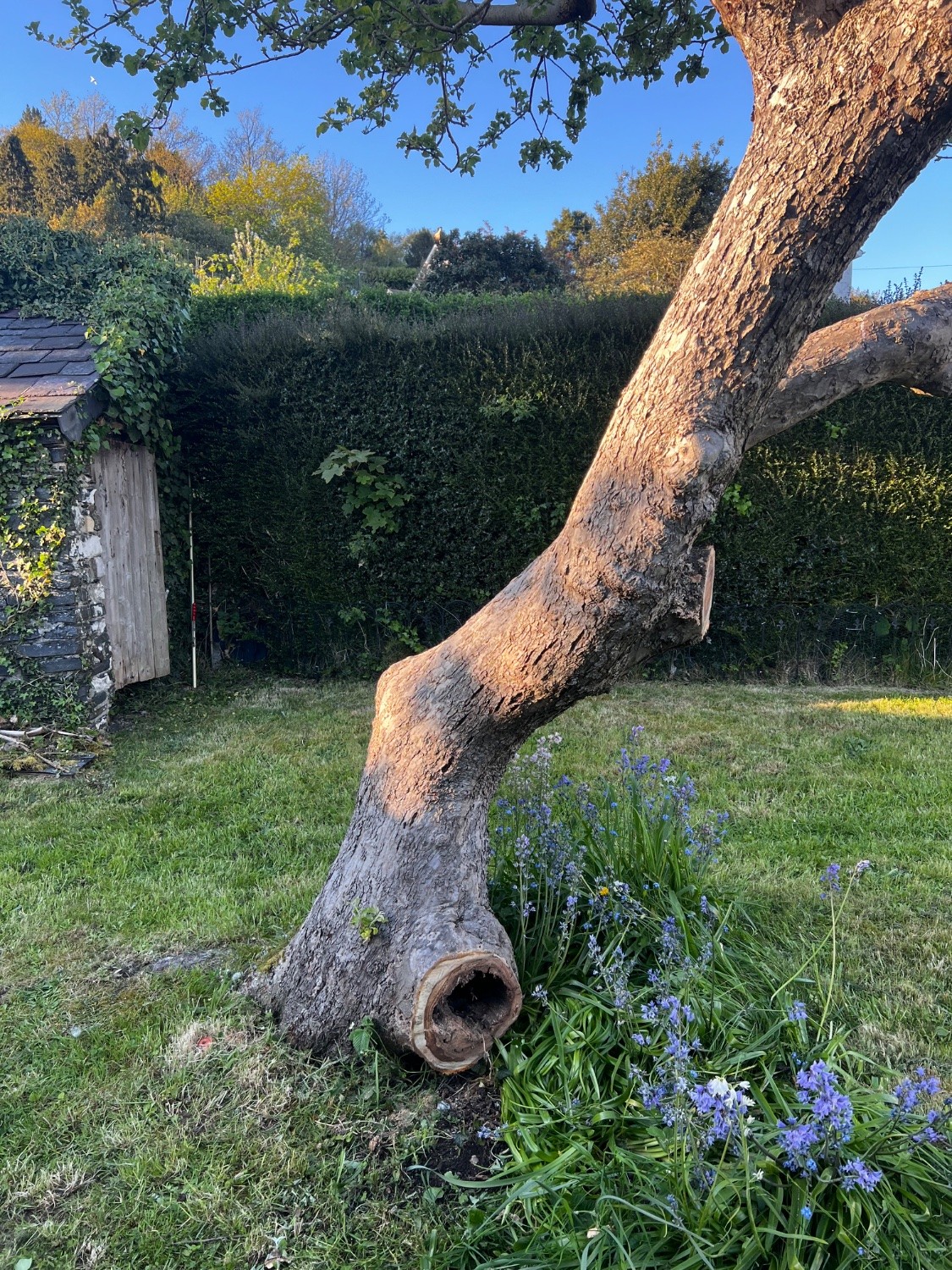
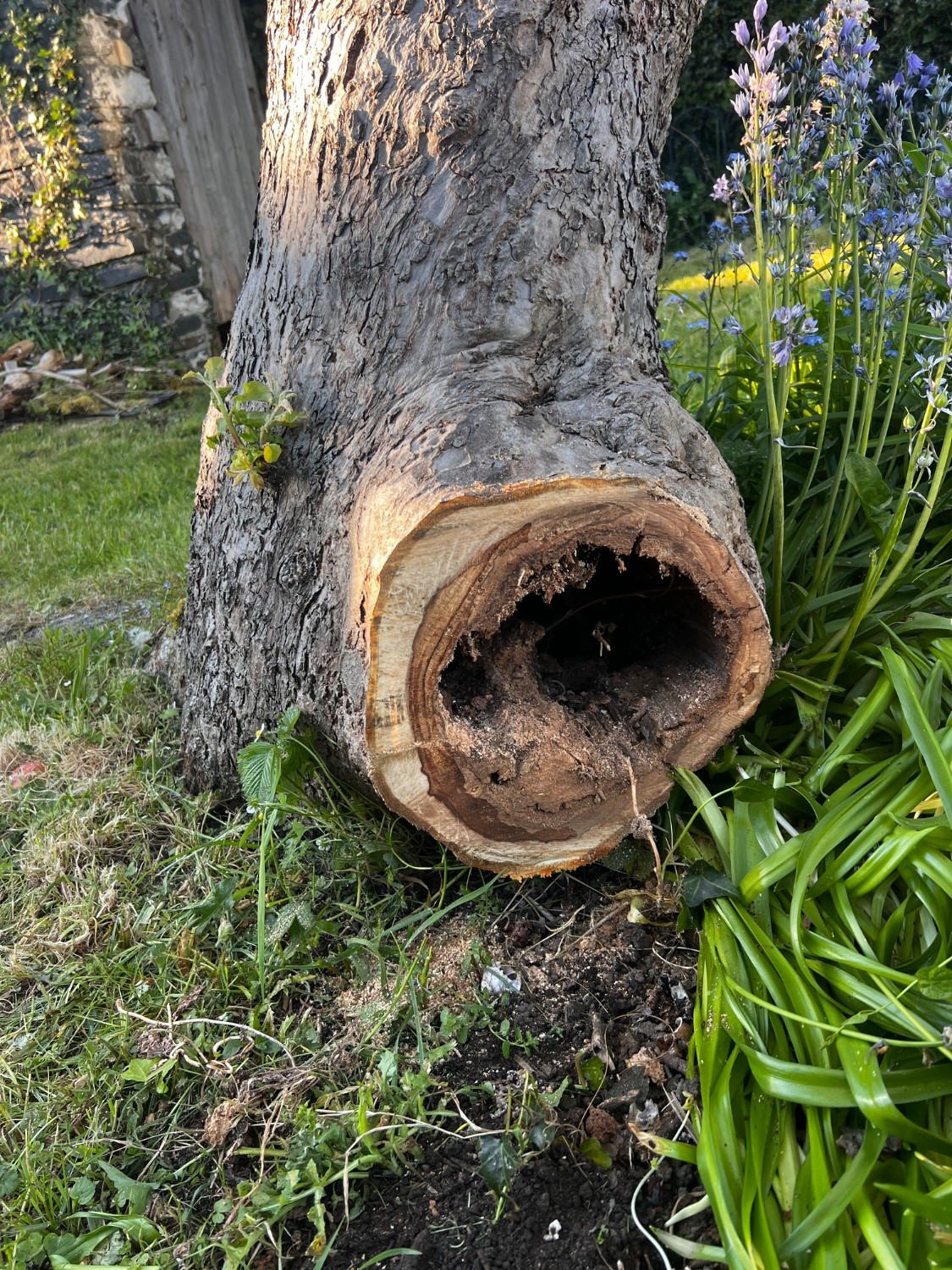
Pretty old apple tree in the garden which produces hundreds of not-great-tasting apples every year looks like it’s in a bit of a state. I had to cut back a weird branch that had been cut before, presumably because it shot out horizontally, and there’s a ton of rot.
It’s not in danger of hitting any buildings if it ever does fall, although could maybe take out a distracted child or two if I’m lucky.
Is there anything I can do to save it?
Sure. It is really common to see trees planted too deep. If the trunk looks like a telephone pole it is probably planted too deep. The base of the tree should flare out visibly. Unfortunately a lot of trees are too deep when you buy them. This makes tree selection at the nursery very important.
“Mulch volcanos” are a common way you see landscapers apply mulch to trees. The mulch piled up the sides of the tree. When mulching a tree you should use 2"-3" of mulch out to the drip line (edge of the leaves). No deeper than this, and the mulch can’t touch the bark of the tree. Wet mulch on the bark encourages fungal growth and pests.
These are both really important for tree health because tree roots need access to oxygen. Being planted too deep or adding too much mulch will starve the roots of oxygen and ultimately lead to tree decline. It won’t be a fast death. It could be five years before you start seeing your tree struggle. I have a pamphlet I was gonna take a picture of, but I’m in the middle of a move so it’s packed away.
!remind me when you finally finish moving to a new place
Very much appreciated!
Are you saying that on a nursery tree, if the flare is buried it is already a lost cause? (As in, there’s no way to excavate it out and leave it exposed when transplanting into the soil that will actually work?)
Not at all. You can gently excavate down until the root flare is exposed in most cases. It is, however, a red flag for how the tree has been taken care of and if you can find a better looking one it’s easier to just go with that one.
That makes a ton of sense!
EDIT: Final question: do you know if there is something similar that applies to more “vine-y” fruit plants like raspberries and grapes?
The same principles should apply to any woody perennial plant, but maybe not exactly. You still don’t want them planted too deep, but they might not have a visible root flare. Since they are smaller, faster growing plants than trees I think they adapt better to inconveniences. But don’t quote me on that. They are technically covered by arboriculture but I do 95% of my work with trees. Vines and brambles aren’t really my area of expertise.