

From Loel Lamela
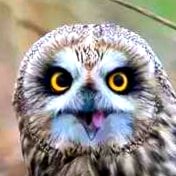
"The White-fronted Scops Owl is among Southeast Asia’s rarest, least understood, and most threatened owl species, making it one of the premier birding highlights of Thailand’s Kaeng Krachan National Park. Its extreme rarity stems from its very small global population and its dependence on increasingly scarce specialized habitats. A strict lowland forest specialist, it survives only in pristine, mature evergreen rainforests and riverine bamboo forests, generally below 700 meters above sea level. Kaeng Krachan National Park remains one of the few places on Earth where these vital lowland forest canopies are still protected, offering birders on guided tours one of the best opportunities to observe this elusive species in its natural habitat.
White-fronted Scops Owl (Otus sagittatus)… 60th Lifer for 2024… Rare… Listed globally as Vulnerable, but classified in Thailand as Endangered… Resident to Thailand… Kaeng Krachan National Park… April 27, 2024… Canon EOS R5… EF 600mm f/4L IS II USM + 2x III Extender @ 1,200mm… Tripod shot @ 15.0 meters… ISO12800 @ 1/100 & f/8
Aww, I feel bad now since I have to tell you that you’re not correct. 😅
It’s scops with an ahh sound, not the long o sound. You are right about the original word being the Greek skops, but those pesky scientists chose the New Latin scops, so it lost the long o.
It does fit standard English pronunciation that way as well, so it probably would have lost that long o regardless. Without the vowel-consonant-vowel structure, the o would get shortened. Just like in scops vs scopes. The e is silent, it just changes the way the o is pronounced.
The elf owl would also not be a scops as it is a round headed owl, no plumicorns.
Buuuut, you did get that it that one of these guys was named after a person!
The elf owl is Micrathene whitneyi, because it was formerly called Whitney’s Owl, after geologist Josiah Dwight Whitney.
Naturalist James Cooper was the one who is credited for first describing the owl for science, and named it after the leader of the California Geological Survey. The survey yielded unprecedented amounts of mining and naturalist data, it led to the creation the US Geological Survey.
TIL this is why the USGS is in charge of all US bird banding! So though I had to correct you, you ended up teaching me something! This is why I love answering all the questions you guys have!