Okay, I may have understood why we can’t understand each other (beside my poor English, which is I presume a big part of the problem). The idea that these texts come from oral traditions from the bronze age was abandoned decades ago… they are far more recent than that. The book of Exodus, for example, was written in its first form in the 7th century BCE (exactly when Egypt regains power in the Middle East, and it’s not a coincidence), and rewritten again and again; we still find (small) variations on the text in the 10th century CE! But it’s more or less finished by the period of Alexander the Great. It may contain traces of oral tradition, but nothing very older; it was a written document Does it make more sense to you in this timeframe?
That probably is a major issue here. Your argument regarding Exodus, however, only applies to Exodus - you explicitly noted Leviticus as part of your argument for rewriting scriptures, but the laws in Leviticus are pretty generally accepted to long-predate its 6th century BCE written composition. Not only that, but the idea that Exodus is itself made from ‘whole-cloth’ a la Esther is not a popular position to my knowledge, with the older position being that the oral tradition was a singular cultural memory closer to the text as-is; and the newer, more mainstream position being that Exodus was a compilation of oral folklore, which would have, again, been regarded as fundamentally true by those collating it.
My point is not that Exodus is reliable or true or ancient, but that it was believed to be such by the vast majority of Jewish scholars in the Second Temple Period, and was unlikely to have been consciously or significantly altered precisely because of Jewish cultural norms regarding religious truth.
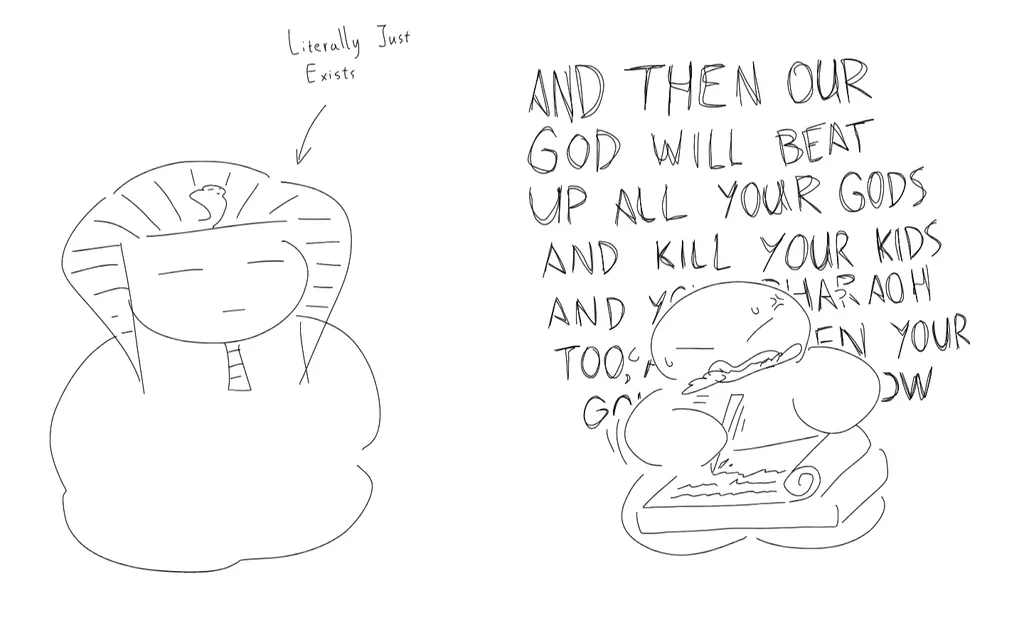
I don’t remember citing Leviticus, but it was written after Exodus, probably in the 5th Century BCE. Some rules are older, but not a lot, even if some may come from the Iron Age (but remember that David and Salomon, if they existed, didn’t have a big central temple; the “first temple” if it existed, was something far more modest who wouldn’t need all these rules). Second Temple period is when these texts were redacted from the first time, using small oral tradition from before, but with a lot of original composition. They chose the texts, they put them in order, they created a narrative around the small traditions they collated. They knew it was not historical, at least the parts they wrote themselves, it’s not possible otherwise. They probably thought that Moses existed, that he liberated the Hebrews; but they wanted to be true to what they believed was Moses’s legacy, not Moses’s life. And after that, other schools rewrote some parts, which were added, explaining why there are so much contradictions. These texts were living for centuries before being stopped; moreover, we now know thanks to Qumran that there never was one tradition, but different and opposing ones, probably until the late antiquity. If people thought that Exodus was written by Moses, they wouldn’t dare change it. The fact that they did proves that they didn’t think so.
It’s the same thing for the New Testament: the people writing the Second Epistle to the Thessalonians for example knew that they were not Paul (obviously), but they thought they were true to Paul’s legacy. And it was more important to say a true thing than a real thing.


That probably is a major issue here. Your argument regarding Exodus, however, only applies to Exodus - you explicitly noted Leviticus as part of your argument for rewriting scriptures, but the laws in Leviticus are pretty generally accepted to long-predate its 6th century BCE written composition. Not only that, but the idea that Exodus is itself made from ‘whole-cloth’ a la Esther is not a popular position to my knowledge, with the older position being that the oral tradition was a singular cultural memory closer to the text as-is; and the newer, more mainstream position being that Exodus was a compilation of oral folklore, which would have, again, been regarded as fundamentally true by those collating it.
My point is not that Exodus is reliable or true or ancient, but that it was believed to be such by the vast majority of Jewish scholars in the Second Temple Period, and was unlikely to have been consciously or significantly altered precisely because of Jewish cultural norms regarding religious truth.
I don’t remember citing Leviticus, but it was written after Exodus, probably in the 5th Century BCE. Some rules are older, but not a lot, even if some may come from the Iron Age (but remember that David and Salomon, if they existed, didn’t have a big central temple; the “first temple” if it existed, was something far more modest who wouldn’t need all these rules). Second Temple period is when these texts were redacted from the first time, using small oral tradition from before, but with a lot of original composition. They chose the texts, they put them in order, they created a narrative around the small traditions they collated. They knew it was not historical, at least the parts they wrote themselves, it’s not possible otherwise. They probably thought that Moses existed, that he liberated the Hebrews; but they wanted to be true to what they believed was Moses’s legacy, not Moses’s life. And after that, other schools rewrote some parts, which were added, explaining why there are so much contradictions. These texts were living for centuries before being stopped; moreover, we now know thanks to Qumran that there never was one tradition, but different and opposing ones, probably until the late antiquity. If people thought that Exodus was written by Moses, they wouldn’t dare change it. The fact that they did proves that they didn’t think so.
It’s the same thing for the New Testament: the people writing the Second Epistle to the Thessalonians for example knew that they were not Paul (obviously), but they thought they were true to Paul’s legacy. And it was more important to say a true thing than a real thing.