Because India didn’t do it. it didn’t chose to provide resources to the war. Britain did
it is colonisation. and the reason The British went to war with Germany is not to liberale it from Nazis. but because Hitler was doing colonization in Europe. Colonisation is only bad when done on Europeans, except the Irish.
This does not capture the full picture. India already had elected authorities and provincial autonomy through the Government of India Act 1935 at this point. Indian freedom fighters had effectively rubbed the hipocrisy of claiming to be stewards of democracy while depriving colonies of it in the faces of British colonial authorities so they had capitulated this much.
When the war broke out in September 1939, the Viceroy, Lord Linlithgow, declared India to be at war with Germany without consulting any of elected Indian provincial governments. This led to significant discontent and civil unrest.
For this reason, in order to maintain the cooperation of Indian businesses during the war, they “purchased” goods and services from these businesses.
They printed Indian rupees to pay for goods and credited the equivalent value in British pounds to an account in London. These were known as Sterling Balances.
During the war, as the Indian economy became a massive exporter and Britain became a massive debtor, the “market value” of the rupee should have naturally risen.
By keeping the exchange rate artificially low and fixed, Britain was able to “buy” Indian resources much more cheaply than they would have in a free market.
This massive printing of rupees also triggered hyperinflation within India, leading to a soaring cost of living for the local population.
By the end of the war, India had transitioned from a debtor nation to one of Britain’s largest creditors, holding nearly £1.3 billion in debt.
Even though India technically “owned” over £1.3 billion by the end of the war, they weren’t allowed to spend it freely.
Britain forced India to remain within the “Sterling Area.” This meant India could only spend its credits on goods from Britain or other British colonies.
India desperately needed American machinery and technology to industrialize after the war. However, Britain refused to let India convert its Sterling Balances into U.S. Dollars, effectively forcing India to wait until British industry recovered enough to sell them goods (often at higher prices).
After the war, Britain was nearly bankrupt. John Maynard Keynes and other British officials argued that the Sterling Balances should be “scaled down” or even canceled.
They argued that since Britain had “saved” India from Japanese invasion, India should consider the debt a contribution to the common cause of the war.
Indian leaders, including those in the interim government before independence, fiercely resisted this. They argued that the debt represented the “blood and sweat” of the Indian people, pointing to the Bengal Famine as the price already paid.
In 1949, shortly after Indian independence, Britain devalued the Pound Sterling.
Because India’s credits were held in Pounds, the purchasing power of those balances on the international market (specifically for buying goods from the U.S. or Europe) dropped overnight.
This effectively wiped out a significant portion of the real value of the debt Britain owed to India (between 30 to 50%).
During the war, the British government explicitly agreed to the terms of these “purchases.” They used Indian grain, steel, and labor to win a global war that in part saved Britain itself from Nazi invasion. To later suggest that the debt should be canceled because they “protected” those that they borrowed from is often viewed by economists as an attempt to retroactively change the terms of a loan because the borrower went broke.
So, this contribution was not made entirely without the consent of the Indian people. It was an arrangement with the Empire based on the understanding that they would eventually pay back their debt. They did not.
That’s wonderful. I’m thrilled to see India breaking the shackles of colonialism and rapidly developing and I’m optimistic towards seeing the same happen in Africa. I’m all for seeing people thrive after surviving imperialism.


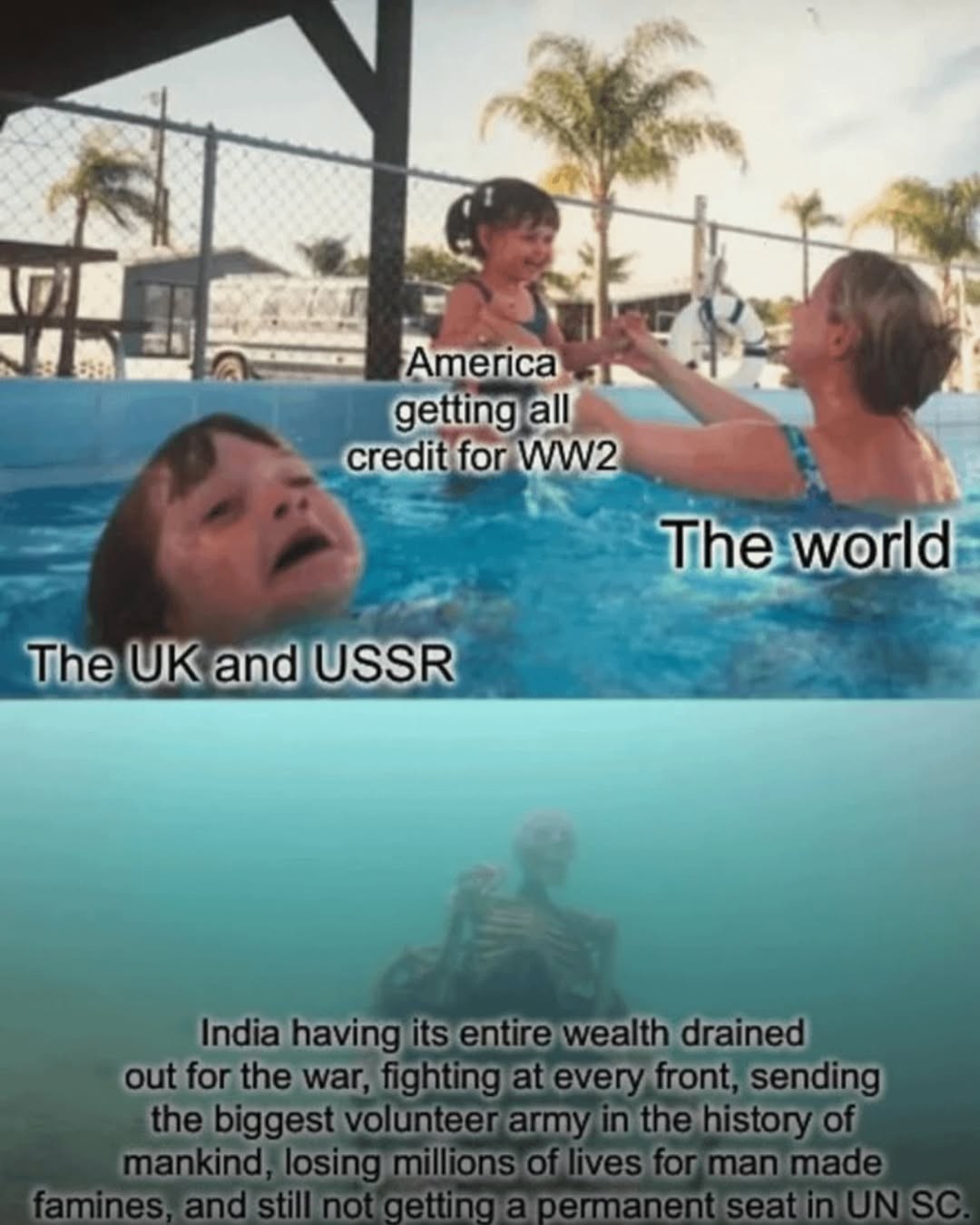
Because India didn’t do it. it didn’t chose to provide resources to the war. Britain did
it is colonisation. and the reason The British went to war with Germany is not to liberale it from Nazis. but because Hitler was doing colonization in Europe. Colonisation is only bad when done on Europeans, except the Irish.
This does not capture the full picture. India already had elected authorities and provincial autonomy through the Government of India Act 1935 at this point. Indian freedom fighters had effectively rubbed the hipocrisy of claiming to be stewards of democracy while depriving colonies of it in the faces of British colonial authorities so they had capitulated this much.
When the war broke out in September 1939, the Viceroy, Lord Linlithgow, declared India to be at war with Germany without consulting any of elected Indian provincial governments. This led to significant discontent and civil unrest.
For this reason, in order to maintain the cooperation of Indian businesses during the war, they “purchased” goods and services from these businesses.
They printed Indian rupees to pay for goods and credited the equivalent value in British pounds to an account in London. These were known as Sterling Balances.
During the war, as the Indian economy became a massive exporter and Britain became a massive debtor, the “market value” of the rupee should have naturally risen.
By keeping the exchange rate artificially low and fixed, Britain was able to “buy” Indian resources much more cheaply than they would have in a free market.
This massive printing of rupees also triggered hyperinflation within India, leading to a soaring cost of living for the local population.
By the end of the war, India had transitioned from a debtor nation to one of Britain’s largest creditors, holding nearly £1.3 billion in debt.
Even though India technically “owned” over £1.3 billion by the end of the war, they weren’t allowed to spend it freely.
Britain forced India to remain within the “Sterling Area.” This meant India could only spend its credits on goods from Britain or other British colonies.
India desperately needed American machinery and technology to industrialize after the war. However, Britain refused to let India convert its Sterling Balances into U.S. Dollars, effectively forcing India to wait until British industry recovered enough to sell them goods (often at higher prices).
After the war, Britain was nearly bankrupt. John Maynard Keynes and other British officials argued that the Sterling Balances should be “scaled down” or even canceled.
They argued that since Britain had “saved” India from Japanese invasion, India should consider the debt a contribution to the common cause of the war.
Indian leaders, including those in the interim government before independence, fiercely resisted this. They argued that the debt represented the “blood and sweat” of the Indian people, pointing to the Bengal Famine as the price already paid.
In 1949, shortly after Indian independence, Britain devalued the Pound Sterling.
Because India’s credits were held in Pounds, the purchasing power of those balances on the international market (specifically for buying goods from the U.S. or Europe) dropped overnight.
This effectively wiped out a significant portion of the real value of the debt Britain owed to India (between 30 to 50%).
During the war, the British government explicitly agreed to the terms of these “purchases.” They used Indian grain, steel, and labor to win a global war that in part saved Britain itself from Nazi invasion. To later suggest that the debt should be canceled because they “protected” those that they borrowed from is often viewed by economists as an attempt to retroactively change the terms of a loan because the borrower went broke.
So, this contribution was not made entirely without the consent of the Indian people. It was an arrangement with the Empire based on the understanding that they would eventually pay back their debt. They did not.
fuck the Brits. Churchill statues belong in the river.
And I like how the part of Ireland that didn’t give up is far better off today!
That’s wonderful. I’m thrilled to see India breaking the shackles of colonialism and rapidly developing and I’m optimistic towards seeing the same happen in Africa. I’m all for seeing people thrive after surviving imperialism.