AI is consuming staggering amounts of energy—already over 10% of U.S. electricity—and the demand is only accelerating. Now, researchers have unveiled a radically more efficient approach that could slash AI energy use by up to 100× while actually improving accuracy. By combining neural networks with human-like symbolic reasoning, their system helps robots think more logically instead of relying on brute-force trial and error.
That’s the neat part, once you drop the cost of running these things sufficiently, you don’t need datacenters because people can just run the models locally. We’re currently in the mainframe era of AI, but the pendulum is already swinging towards personal computing as local models continue to improve. These kinds of breakthroughs are going to accelerate the process.
i am kind of pessimistic because i feel like the profit motive will impede the mass implementation of local models. it feel like all good web / tech things stay too niche to make a difference.
That’s just the Silicon Valley model though. Look at China for contrast. Companies there treat models as foundational infrastructure, and they’re not trying to monetize them directly. Hence why we see so much open source work coming out of there right now. It’s a similar situation we see with Linux incidentally. A lot of companies contribute to its development, but they monetize things like AWS that are built on top of it. However, even without company engagement, people will continue to work on open source as they always have. It doesn’t really matter if it goes mainstream or not.
What’s happening currently is a bubble that’s not in any way sustainable. And energy prices going through the roof thanks to the war could even be the catalyst that pops it. But as I noted earlier, we’ve gone through this cycle many times in tech world. New tech often requires a ton of resources to run which creates the mainframe era, then it gets optimized overtime, and moves to edge devices. I don’t see anything special about LLMs here. We’re just in very early stages of new technology.
There’s a competitive advantage to squeezing more compute out of the same GPU cluster with software optimizations that indirectly favors local models. It just depends on whether the optimization work can proceed fast enough to make the DC expansion approach obsolete (or at have a less profitable ROI).

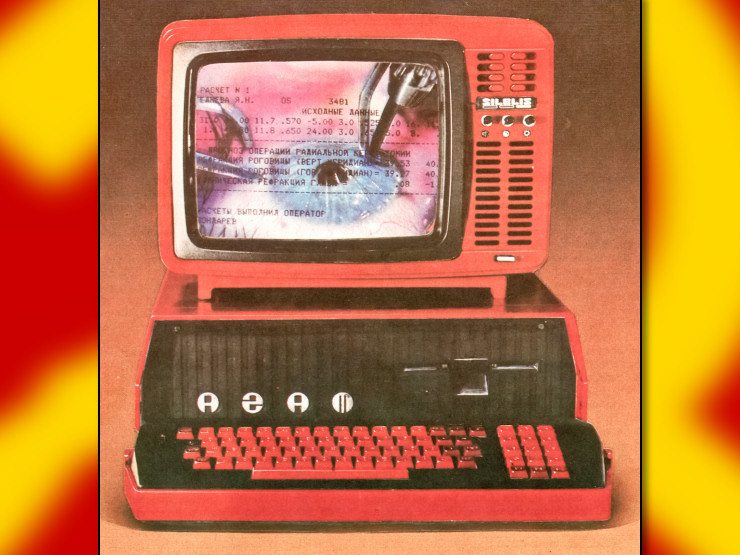

That’s the neat part, once you drop the cost of running these things sufficiently, you don’t need datacenters because people can just run the models locally. We’re currently in the mainframe era of AI, but the pendulum is already swinging towards personal computing as local models continue to improve. These kinds of breakthroughs are going to accelerate the process.
i am kind of pessimistic because i feel like the profit motive will impede the mass implementation of local models. it feel like all good web / tech things stay too niche to make a difference.
That’s just the Silicon Valley model though. Look at China for contrast. Companies there treat models as foundational infrastructure, and they’re not trying to monetize them directly. Hence why we see so much open source work coming out of there right now. It’s a similar situation we see with Linux incidentally. A lot of companies contribute to its development, but they monetize things like AWS that are built on top of it. However, even without company engagement, people will continue to work on open source as they always have. It doesn’t really matter if it goes mainstream or not.
It does matter for it to be environmentally sustainable
What’s happening currently is a bubble that’s not in any way sustainable. And energy prices going through the roof thanks to the war could even be the catalyst that pops it. But as I noted earlier, we’ve gone through this cycle many times in tech world. New tech often requires a ton of resources to run which creates the mainframe era, then it gets optimized overtime, and moves to edge devices. I don’t see anything special about LLMs here. We’re just in very early stages of new technology.
There’s a competitive advantage to squeezing more compute out of the same GPU cluster with software optimizations that indirectly favors local models. It just depends on whether the optimization work can proceed fast enough to make the DC expansion approach obsolete (or at have a less profitable ROI).