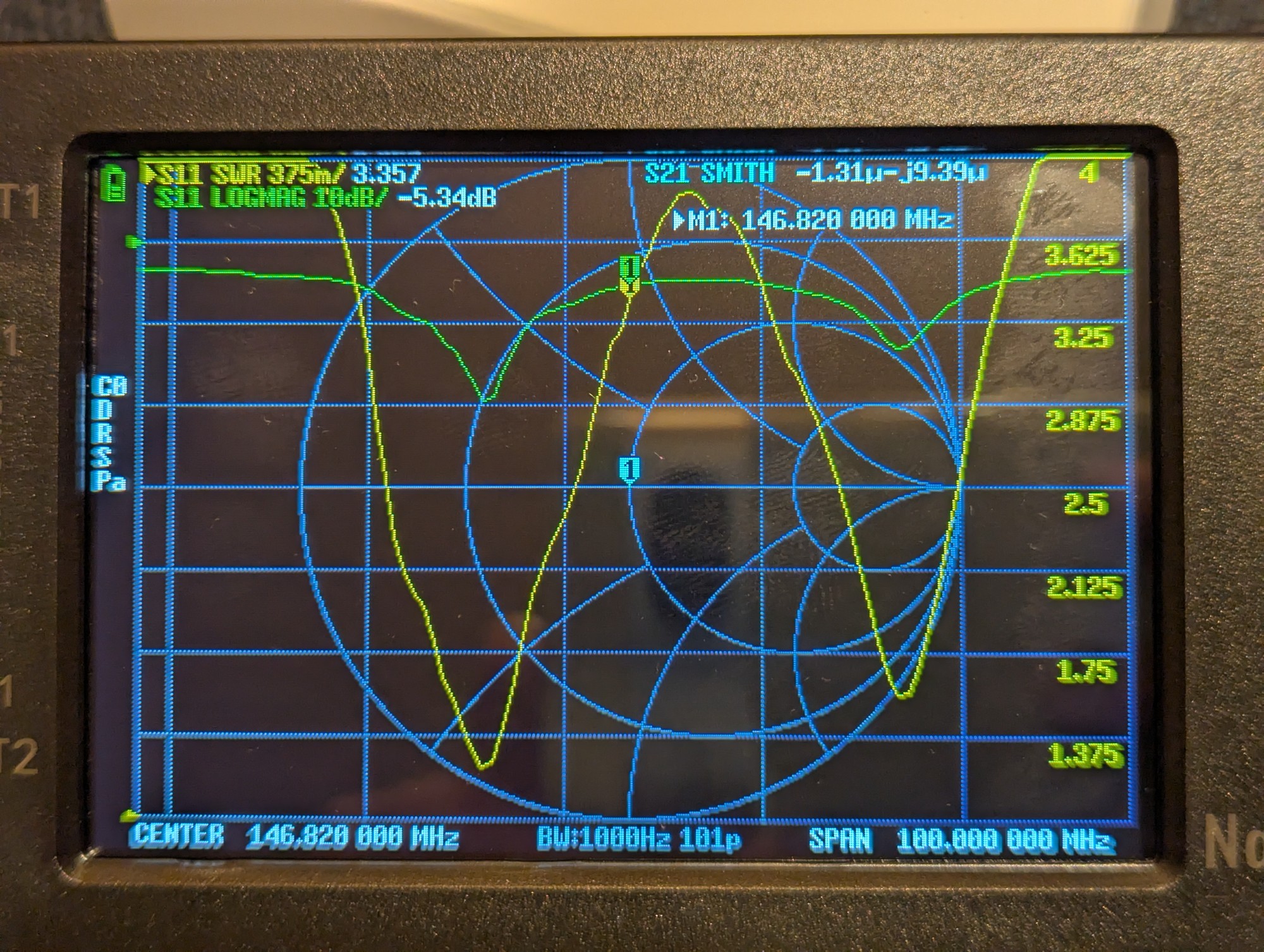
I got a J-Pole for VHF/UHF on Craigslist, and now that I have a NanoVNA (highly recommend!), I can see it’s not correctly tuned for 2m. It looks like it’s about 50MHz low for my 146MH ideal center, and while SWR of 3.4 is kinda usable, from what I read it’s not great for the radio nor ideal for transmission.
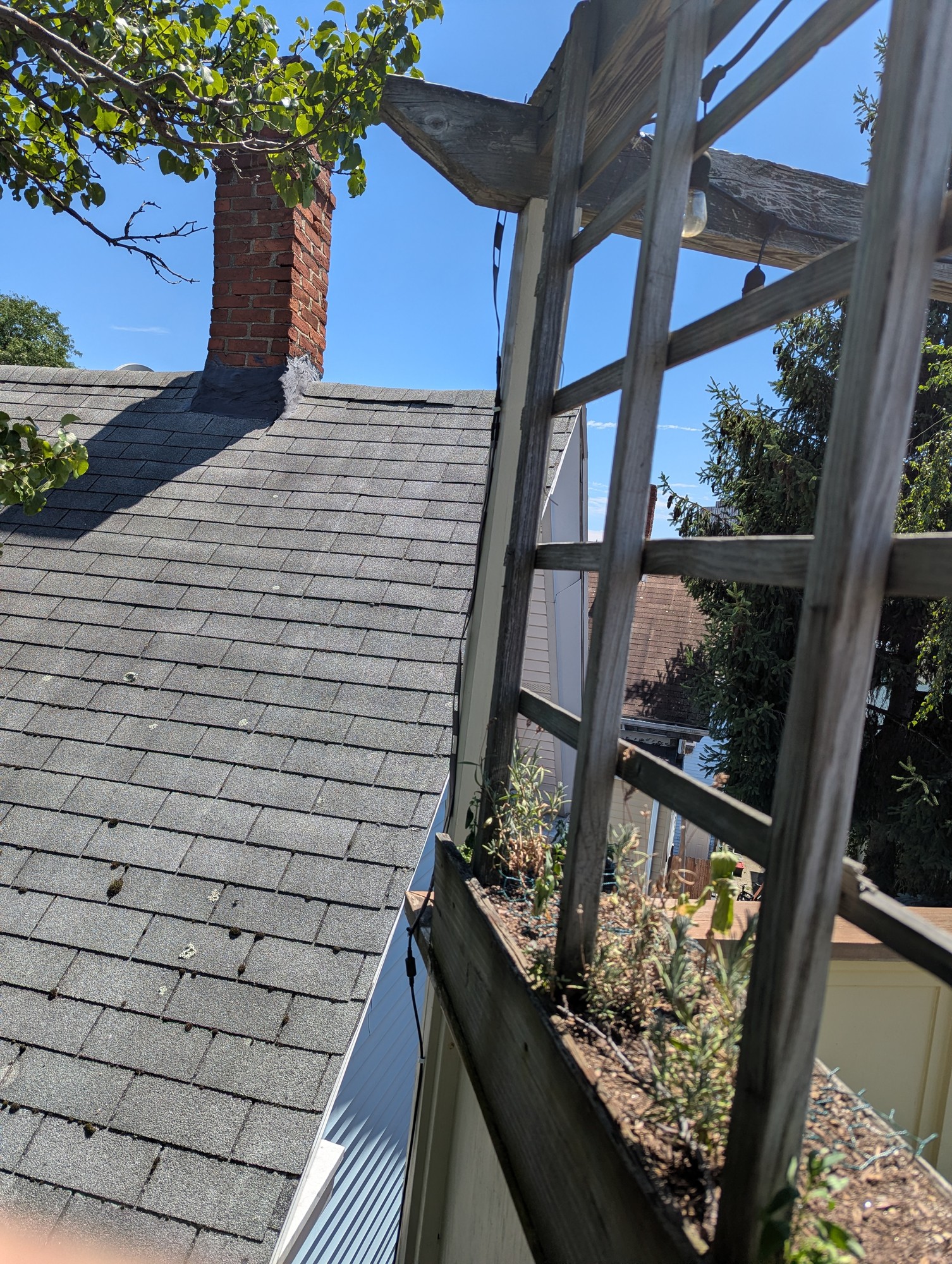
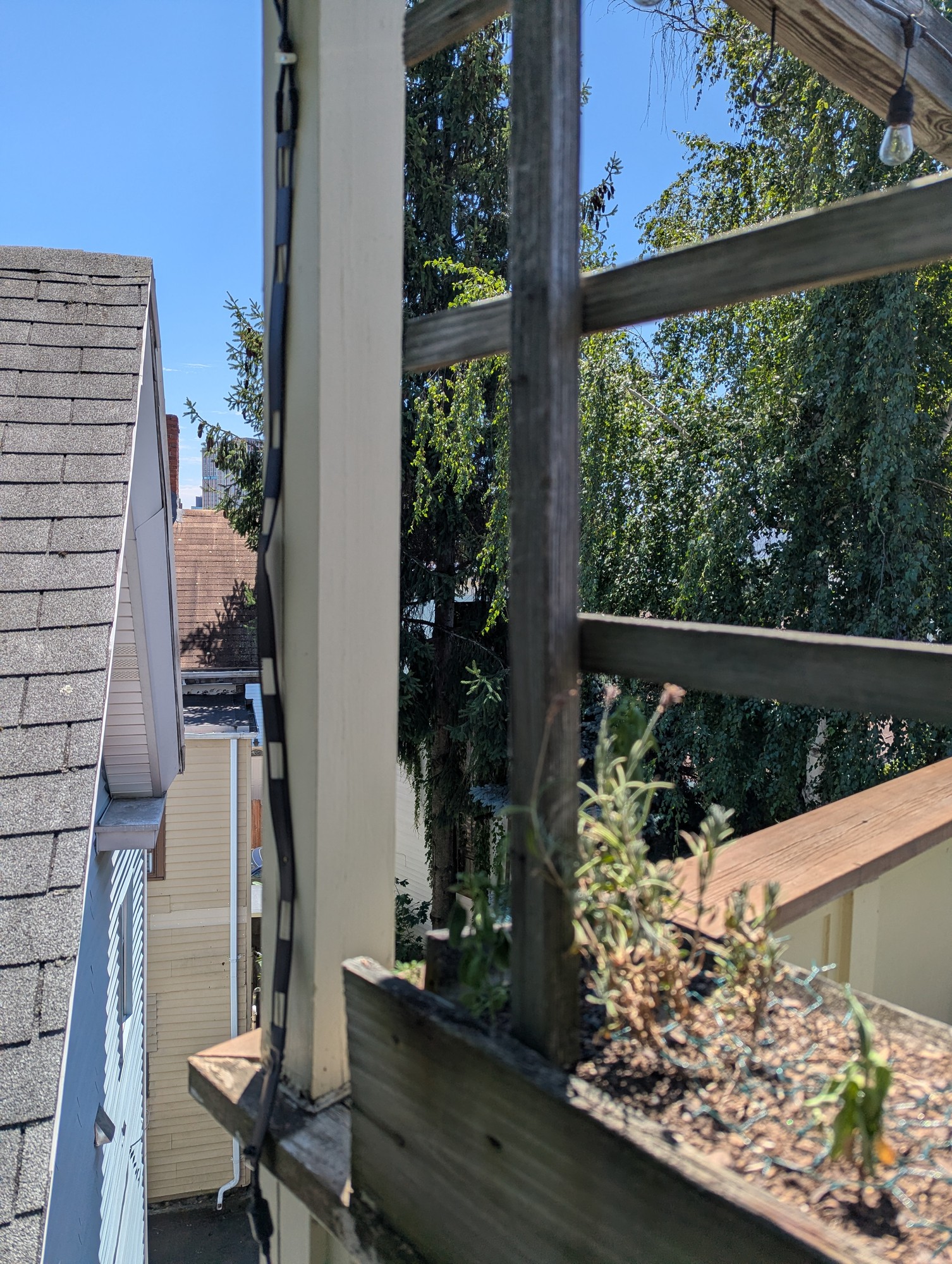
The antenna is made from ladder line, with a gap near the bottom (the defining characteristic of a J-pole I believe) and a twist in the center. It’s mounted to a 4x4" wooden post on my roof deck, with a small nail at the top and a plastic+nail coax clip near the bottom. There’s a string of party lights near the top (almost always unplugged) which I discovered was severely detuning my HF dipole that ran parallel to it; but the J-pole is perpendicular and I don’t have another better mounting option.
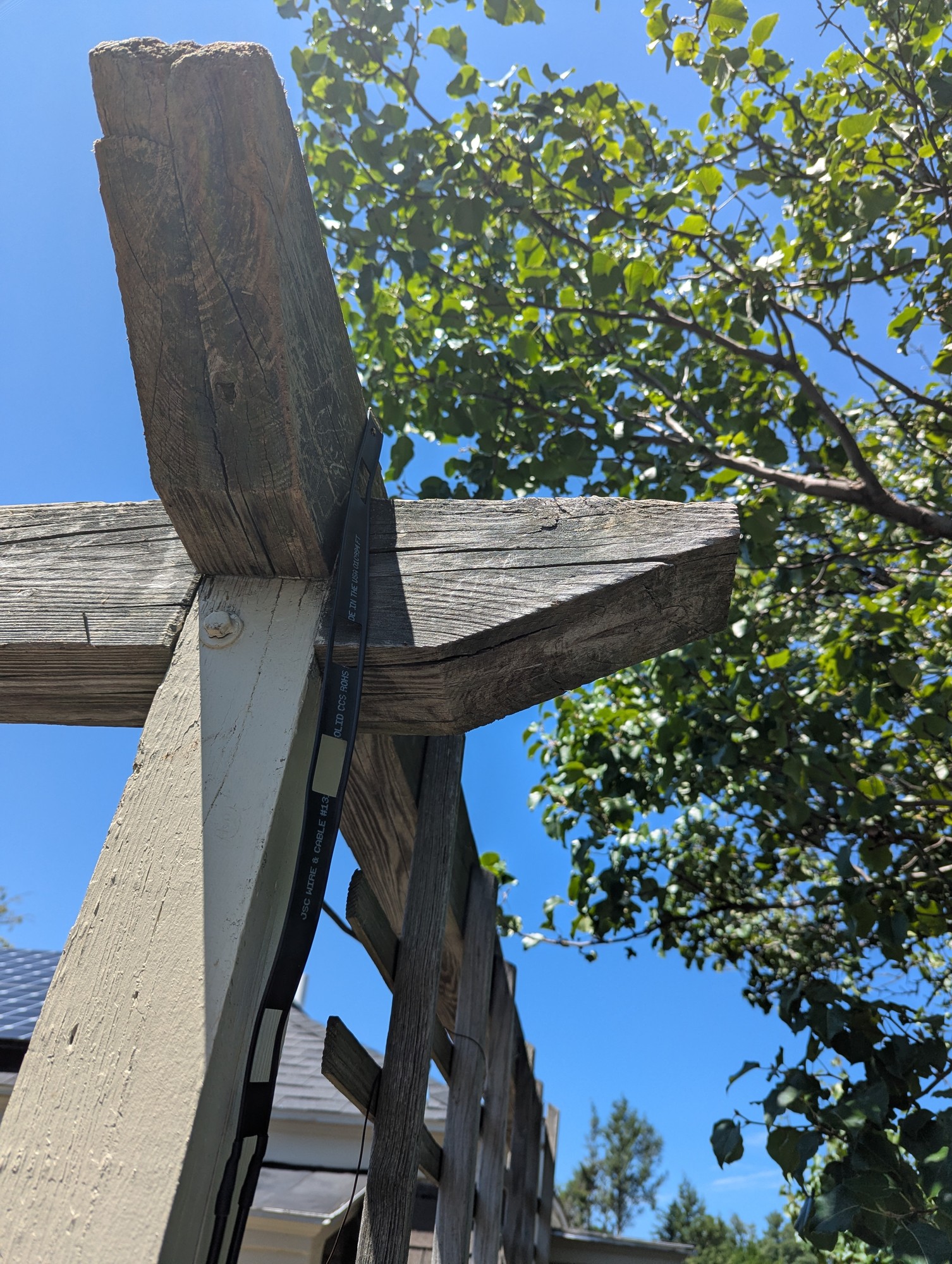
I’ve read advice on tuning J-poles but it was too technical, and I didn’t understand which part to trim. Is there somewhere I can trim without having to re-solder? (I’m comfortable soldering, but would prefer not to in this case since it’s physically awkward to either solder in place or take it down/up.) Or can I do something to raise the resonant frequency non-destructively?
Thanks for any advice!
have you calibrated your nanovna? you have to do that after every change of frequency range. you need S11 smith chart, not S21 smith chart (port 2 is not connected). swr and logmag get you the same info in different formats, pick 1
1m away from metal things should be okayish but the more the better. these lights will interfere, if you could at least move them away from the corner it would be an improvement. twin lead cannot be close to metal either (is that sheet metal near bottom of antenna?) needs at least couple cm of distance from it. i would also replace that nail with a ziptie
strictly speaking that’s a slim jim. why does it have a twist in the middle? untwist it, the radiating part (upper approx 1m) should be a smooth transmission line for it to work right (or shorted at both ends)
If you want to preserve the way it’s made, you’d need to resolder the top bar after adjustment. But you also can leave wires on top unconnected
Thanks for the terminology correction!
Removing the lights, taking the nails out, and untwisting the antenna lowered the SWR but didn’t improve the tuning.
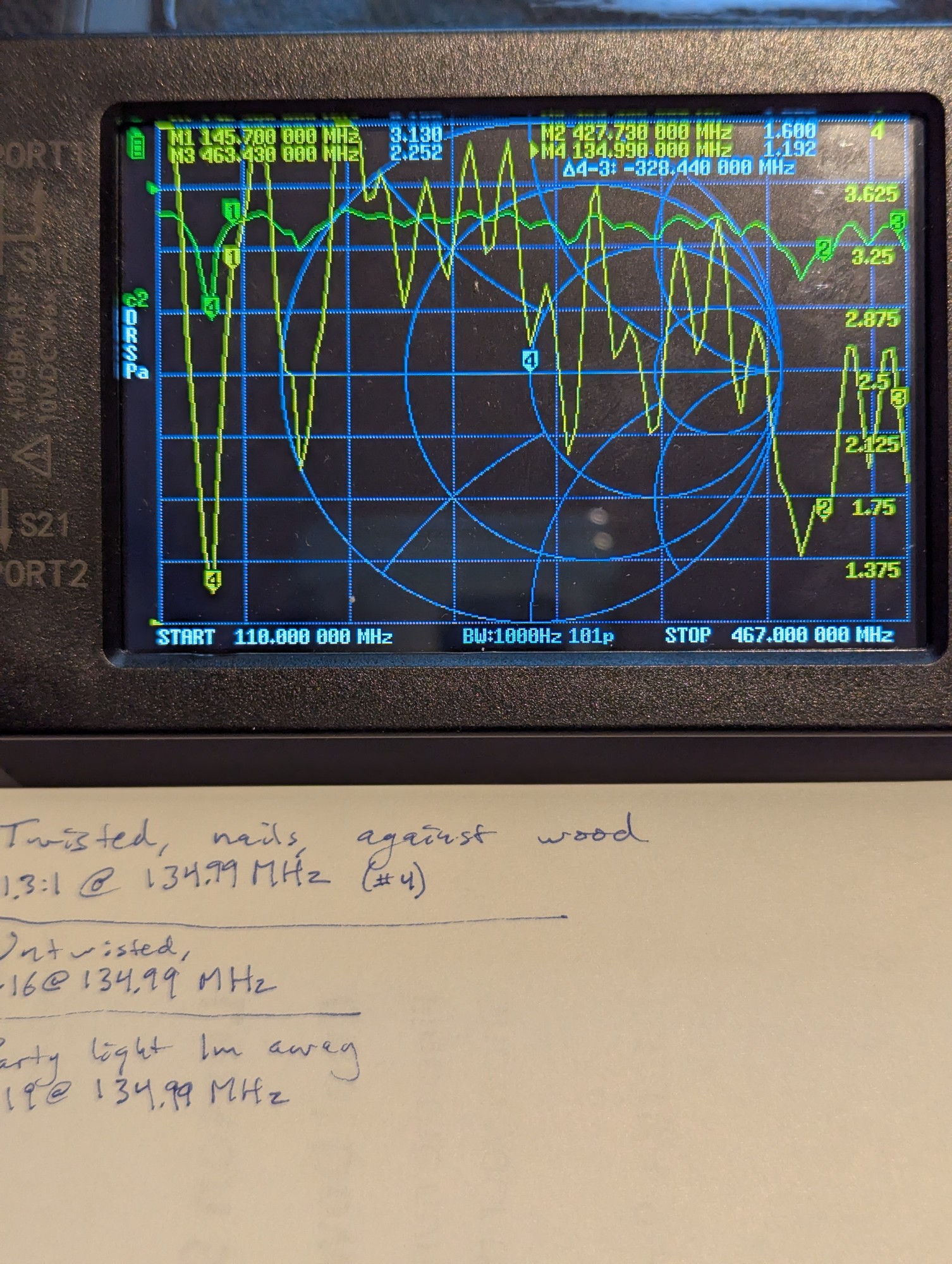
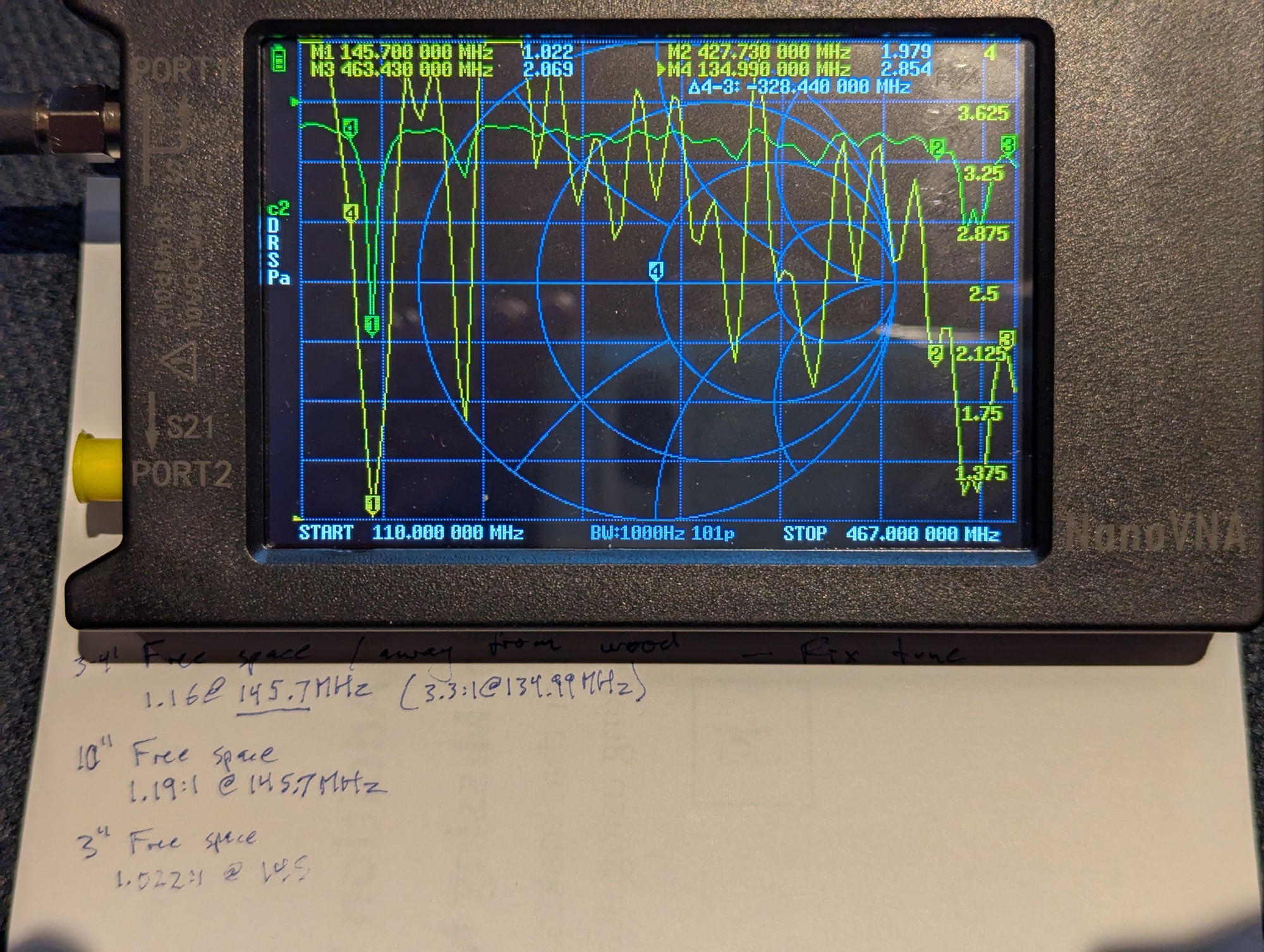
Moving it away from the 4x4 pillar, anywhere from 3" to several feet, fixed the tune.
I ended up using wood standoffs, since I didn’t have plastic, which seems to work fine.
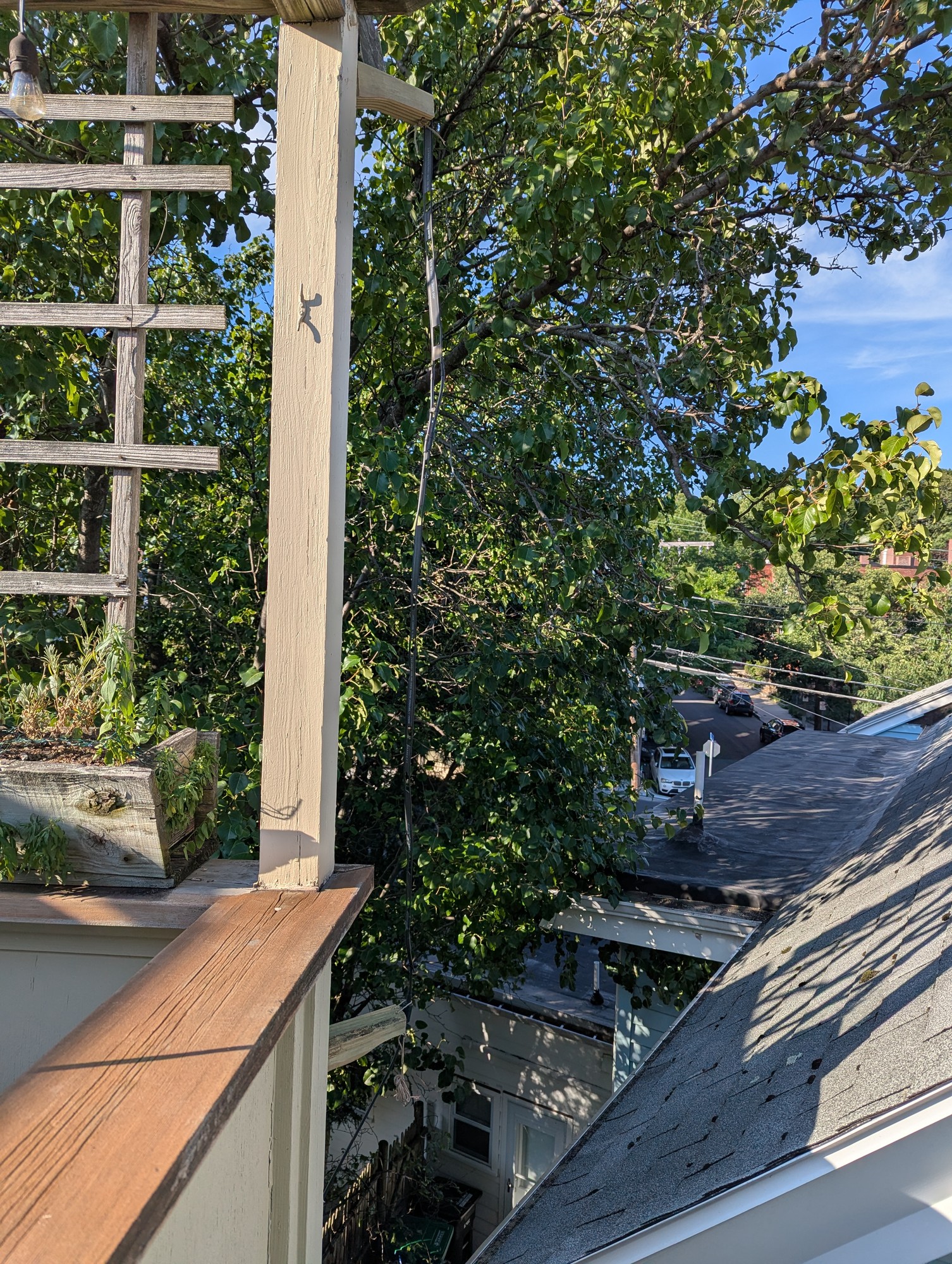
Huh weird. There must be something evil in that pole, it might be a piece of metal or maybe it’s wet or rotting inside. I’d use plastic things to tie it, because natural fibers will remain wet some time after rain, that might degrade performance. (zipties or nylon fishing line or whatever preferably monofilament). I see that bottom is secured too, this is good because in wind antenna could flap around and would stop working if it’s too close to the pole. If twin lead is slightly twisted and under strain (half turn per 30cm or so) then it should flutter less in wind, but you’ve got it spliced and i’m not sure how that would work. This is likely fine as is
J-pole type antennas are effectively monoband. They might work on 3rd harmonic which would be here 70cm band, but most of signal in this case goes up and down that is it’s useless and the signal that goes out horizontally is 6db weaker than what it would be with J-pole for that band. So you can take more precise measurement by zooming in to 130-160MHz or even 140-150MHz, this way you’ll see how low does SWR go at band edges because now you can only see that there is minimum somewhere in the band. I don’t know how much your radio tolerates, but 1:1.5 is generally pretty good. On receive only it might be good also at other frequencies, but dedicated antenna would be likely better
I don’t know if you have calibrated your VNA with cable or not, you can use Smith chart if you do calibrate it with cable but without it, SWR shouldn’t change too hard with any reasonable length of cable (Smith chart rotates once per half wavelength of feedline). This is useful especially if you make your own antennas, but here it’s fine just to make sure that SWR is low