
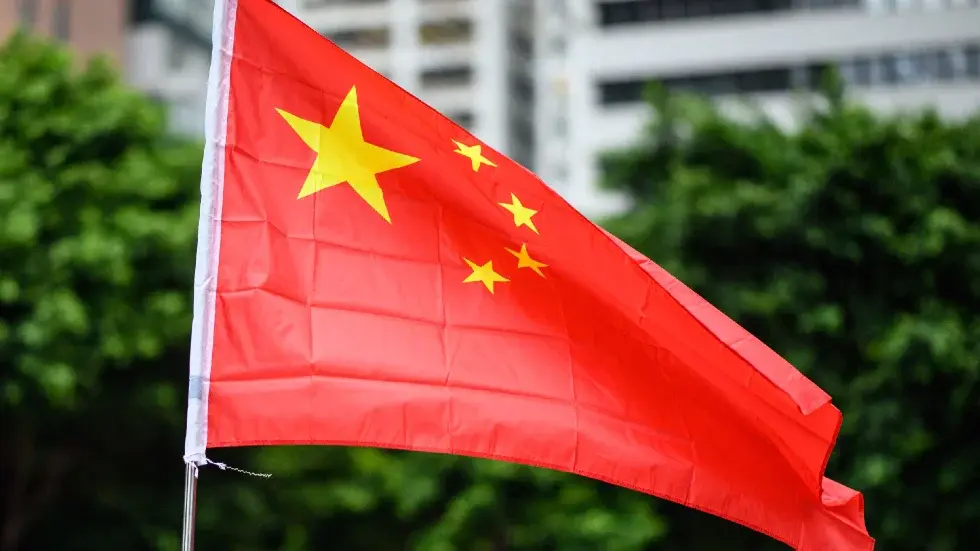

I am a Marxist in China
Orthodox Marxists in the Chinese internet community often view Russia and Iran as weak links in imperialism, rather than as anti-imperialist forces .However, in the view of Chinese Marxists, opposing the global hegemony of the United States takes precedence over opposing secondary imperialisms (Iran, Russia).
The person in the picture is Yang Heping, a US citizen with a Chinese green card, and he is the most popular orthodox Marxist-Leninist-Maoist self-media figure on the Chinese internet (with 3 million followers on Tiktok and 800,000 on Bilibili). Yang Heping advocates that whether it’s Ukraine, Russia, or Iran, “the truth is on the side of the proletariat, not on the side of any government or capitalist.”
In China, those who unconditionally support Iran and Russia are usually nationalists or national leftists.
I wonder if the differences between the left-wing in Europe and America and the left-wing in China are really that significant?
I have a very hard time understanding the post actually.
What is the meaning of this statement in this context? It doesn’t give any answers and lacks substance.
If the US succeeds in subduing Iran and the EU/NATO succeeds in weakening Russia to the point of fragmentation, then China is left as the only major obstacle to Western hegemony. In such a world, the US would be more aggressive in the Pacific, sanctions and blockades would become easier to enforce, the Belt and Road Initiative would face greater pressure, Cuba and other sanctioned states would become more isolated, and anti-colonial governments in places like the Sahel would lose important sources of external support. This would be bad for the proletariat. Generally a strong Russia and a strong Iran is essential for increased multipolarity and a stronger development of the material conditions of the working class.
This support is not unconditional but critical.
Meaning what? That they are themselves imperialist, not just to the degree of western states? From a ML standpoint this is laughable, what is the definition of imperialism then? It is not the usual Leninist one that’s for sure.
I encourage the discussion but I think if we are to arrive at to any fruitful conclusions you must clarify a few premises beforehand, otherwise it will be hard to understand what the different positions are in the first place.
“the truth is on the side of the proletariat, not on the side of any government or capitalist.”This is just a brief summary of his theory. If you want to hear more, I can convey his arguments, but to be honest, I don’t think you want any communication with me at all. You said, “This is not Leninism,” but you didn’t provide any arguments either.
Lenin’s theory: Lenin pointed out that the fundamental economic characteristic and essence of imperialism is the “replacement of free competition by monopoly.” To ensure the “survival” and continued growth of domestic capital, monopoly capital groups are compelled to export capital globally and seize resources and markets.
Yang Heping’s arguments:
The Russia-Ukraine War: He argues that Russia not only harbors territorial ambitions reminiscent of the Tsarist era, but its regime is also essentially controlled by a monopoly-oligarchic capitalist class that emerged following the “restoration of capitalism.” Russia’s invasion of Ukraine was not merely an act of geopolitical security defense; rather, it was an act of aggressive expansion driven by its domestic monopoly capital seeking to advance its own interests and carve up spheres of influence.
US-Iran/US-Russia conflicts: As the world’s most powerful “super-monopoly” imperialist state, the US wages wars (such as the Iraq War) to consolidate the hegemony of the US dollar and secure control over core resources like oil.
Any other late-developing nation that embarks on the path of capitalism and develops monopoly capital will inevitably follow the same path of striving for global dominance.
Lenin’s Theory: Lenin posited that “uneven development is an absolute law of capitalism.” Established imperial powers decline while emerging ones rise, leading to shifts in the balance of power.
Yang Heping’s Argument: He applies this theory to explain the imperial rivalries between the US and Russia, and between the US and China. He points out that the US is not the world’s sole imperialist power; the essence of the Russia-Ukraine war lies in a struggle to re-divide spheres of influence between an “established hegemon” (US imperialism) and a “rising imperial power” (Russia).
As long as capitalism exists, the ultimate “fundamental solution” to the conflicts between interest groups driven by uneven development is war.
Leninist Theory: During World War I, Lenin distinguished between “unjust imperialist wars of plunder” and “just wars of national liberation.” He argued that determining the nature of a war depends not on which side fired the first shot (a matter of diplomatic history), but on the class character of the ruling classes of the belligerent nations.
Yang Heping’s Argument: Yang Heping uses this framework to sharply criticize the nationalist double standards held by the “pro-Russia” faction within the country. He emphasizes that the ruling classes on both sides of the Russia-Ukraine conflict are bourgeois; consequently, for Russia, this is an unjust, predatory imperialist war of aggression, whereas for the Ukrainian people, it is a struggle against aggression. One must absolutely not rationalize Russia’s act of aggression as a “just anti-imperialist” action simply out of opposition to US imperialism.
Lenin’s Theory: Lenin sharply criticized Kautsky’s “theory of ultra-imperialism” (the notion that imperialism could peacefully divide the world through negotiation rather than war) as well as “social pacifism,” which obscured underlying contradictions.
Yang Heping’s Argument: Yang Heping argues that, in an era when imperialist powers are locked in chaotic conflict and vying for hegemony, it is extremely naive to imagine that these nations could sit down and achieve genuine peace. He invokes this Leninist theory to urge the Left not to pin its hopes on compromises between major imperialist powers; instead, the proletariat must recognize the reactionary nature of the bourgeoisie on both sides of the conflict, rather than maintaining a so-called “neutrality” between the aggressor and the victim of aggression.
Lenin’s Theory: Imperialism, as the highest stage of capitalism, possesses unique economic dynamics that distinguish it from the aggression associated with slavery, feudalism, or early capitalism.
Yang Heping’s Argument: He illustrates this distinction through comparison. He argues that historical conflicts—such as the “India-Pakistan conflict” or the “Iran-Iraq War” of the 1980s—while involving warfare and plunder, were essentially traditional struggles for power and spoils among exploiting classes; they did not constitute the modern imperialist behavior of monopoly capital, which operates on the principle of “expand or perish.”
In contrast, conflicts such as those between the US and Iran or Russia and Ukraine are irreconcilable struggles for spheres of influence driven entirely by modern monopoly capital.
Yang Heping’s line of reasoning could even be described as dogmatic, as it remains consistently grounded in Lenin’s original texts; your arguments, by contrast, are almost entirely based on geopolitics. I do not believe you can effectively refute him from the perspective of Lenin’s own writings. Lenin’s objective was always to destroy all the capitalist nations involved in World War I—including his own homeland, Tsarist Russia—rather than to pursue “multipolarity” or “improvements in the working class’s living conditions”; his aim was to “launch an international revolution and immediately establish a proletarian regime.”
You miss understand imperialism. Imperialism is not simply whenever a war is not about national liberation. Imperialism according to Lenin is about the need to export capital. Russia exports mostly goods and resources. The world Bank lists Russia as developing nation. Foreign direct investment outflows out of Russia are negative. Russia is not imperialist. The capitalist class in Russia would make better profits without the war, even if they had lost the Ukrainian sphere of influence. The reason Russian capitalists need this war it to defend assets inside Russia from NATO imperialists. In repeated negotiations to prevent the war, NATO did not accept yes as an answer from Russia to their demands.
On the other hand, US capital would not survive without the forever wars. US absolutely needed this war, that’s why they started it. Remember, Putin wanted Russia to join NATO and become subservient under US. US didn’t accept, because of the absolute imperative to have war.
But granted, Russia was probably on the edge to become imperialist. It’s not as straightforward as in Iran’s case, where I think the case could be made much more easily to speak of a war of national liberation.
As I understand it, Lenin’s definition of imperialism was not based on a capital surplus, but rather on the proportion of monopoly capital or finance capital within a country. If one looks at the balance of capital inflows, Tsarist Russia—long a net importer of capital from Britain and France—certainly would not qualify as an imperialist power; yet, aside from Lenin, you would be hard-pressed to find anyone else in the world who was more intent on destroying Tsarist Russia.
I apologize if I sounded condescending, I now understand Yang Heping’s (YH) position. Contrary to your post, I think this is a very common one, especially among non-ML leftists organizations in the west. It seems that YH’s primary concern is guarding against class collaborationism. From what you wrote it seems he applies Lenin’s stance during WW1, not supporing bourgeoisie inter-imperialist conflicts, to prevent the Left from becoming cheerleaders for reactionary capitalist governments. This is a principle concern and obviously our ultimate goal is the emancipation of the proletariat and not the success of any bourgeois state.
However, applying Lenin’s 1914 framework to the 2020s without accounting for the shifted material conditions is (as you wrote) dogmatism, not dialectal materialism. Being “consistently grounded in Lenin’s original texts” is not really a thing in 2026 unless you are also analyzing imperalism in the context of WW1.
Regarding the summary YH’s theory:
While this sounds revolutionary, it lacks material substance. Dialectal materialism does not consider “truth” is not an abstract moral category; it is found in the concrete analysis of concrete conditions. It borders on Trotskyist sloganeering because it offers no actionable roadmap for the working class. The proletariat does not exist in a vacuum bot in a world currently dominated by a unipolar US hegemony. If a bourgeois government takes actions that objectively weaken that hegemony, thereby easing the boot off the neck of the global proletariat, recognizing and tactically supporting that fracture is not a betrayal of the working class.
Arguing that because Russia is imperialist because it has domestic monopoly capitalism fundamentally misunderstands Lenin’s economic criteria. Lenin didn’t say “imperialism is monopolies doing bad things”. Imperialism is a specific stage of global financial domination cahracterized fundamentally by the export of capital and the super-exploitation of the periphery to generate super-profits.
The US and NATO export financial capital, control global institutions (IMF, World Bank, etc) and violently enforce the dominance of the dollar, extracting super-profits globally. Russia on the other hand, primarily exports commodities (oil, gas, agricultural products) and weapons. Foreign direct investments (FDI) outflows from Russia are in most sectors negative (and otherwise negligible). The Russian bourgeoisie is heavily sanctioned and isolated from global finance. Iran is literally subjected to starvation-level blockade and cannot even trade its own oil freely, let alone export finance capital to subjugate other nations.
To say that Russia and Iran are imperialist because they have an internal bourgeoisie with capitalist ambitions is like saying the corner store outside my apartment is a multinational corporation because it also wants to make a profit.
Lenin’s assessment of WW1 as an “unjust imperialist war of plunder” between relatively equal imperial powers dividing the world was true then – today’s material conditions are completely different. We don’t have competing empires of equal standing, but a single global hegemon (US/NATO) attempting to crush regional bourgeois states that refuse to act as subserviennt compradors.
When NATO pushes into Ukraine, it is expanding the US imperial monopoly. When Russia pushes back it is a national bourgeoisie fighting for its own survival against that monopoly. The Russian capitalists would have happily integrated into the West (as they tried in the early 2000s), but US finance capital demands absolute submission and not partnership. Acknowledging Russia’s resistance is not “Social Pacifism” obscuring contradictions but recognizing the primary contradiction in the first place.
Imperial Japan in the 1930s was already heavily industrialized, actively exporting capital and colonizing Korea and China for super-exploitation. Iran and Russia are not in that position. If, in 50 years, a multipolar world exists and Russia attempts to establish a gloval financial monopoly, the primary contradiction will have changed, and our analysis will change with it.
But right now the primary barrier to socialist development worldwide is the US empire.
In another reply you had a comparison about Imperial Japan and noted the risk that a nation breaking through a blockade will inevitably become the next imperialist power. You also mentioned that these regimes should be used merely as “instruments, rather than being objects of loyalty.”
But here we are in agreement, we do not pledge loyalty to the Islamic Republic or the Russian Federation. We don’t pretend Putin or the Ayatollahs are socialist. We offer critical support, which means exactly what you said. So maybe I have not understood your position well enough after all.
I think it boils down to two things which are a bit confusing:
This doesn’t hold up to a Leninist definition of imperialism. Which makes the whole discussion of dogmatism even more unclear.
This is generally not a thing in the West, which makes the question of the original post ill-stated. You’d especially not find an ML unconditionally supporting these states.
I have discussed things of this nature with Chinese MLs and have generally had few disagreements. I would say that among contemporary MLs, there is quite the consensus regarding the primary global contradictions for some time now.
对不起,我说话可能语气有些重了,我基本理解你的想法了