Skip Navigation

InitialsDiceBearhttps://github.com/dicebear/dicebearhttps://creativecommons.org/publicdomain/zero/1.0/„Initials” (https://github.com/dicebear/dicebear) by „DiceBear”, licensed under „CC0 1.0” (https://creativecommons.org/publicdomain/zero/1.0/)Y
Posts
0
Comments
57
Joined
3 yr. ago

  • Taiwan might be beholden to the US in some sense - but essentially the bargain is for Taiwan not to seek independence and disrupt the "status quo" and in exchange the US will be "strategically ambiguous" about whether it will defend Taiwan against PRC aggression or not.

    That's hardly enough to call Taiwan a "protectorate"

    And the only reason Taiwan even needs the US is PRC's belligerence.

    I still maintain that the current Taiwanese government represents the will of Taiwanese people - and would even argue that more so than the American government represents the will of American people for example.

    Taiwanese people have been fighting for independence throughout all its history, only to be swept up in larger geopolitical turmoil and ambitions of empires.

    Population of Taiwan resisted European colonization, Qing colonization, Japanese colonization.. and when it looked like they might finally get a chance at self-determination after WWII, as many other countries have, they got occupied by the ROC military and suffered another wave of colonization from the mainland (with tacit US support), and decades of brutal dictatorship and martial law. Of course each of these colonial periods contributed to shaping the unique Taiwanese identity and culture of present day.

    Taiwanese people managed to survive the Chiang dictatorship and reform their government in 1990 to become a vibrant and free democracy, and became one of the most successful countries in the world. Unfortunately they have inherited the complicated geopolitical situation forged during the cold war period and delicate balance of world powers at the time, combined with gross diplomatic malpractice by Chiang Kai-shek, who then, like Xi now, was too focused on Chinese nationalism and trying to reconstruct the Qing empire, and cared little for the actual population of Taiwan.

  • That's a wild comparison. Taiwan is ranked 12th in the world on the latest Economist Democracy Index (US is 28th and rated a "flawed democracy", Pakistan is 125th and China 145th, both rated "authoritarian regime")

    Taiwan is ranked 24th in the Corruption Perception Index (US is 28th, China is 76th and Pakistan 136th)

    Taiwan ranks 19th by the Human Development Index - below US which is 17th, but significantly above China at 78th and Pakistan at 168th.

    After transitioning to democracy in 1990, Taiwan has been one of the most successful countries in the world by almost any metric you can think of - it has less poverty than China, less income inequality, higher literacy, far more freedoms, better social safety net, better healthcare system, higher life expectancy, higher gender equality, higher per capita GDP ... you name it.

    According to 2025 polls, only 1.1% of Taiwanese want unification with the PRC. 6.1% support eventual unification with China, but not with the current PRC government. Ironically, these numbers were slowly trending up and reached a high of 3.1% and 12.8% respectively in 2018 - however the crackdown on the democracy movement in Hong Kong in 2019 cut any support for unification with China to half.

    There is nothing PRC takeover can offer the Taiwanese - PRC has no carrots, only sticks. And one thing is for damn sure, the PRC government cares about or represents the will of Taiwanese people far less than the Taiwanese government. China promised democracy and universal suffrage to Hong Kong in the 80s, but never delivered after the handover. Xi wants Taiwan for nationalist pride and to rebuild the Qing empire - he doesn't care about Taiwanese people, he just wants them to be his imperial subjects.
  • Taiwan is not under American control. Taiwan has a democratically elected government that represents the will of Taiwanese people.

  • Taiwan was conquered by China as well, in the 1680s. Taiwan was colonized by China only after it was colonized by Europeans (who arrived in early 1600s) - for most of its history it was inhabited by native non-Han aboriginals, who resisted both Chinese and Japanese attempts to settle the island in the 1500s.

    Even after the Qing incorporated Taiwan into China, they didn't control the full territory - they largely left most of the mountainous areas inhabited by the aboriginals alone until late 1800s.

    Qing gave Taiwan away to Japan in a treaty in 1895 btw - Japan didn't conquer the island militarily. The local population at the time wasn't happy about it, and even declared an independent Republic of Formosa to try to resist the Japanese colonization after being abandoned by Qing China, with tens of thousands of Taiwanese giving their lives fighting the Japanese.

    America didn't conquer the island either - they forced Japan to surrender and give up claim to the island. With Chinese civil war breaking out, the issue of Taiwan was never fully resolved after the war, with ROC assuming control as presumed successor state of the Qing - nobody really asked the Taiwanese yet again what they wanted.

    Taiwanese people should finally have the final word about their own country and sovereignty - they have their own unique history, culture and identity - Taiwan shouldn't be a plaything of empires and their imperial ambitions, be it China, Japan, America or Europe.

  • Current scientific consensus is that contrails are a net contributor to warming (they trap more heat from escaping the atmosphere than they prevent from entering overall) - but it's a complex phenomena that's difficult to model, so studies vary a lot in estimating the magnitude of this effect - from being a fraction of airplane CO2 emissions, to being several time that.

  • ..or it gets the hose again, added Rubio.

  • Funny enough, the origin of that character is 姦 - which goes all the way back to the earliest forms of Chinese writing (the bronze inscriptions) and was a pictogram of 3 women together (see here), which represented "evil, treacherous, scheming, traitor, adulterer" and similar. 奸 was a later variant form with same meaning (the 干 was added as a phonetic component, and 3 女 were reduced to just 1), which was later adopted as the simplified form of traditional 姦.

  • You can keep a short position for a long time, as long as you can maintain margin, which gets bigger if the stock price continues increasing, and pay margin interest - there is no set date when the short has to he closed, it's indefinite. Sometimes the lender who loaned you the stock can ask for it back, and if you can't locate any more shares to borrow to replace the returned shares, you might be forced to buy the shares back and close the short, but this is not common, at least during normal market conditions.

  • This is only partially true. Very early on, this was the case - Chinese characters started as pictograms representing objects and concepts. But this was fairly limiting in how much complexity you could capture without creating an unmanageably large set of unique pictograms. So the system evolved to use compound characters (characters made up of 2 or more components) incorporating phonetic (i.e. pronunciation) information into the writing system.

    Most Chinese characters used in past 2000 years are made up of parts related to their meaning or category of meaning, and parts related to the pronunciation of the spoken word they represent (at least at some point in time, typically in Old Chinese) - these are called phono-semantic compound characters. The first comprehensive dictionary of Chinese characters that was created almost 2000 years ago already classified over 80% of all characters as phono-semantic compounds. This percentage also went up over time in later dictionaries as new compound characters were still being added.

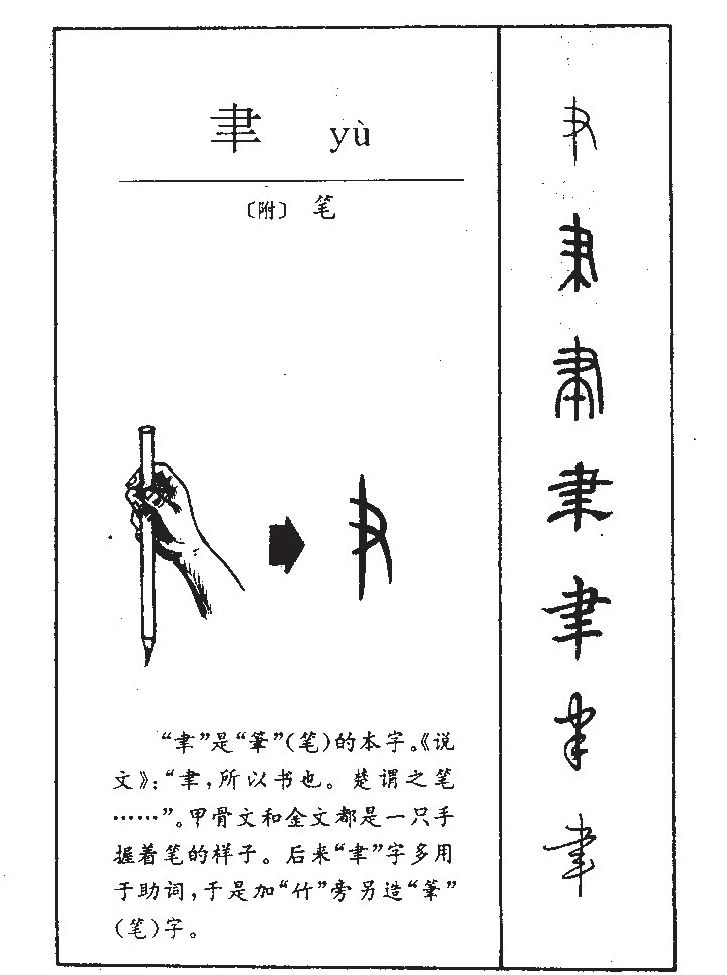
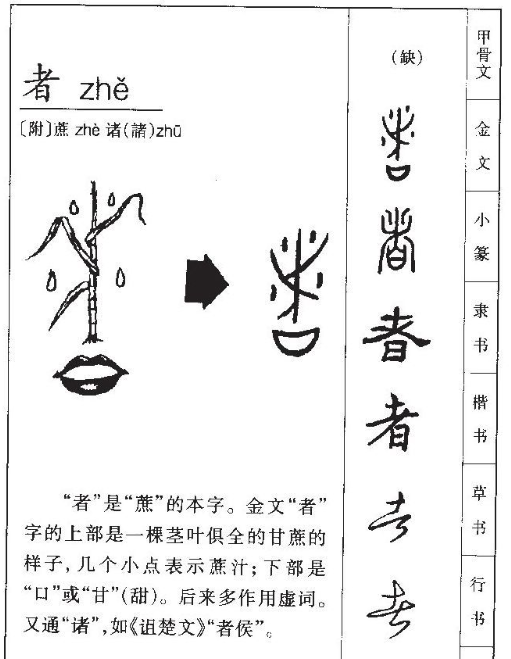
    As an example the character for book (書) - is made up of 2 parts, the semantic part is 聿 (brush - in its original form a literal picture of a hand holding a brush) on top (so the word is related to writing or painting), and 者 on the bottom (the meaning of 者 is not important here (it was a picture of a mouth eating sugarcane originally, but lost this meaning long time ago), but 者 in Old Chinese was pronounced similar to the Old Chinese spoken word for book, so it serves a purely phonetic function here)

    When Chinese writing was adopted in Japan, it wasn't really used to write Japanese - it was used to write Classical Chinese. Literate people would translate from Japanese to Chinese (which they would have been fluent in) and write it down in Classical Chinese grammar and vocabulary, not spoken Japanese grammar. They could also read it back and translate on the fly into spoken Japanese for Japanese speaking audience. They also brought in the Chinese pronunciation of the Characters into Japanese (in fact several different versions of this over time - see Go-on, Kan-on, etc.) so the phonetic hints in the characters were still useful when learning the system.

    Attempting to write spoken Japanese using Chinese characters was difficult, initially they would actually use Chinese characters stripped of their meaning to represent Japanese syllables. These were later simplified to become modern kana

    Spoken Chinese itself evolved beyond the monosyllabic written Classical Chinese (which remained quite rigid), so for a long time, Chinese also wrote essentially in a different language from how they spoke. It was only fairly recently that vernacular Chinese began to be written (rather than Classical Chinese) with it's polysyllabic words (most words in modern Chinese have 2 or more syllables, and require 2 or more characters to write, further distancing modern words from the original simple pictogram meanings)

    So while the idea of some kind of universal abstract concept representation divorced from phonetics sounds intriguing, in practice it is a poor way to capture the complexity and nuance of spoken languages, and all languages (including Chinese) that attempted to adopt it ended up having to build various phonetic hints and workarounds to make the system actually useful and practical for writing.

  • I think the lady is air cello, not piano - her left hand is on the neck, right hand holding a bow

    The sitting guys could both be violins too, hard to tell.

  • It's the Infinite Improbability Drive though, not Probability, that makes no sense :)

  • +1 for MoCA

    I switched from powerline to MoCA about 10 years ago, and it was a huge step up. Even though it's half duplex, since MoCA version 2.5, there is enough total bandwidth available to sustain 1 Gbps in 2 directions simultaneously, so it is functionally almost equivalent to full duplex 1 gig Ethernet (except for few ms of extra latency)

  • pihole often doesn't help, as many IoT devices either use their own DNS servers and ignore the one provided by your network, and sometimes even skip DNS completely and just connect to hardcoded IPs directly. Even blocking DNS at the firewall/router is getting more difficult with increasing use of DNS over HTTPS and custom DNS server IPs that aren't in public lists. (I block all known DNS server IPs at my firewall, forcing any device to use my own DNS servers, but even that is not always completely effective)

    It's usually best to isolate IoT devices on VLANs with no internet access (blocked at the router/firewall) Although there are now even devices that can autonomously connect to external WiFi networks like Amazon Sidewalk, to gain internet access and bypassing any restrictions you might try to place on them..

  • Deleted

    Permanently Deleted

    Jump
  • For many (most ?) people who learn to like durian, a switch happens inside the brain, and the smell becomes appetizing. The first few times I encountered durian, I thought the smell was vile - but I've become a durian lover eventually, and they smell delicious to me now.

    Funny enough I also like stinky cheeses, but still find them stinky (even though I like the taste) - for some reason it's different with fruit.

  • Deleted

    Permanently Deleted

    Jump
  • I had my first durian at 35, and it has become one of my favorite things ever.

    I've managed to convert at least one person as well - friend of mine (we were mid 40s at the time) didn't like it at first, but the second time he came around, and now loves it as well.

    Sometimes I order the unique varieties from Year of the Durian - the diversity of durian flavors is mind blowing honestly, it's not all Monthong or Musang King, there are some crazy durians out there.

  • Fun fact, California doesn't mandate safety or roadworthiness inspections for personal vehicles at all - only emissions.

    This was a bit of a surprise to me when I moved here, given CAs reputation.