Skip Navigation

InitialsDiceBearhttps://github.com/dicebear/dicebearhttps://creativecommons.org/publicdomain/zero/1.0/„Initials” (https://github.com/dicebear/dicebear) by „DiceBear”, licensed under „CC0 1.0” (https://creativecommons.org/publicdomain/zero/1.0/)M
Posts
28
Comments
521
Joined
3 yr. ago

  • go run works by compiling the program to a temporary executable and then executing that.

    can you guarantee that runs everywhere

    It seems to depend on glibc versions, if that's what you are asking. You can force it to be more static by using a static musl python or via other tools. Of course, a binary for Linux only runs on Linux and the same for Windows and Mac. But yeah.

    Also it should be noted that go binaries that use C library dependencies are not truly standalone, often depending on glibc in similar ways. Of course, same as pyinstaller, you can use musl to make it more static.

  • You can create static binaries that bundle the python interpreter and dependencies.

    It's the onefile option in pyinstaller: https://pyinstaller.org/en/stable/usage.html#cmdoption-F

    You can also do it with C. Or Csharp. Or many other programming languages. It's not a feature unique to Go, it's just that Go can only create static binaries.

  • oh I have tested this game somewhat, although I've never actually played it. It is very impressive.

  • What about a static site generator? Plaintext, markdown, but renders to html with headings and whatnot. Version control is because it's in git.

    Read access control is difficult though. You could do some hacks like using encrypting files in the git repo (perhaps with SOPS), and then either using http basic auth to control access to specific pages or something like staticrypt. But these are not ideal solutions.

  • Selfhosted @lemmy.world

    Selfhosted, multiplayer, browser based games

    1. Bluetooth probably won't be able to give you good quality audio and mic input at the same time. It doesn't have enough bandwidth over a single channel, last time I tried. Of course that was probably like 5 years ago and things might've changed, like a theoretical workaround I thought about is the headset simply having two bluetooth reveivers and connecting twice. But yeah.

    Edit: I suspect jgrffn's comment in the thread refutes the above. I might test later.

    1. Most of the proprietary wireless 2.4 ghz usb adapters I have tried have worked fine and better than bluetooth since they can do good audio and mic at low latencies. I have used logitech and corsair but my logitechs died on me (one I bought had the left side die and the other the right side :/) and the corsair earmuffs fell apart after I made the mistake of not being perfectly dry once. So I can't really recommend my most used headsets.
  • This is technically yaml I think, a list (with one entry) of lists that contains mostly single items but also one other list. You should be able to parse this with a yaml parser like pythons built in one.

    Note that yaml is picky abiut the syntax though, so it wouldn't be able to handle deviations.

  • I won't lie, I use curl | bash as well, but I do dislike it for two reasons:

    Firstly, it is much, much easier to compromise the website hosting than the binary itself, usually. Distributed binaries are usually signed by multiple keys from multiple servers, resulting in them being highly resistant to tampering. Reproducible builds (two users compiling a program get the same output) make it trivial to detect tampering as well.

    On the other hand, websites hosting infrastructure is generally nowhere near as secure. It's typically one or two VPS's, and there is no signature or verification that the content is "official". So even if I'm not tampering with the binary, I can still tamper with the bash script to add extra goodies to it.

    On the other hand (but not really relevant to what OP is talking about), just because I trust someone to give me a binary in a mature programming language they have experience writing in, doesn't mean I trust them to give me a script in a language known for footguns. A steam bug in their bash script once deleted a user's home directory. There have also been issues with AUR packages, which are basically bash scripts, breaking people's systems as well. When it comes to user/community created scripts, I mostly trust them to not be malicious, and I am more fearful of a bug or mistake screwing things up. But at the same time, I have little confidence in my ability to spot these bugs.

    Generally, I only make an exception for running bash installers if the program being installed is a "platform" that I can use to install more software. K3s (Kubernetes distro), or the Nix package manager are examples. If I can install something via Nix or Docker then it's going to be installed via there and not installed via curl | bash. Not every developer under the sun should be given the privilege of running a bash script on my system.

    As a sidenote, docker doesn't recommend their install script anymore. All the instructions have been removed from the website, and they recommend adding their own repo's instead. Personally, I prefer to get it from the distro's repositories, as usually that's the simplest and fastest way to install docker nowadays.

  • Unfortunately deleted means deleted. Data gone.

    My recommendation is to use it as a reverse proxy to expose services but ultimately host from another device.

    It's 1 gb of ram anyway (the free 24 gb of ram arm vps' are scarce and hard to get).

    Another tip is that they monitor cpu and ram and are more likely to delete it if is idling. There exist programs on github that do nothing but waste cpu in order to try to keep the oracle vps up.

  • Openebs mayastor

    But you could fit ceph on that I think. As long as your network between nodes is fast enough.

  • They like to randomly delete them. It happened to me and a friend.

    1. Use networkmanager. Other alternatives technically work but I have has seen many people struggle with alternatives, they are not as smooth.
    2. Follow the instructions for connecting on android devices. The options will be named the same.
  • Linux @programming.dev

    Bluetooth streaming from phone randomly stops

  • KDE @lemmy.kde.social

    Bluetooth streaming from phone randomly stops

  • Did you try meshcentral? It's a selfhosted MDM.

  • It's easy. Mumble. Or the thing you used probably still works.

    But you see, people never actually seek a discord alternative. They want a discord alternative that includes all the features in one app that is also federated, AND end to end encrypted, and each one makes things vastly more technically challenging and resource intensive and then you want them together.

    A little secret: Matrix is much, much easier to host if you disable encryption and federation. Federation to many servers is the main performance killer, and "failed to decrypt message" will all disappear if you disable encryption.

  • If your software updates between stable releases break, the root cause is the vendor, rather than auto updating. There exist many projects that manage to auto update without causing problems. For example, Debian doesn't even do features or bugfixes, but only updates apps with security patches for maximum compatibility.

    Crowdstrike auto updating also had issues on Linux, even before the big windows bsod incident.

    https://www.neowin.net/news/crowdstrike-broke-debian-and-rocky-linux-months-ago-but-no-one-noticed/

    It's not the fault of the auto update process, but instead the lack of QA at crowdstrike. And it's the responsibility of the system administrators to vet their software vendors and ensure the models in use don't cause issues like this. Thousands of orgs were happily using Debian/Rocky/RHEL with autoupdates, because those distros have a model of minimal feature/bugfixes and only security patches, ensuring no fuss security auto updates for around a decade for each stable release that had already had it's software extensively tested. Stories of those breaking are few and far between.

    I would rather pay attention to the success stories, than the failures. Because in a world without automatic security updates, millions of lazy organizations would be running vulnerable software unknowingly. This already happens, because not all software auto updates. But some is better than none and for all software to be vulnerable by default until a human manually touches it to update it is simply a nightmare to me.

  • Second comment, but also investigate Wazuh. It can audit systems and report vulnerabilities. It's not an external scanner, but I have found it to be more effective and less annoying than greenbone/openvas.

  • Instead of trying to automatically scan your environment, it's probably better to figure out how to automatically update applications first. CVE's eventually get patched.

  • No, isn't it only software raid5 done via btrfs?

    Btrfs + hardware raid should work fine. The OS can't tell the difference anyways.

  • Fermi is just a custom client for discord/spacebar. It's not federated.

  • It's not federated, just easy to self host and point custom clients at.

  • Selfhosted @lemmy.world

    GitHub - spacebarchat/spacebarchat: 📬 Spacebar is a free open source selfhostable discord compatible communication platform

    github.com /spacebarchat/spacebarchat
  • Ask Lemmy @lemmy.world

    What's the minimum number of food items you can survive on exclusively and what are they?

  • Selfhosted @lemmy.world

    What's the laziest way to create a website that looks really nice and is maintainable?

  • Firefox @lemmy.world

    Profiles (old) vs Profiles (new) vs Containers

  • Programmer Humor @programming.dev

    Terraform plugin for the Dominos Pizza provider

    github.com /MNThomson/terraform-provider-dominos/
  • Wikipedia @lemmy.world

    Core War - Wikipedia
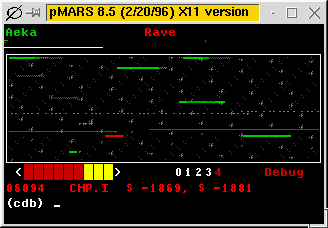
    en.wikipedia.org /wiki/Core_War
  • Nix / NixOS @programming.dev

    home-manager now has a built in option to wrap packages with NixGL, for non-nixos systems

    home-manager.dev /manual/unstable/index.xhtml
  • Linux @lemmy.world

    Is there any way on KDE, I can "click through" a partially transparent window to interact with the window behind it instead?

  • Linux @lemmy.ml

    Is there any way on KDE, I can "click through" a partially transparent window to interact with the window behind it instead?

  • Linux @programming.dev

    Is there any way on KDE, I can "click through" a partially transparent window to interact with the window behind it instead?

  • Open Source @lemmy.ml

    GitHub - element-hq/ess-helm: Element Server Suite Community Edition

    github.com /element-hq/ess-helm/
  • Opensource @programming.dev

    GitHub - element-hq/ess-helm: Element Server Suite Community Edition

    github.com /element-hq/ess-helm/
  • Asklemmy @lemmy.ml

    Give me some of your hardest riddles? (with solutions in spoilers)

  • Linux @lemmy.ml

    There doesn't appear to be a limit to the maximum size the KDE cursor can get when you shake it.

  • Linux @programming.dev

    There doesn't appear to be a limit to the maximum size the KDE cursor can get when you shake it.