Skip Navigation

InitialsDiceBearhttps://github.com/dicebear/dicebearhttps://creativecommons.org/publicdomain/zero/1.0/„Initials” (https://github.com/dicebear/dicebear) by „DiceBear”, licensed under „CC0 1.0” (https://creativecommons.org/publicdomain/zero/1.0/)I
Posts
6
Comments
66
Joined
2 yr. ago

  • Uh oh. If people realize that 700M in subsidies is the same amount of money as 700M in free buses, it’s all over. You’re supposed to act like one of them is cheap and the other is expensive. There’s not supposed to be math involved /s

  • Says who? In a typical month I make myself most of the above at least once.

  • Rather than tell you what I personally eat, maybe it will be useful to know what American diners serve for breakfast. You can walk into any locally-owned diner anywhere in the country and order from a menu almost exactly like this:

    • Breakfast Combo: Two eggs (scrambled, fried, or over easy/medium/hard), meat (bacon, sausage links, steak, or ham), and a carb (pancakes, toast, a biscuit, or hash browns)
    • Biscuits and Gravy: Two biscuits with sausage gravy over the top. Sometimes served with an egg.
    • Pancakes: A short stack is 2 and a tall stack is 4. Served with maple syrup.
    • Skillet/Omelet: Eggs scrambled with onions, bell peppers, cheese, and meat. An alternate version, sometimes called “loaded hash browns,” uses hash browns instead of eggs.
    • Breakfast Burrito: An omelet wrapped up in a tortilla. May be smothered with red or green chili sauce for a Tex-Mex spin.
    • Oatmeal: Boiled oats with fruit, granola, syrup, etc.
    • Eggs Benedict: Poached egg on an English muffin with ham and hollandaise sauce.

    And then each diner will have their own “famous” specialty, like stuffed French toast, “home fries” (pan-fried potato chunks), huge pancakes, or sausage made in house. It’s hard to go wrong though, American breakfasts are consistently pretty tasty.

  • New Republic is a tabloid. As are Newsweek and Raw Story, which are all uncritically posted to this community multiple times a week.

    They’re tabloids that often appeal to my political sympathies, but tabloids nonetheless. We shouldn’t treat them like real journalism. If I had my way they’d be banned and/or ignored on Lemmy.

  • I saw one where someone had written:

    The founder of this company is a narcissistic sociopath who can’t imagine that anyone else isn’t.

    Hard to see something as “vandalism” when it has a thesis statement.

  • Same. I use Kagi because search is an essential function of my job and I can’t extract decent results from Google anymore, but if there were another engine with equally good results and a better ethical track record I’d switch.

    (There isn’t. I’ve tried Qwant, Ecosia, DuckDuckGo and a handful of others. Was not impressed.)

  • The year of Linux on the gas stop

  • Though my sample size is small, these stories fit my thesis that the real AI jobs crisis is that the drumbeat, marketing, and pop culture of "powerful AI” encourages and permits management to replace or degrade jobs they might not otherwise have. More important than the technological change, perhaps, is the change in a social permission structure.

    Agreed. If a company says “we’ve automated this job and it’s now done by AI,” they mean “we’ve decided to take advantage of media trends by dramatically lowering the quality and reliability of our processes, consistent with our policy of doing things as cheaply as our customers will tolerate.”

  • No. The number of users who have a real email with no TLD is far less than the number of users who will accidentally type an email with no TLD if you don’t validate on the front end.

    I’m here to help 99.9% of users sign up correctly, not to be completely spec-compliant for the 0.1% who think they’re special.

  • Let us recite the email validator’s oath:

    If it has something before the @, something between the @ and the ., and something after the ., it’s valid enough.

  • Clearly LLMs are useful to software engineers.

    Citation needed. I don’t use one. If my coworkers do, they’re very quiet about it. More than half the posts I see promoting them, even as “just a tool,” are from people with obvious conflicts of interest. What’s “clear” to me is that the Overton window has been dragged kicking and screaming to the extreme end of the scale by five years of constant press releases masquerading as news and billions of dollars of market speculation.

    I’m not going to delegate the easiest part of my job to something that’s undeniably worse at it. I’m not going to pass up opportunities to understand a system better in hopes of getting 30-minute tasks done in 10. And I’m definitely not going to pay for the privilege.

  • I’ve seen a handful of new startups posting about their 4-day, 32-hour work weeks. I can only imagine they’re bringing on a scuzzton of top talent at middle-of-the-road prices.

    When one of them IPOs for a billion dollars, I hope their employees are incredibly annoying about it. I hope they never shut up. I hope my LinkedIn feed is wall-to-wall “look what you can do on four days a week.” I hope they go door to door with a Rolex on both wrists and say “hello, sir/madam, I just wanted you to know I haven’t worked a Friday in five years.” I hope they post pictures of themselves relaxing with a martini at the start of every three-day weekend and people go ballistic in the comments and they don’t even notice because they’re too busy doing interviews with Forbes and Fortune Magazine. I hope I get sick and tired of hearing about four day weeks.

    I’m sure as hell tired of hearing about execs that want their employees to burn out.

  • This is very important if you’re a dad. You can’t just start reading the book straightaway. You gotta read it upside down in a nasal nonsense voice until your kid yells for you to stop. Then act confused. Then when they turn it around for you, open it from the last page and say “the end,” then close it again. Then, depending on the vibe, you might say, “oh, I get it now” and start reading upside down again. On a good day you can keep it going for a few minutes before you actually start reading the book.

    It’s peak comedy. No one has ever been as funny as a dad pretending they don’t know how to read a book

  • Pronounced REE-poe-SOH-tuh-ree

  • Deleted

    Permanently Deleted

    Jump
  • Yes, I know I’m doing something illegal (stealing and reselling IP) but it’s in service of something legal (continuing to be rich). You can’t punish me for doing bad things while rich, it would undermine your entire legal system.

  • The article does not mention paraplegia.

  • I think we all know where this is going.

    1. The Brainchip is trendy in Silicon Valley but doesn’t do much yet. The company says cyber-superintelligence will be available in a year, tops. Investors are pouring billions into it. Everyone says you need to hop on the trend now or you’ll be obsolete in six months.
    2. It’s been two years. The Brainchip still struggles to control a mouse or search Google. Everyone’s lost interest in building apps for it. Many users are reporting severe migraines, but the company says there’s nothing to worry about.
    3. The Brainchip pipes three unskippable ads directly to your optic nerve every time you go to the bathroom. Notifications ping your brain all day long. You can get it removed if you’ve got $80k to burn, but there’s a high risk of postoperative stroke.

    Yeah, no, I’m not putting anything in my brain that isn’t open-source from end to end. And even then probably nah.

  • Yes, it’s possible (and common) for a boat to sail against the wind by the power of its sail alone. Sailors have known this for hundreds of years but if it sounds impossible, no worries, I thought so too at first.

    Here’s how it works, simplified so I can get in trouble with pedants:

    The boat, first of all, has a keel (the blade-like bottom of the hull) which “locks” it into movement along a single axis: forward and backward. The wind is not going to blow the boat sideways, at least not very effectively.

    Second, sails are curved, not flat, and can rotate (when seen from above). The force created when the wind deflects off the sail matches the curve of the sail, more or less.

    So if the wind is blowing directly south ⬇️ and you want to travel north ⬆️ you angle the boat northeast ↗️ so it can only move northeast or southwest. Then you point the sail east ➡️ so the wind gets deflected west ↩️. Newton’s third law does the rest. When the wind hits, the boat will move northeast ↗️ because the keel prevents it from going straight east.

    Then after a while you turn the boat (“tack”) northwest ↖️, point the sail west ⬅️, and continue.

  • Lemmy Shitpost @lemmy.world

    HLPIMTRPD NA RCTPRNTR

  • ADHD @lemmy.world

    If I had a nickel for every time someone says "this person's being a huge jerk to me but I think they might be neurodivergent"

  • Climate @slrpnk.net

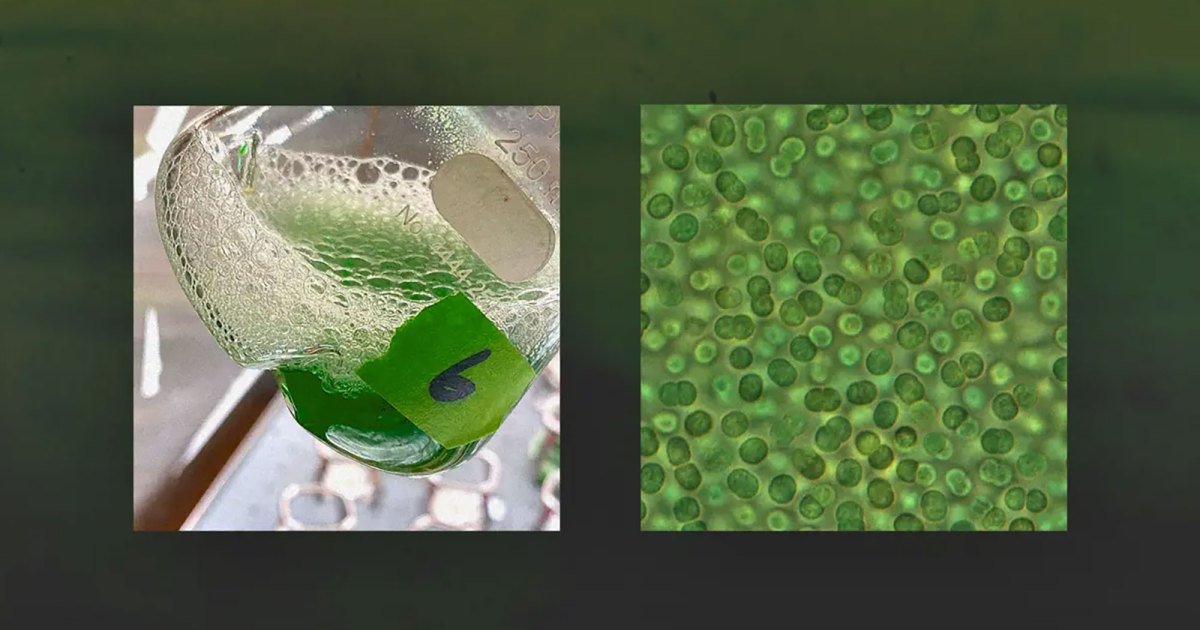
    Hail Chonkus

    www.motherjones.com /politics/2024/11/chonkus-cyanobacteria-atmospheric-carbon-sequestration-climate-change/
  • Programmer Humor @programming.dev

    Code comments

  • Comic Strips @lemmy.world

    Dogs Against Bones

  • Programmer Humor @lemmy.ml

    Crowdstrike! Baby Crowdstrike!