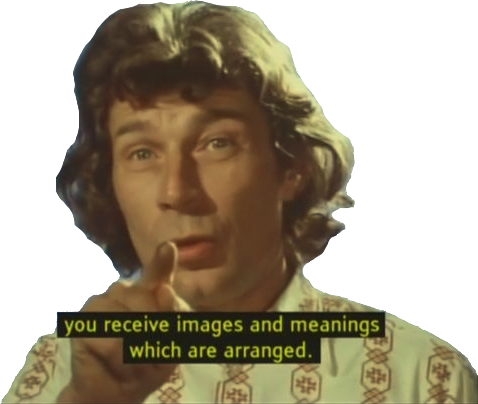
Ways of Seeing is a 1972 television series of (four) 30-minute films created chiefly by writer John Berger and producer Mike Dibb.
- 90 Posts
- 261 Comments


 112·3 days ago
Conservatism is a cultural, social, and political philosophy and ideology that seeks to promote and preserve traditional institutions, customs, and values.
Liberalism is a political and moral philosophy based on the rights of the individual, liberty, consent of the governed, political equality, right to private property, and equality before the law.
These are just different ways of describing support for the status quo with different flavor modifiers. The core of both is the protection of Capital from any threats from the left (aka socialism, the democracy of the workers, removing power from the owners of capital).
This is why from a leftist perspective, they are essentially the same in that they both are against any actual emancipation of the working class if it threatens the existing power structures of capital owners.

It’s extra funny because SK and KMT in Taiwan are starting to change their alliances with all the evidence of the declining US empire piling up. SK is now antagonizing Pissreal and KMT leadership is having historic meetings with China.
Only the ideologically committed Ukraine is still all-in on US/Pissreal fascism.
ALL of Lebanon, not just the south. check along any border where there are small towns on each side, and the Lebanon side does not have any label names while the other side does.
New book is coming out by Michael Wolff. He supposedly has recordings of Epstein talking out Melania and Trump etc.

only took a bit over a month after the killing of thousands of Iranian civilians, such leadership, much humanism
No Kings, No Shahs, No pedophile cabal, No puppets of capital
Liberalism: the"rule of law" is just paper idealism that dilutes the will of the people
Marx: Under no pretext should arms and ammunition be surrendered; any attempt to disarm the workers must be frustrated, by force if necessary
 20·23 days ago
Always has been

Cassian Andor looks pretty good with a beard.
 11·23 days ago
Sounds like the lack of US missile interceptors Israel.
The inverted red, pink, purple, black, and blue triangles have all been reclaimed by various remembrance and anti-fascist groups, particularly in Europe. For example, the Association of Persecutees of the Nazi Regime – Federation of Antifascists (VVN-BdA) and other members of the International Federation of Resistance Fighters – Association of Anti-Fascists use the red triangle as part of their emblem.


The Social Democratic Party of Germany (SPD) historically opposed the Communist Party of Germany (KPD) due to ideological differences, particularly regarding the approach to socialism and the use of revolutionary tactics.
I wonder how that worked out. Oh, right.


 28·1 month ago
It looks like a Phoenix rising to me. The eye is Larak Island.
 4·1 month ago
https://globalvoices.org/special-thanks/
Global Voices was launched as a project of the Berkman Klein Center for Internet and Society at Harvard Law School.
Global Voices would also like to thank other current and past donors, and sponsors and supporters, including: National Endowment for Democracy, the Taiwan Foundation for Democracy, the Google Digital News Initiative, New Venture Fund/Gates Foundation
https://cyber.harvard.edu/about/support
GRANTS AND GIFTS
The Berkman Family: gift toward online pedagogical innovation such as the use of the Threads platform to enable real-time pseudonymous communication within a defined group, such as a class or community.
Carnegie Corporation of New York: grant to advance the Frankly platform, an open-source online video-based discourse platform designed to facilitate constructive dialogue and collaborative decision-making across and within diverse groups. Through December 2026.
Coefficient Giving (formerly Open Philanthropy): grant in support of the Center’s AI Triad project’s efforts to opening up dialogue among AI’s disparate communities to foster understanding, encourage collaboration, and lay the groundwork for more thoughtful policy and technical development around AI. Through October 2027.
Reid Hoffman: gift in support of ongoing digital teaching and learning at the Center, including further development and promotion of educational tools such as H2O, in conjunction with the Library Innovation Lab. An additional unrestricted gift helps support the Institute for Rebooting Social Media.
Michael R. Klein: gift for the general support of the Berkman Klein Center.
John S. and James L. Knight Foundation: gift in support of the Center’s Global Technology Governance Fellowship program.
John D. and Catherine T. MacArthur Foundation: flexible support grant to support the Center’s operational and programmatic costs. Through December 2026.
Frank McCourt, Jr. and Project Liberty: a gift to benefit the Applied Social Media Lab, a first-of-its-kind program to assess and build social media technology in the public interest.
Craig Newmark Philanthropies: gift in support of the Institute for Rebooting Social Media to convene talent from academia, industry, and the public sector to improve the future of social media and online communication. An additional gift supports faculty innovation and dissemination of the Center’s outputs.
Plurality Institute: grant in support of the Applied Social Media Lab’s Frankly novel solutions to advance public interest infrastructure for constructive dialog and collaborative decision-making. Through June 2026.
Rockefeller Philanthropy Advisors: grant to support the creation of AI Workstreams and related exploration of key questions in artificial intelligence. Through June, 2026.
David R. Halperin and Orrick, Herrington & Sutcliffe LLP: gift in support of the Orrick Colloquium on Cybersecurity and Cyberlaw, a semi-annual series of events hosted by the Berkman Klein Center.
 8·1 month ago
Some promise totally autonomous trips.
a handful of tech bro billionaires on a test flight + one aspiring hacker = the next Luigi

 21·1 month ago
The hold music is “Dire Straits” greatest hits.

to boldly go where no capitalist has gone before


