Skip Navigation

User banner

FuckyWucky [none/use name]

@ FuckyWucky @hexbear.net

帖子
74
评论
758
加入于
3 yr. ago

Pro-stealing art without attribution

  • I'm not proposing anything this is how all economies work. This is just the accounting reality.

    Gov can't take a loan when people don't have money. Spending will always come before income. That part is just standard Keynesian economics. Keynes limited it to private sector but it's exact same for Government.

    Please tell me, a new country is formed on another planet. The newly formed state wants to spend, it imposes tax obligations. How will people pay taxes when money hasn't been spent yet?

  • No I am saying all money that exists comes from Government or Government authorised commercial banks.

    Also economy is circular. Money goes round. Money is only deleted when you pay your debts whether tax debts or commercial bank debt.

    Not to mention people are going to be using that money for foreign products where parts of it flow outward and not back to government coffers.

    Nope. Money never goes out of the country. All money exists as electronic entries at banks or Central bank. When you exchange say Euro for Dollars, you are giving Euros to a bank who then gets the Euros and gives you Dollars from the market. The amount of Euros doesn't change.

    But yes imports are a drain on demand, which is exactly why any leakage from imports must be countered to prevent drop in output and employment.

    This is why US Govt must run fiscal deficits to counter Trade Deficits given rest of the world's desire to accumulate US dollar assets. Otherwise the local private sector will be indebted.

  • Where do you think the Government gets any money in general? You may say taxes. But where do people get the money to pay taxes? The Government itself.

    That's what I'm saying, spending creates income. Spending logically comes before taxation because if Gov doesn't spend people won't have money to pay taxes. The two sources of widely used money are

    1. Government spending
    2. Bank lending

    Banks make their own money ie your deposits at bank convertible to Government money, to prevent bank runs, the Central Bank provides reserves on demand. By managing reserves, the interest rate is maintained at target set by the CB.

  • Crypto hoarders dump tokens as shares tumble

    Crypto-hoarding companies are ditching their holdings in a bid to prop up their sinking share prices, as the craze for “digital asset treasury” businesses unravels in the face of a $1tn cryptocurrency rout.

    Shares in Michael Saylor-led Strategy, the world’s biggest corporate bitcoin holder, have tumbled 50 per cent over the past three months, dragging down scores of copycat companies.

    About $77bn has been wiped from the stock market value of these companies, which raise debt and equity to fund purchases of crypto, since their peak of $176bn in July, according to industry data publication The Block.

    With Saylor’s company now worth less than the bitcoin it holds, investors worry that a business model that relied on a virtuous circle of rising crypto prices and massive share and debt issuance is now unravelling.

    “There’s going to be a fire sale at these companies; it’s going to get worse,” said Adam Morgan McCarthy, senior research analyst at crypto data firm Kaiko. “It’s a vicious cycle. As soon as the prices start tanking, it’s a race to the bottom.” Line chart of $ showing Strategy's falling share price

    Saylor’s software business inspired a raft of copycats in industries including film production, vaping and electric vehicles, after its pivot to a “bitcoin treasury” strategy drove a huge increase in its share price. Purchases by such companies have been a big driver of bitcoin hitting a record high last month.

    But the craze has soured as cryptocurrencies bore the brunt of a sell-off in speculative assets this autumn, in a sharp reversal for a sector that had been buoyed by President Donald Trump’s pledge last year to turn the US into a “bitcoin superpower”.

    Shares in Japan’s biggest bitcoin holder Metaplanet have plunged 80 per cent since their June peak. The company on Tuesday raised a $130mn loan backed by its bitcoin, which it said would be used for purposes including buying back stock. The Smarter Web Company, the UK’s biggest bitcoin buyer, has experienced a 44 per cent stock price drop this year. It is valued at £132mn while the bitcoin it holds is worth about $232mn.

    “It was inevitable,” said Jake Ostrovskis, head of OTC trading at Wintermute, referring to the sell-off in digital asset treasury stocks. “It got to the point where there’s too many of them.”

    Several companies have begun selling their crypto stockpiles in an effort to fund share buybacks and shore up their stock prices, in effect putting the crypto treasury model into reverse.

    North Carolina-based ether holder FG Nexus sold about $41.5mn of its tokens recently to fund its share buyback programme. Its market cap is $104mn while the crypto it holds is worth $116mn. Florida-based life sciences company turned ether buyer ETHZilla recently sold about $40mn worth of its tokens, also to fund its share buyback programme.

    Sequans Communications, a French semiconductor company, sold about $100mn of its bitcoin this month in order to service its debt, in a sign of how some companies that borrowed to fund crypto purchases are now struggling. Sequans’ market capitalisation is $87mn while the bitcoin it holds is worth $198mn.

    Georges Karam, chief executive of Sequans, said the sale was a “tactical decision aimed at unlocking shareholder value given current market conditions”.

    While bitcoin and ether sellers can find buyers, companies with more niche tokens will find it more difficult to raise money from their holdings, according to Morgan McCarthy. “When you’ve got a medical device company buying some long-tail asset in crypto, a niche in a niche market, it is not going to end well,” he said, adding that 95 per cent of digital asset treasuries “will go to zero”.

    Strategy, meanwhile, has doubled down and bought even more bitcoin as the price of the token has fallen to $87,000, from $115,000 a month ago. The firm also faces the looming possibility of being cut from some major equity indices, which could heap even more selling pressure on the stock.

    But Saylor has brushed off any concerns. “Volatility is Satoshi’s gift to the faithful,” he said this week, referring to the pseudonymous creator of bitcoin.

    https://www.ft.com/content/53473a9f-e801-4280-a78b-8e6e00bcac78

  • There are no loans. All money you have came from the Government. what I'm suggesting ie the Government replacing lost spending with its own does NOT raise aggregate demand in any significant way, it's a stabilizing policy.

    Government deficit in this case keeps income of workers and employment unchanged relative to before.

    It may be inflationary if the Govt decides to build new industries as that Increases aggregate demand. But keeping existing production doesn't do that.

    I think it was Abba Lerner who said that imports cause unemployment and output losses only if there is no full employment policy in place by the Government.

    You can read the book I linked if you want to.

  • The polls showing crazy high % approval for Modi tend to have bias towards upper-caste, higher income, urban Hindus. And I think even among higher income top 10%ers, there may be a shift soon as tariff shock and U.S. recession squeezes the Indian economy.

    Edit: Indian Rupee has been depreciating a bit recently, and all the wealthy rent seeking treatlers who love imported goods and vacations abroad are whining about it even though they are totally fine with the workers being paid like $100/month working 6-7 (

    ) days a week.

  • There's quite a bit of sampling bias going on in this I think.

  • Countries don't have credit ratings in their own currency, for any sovereign currency issuer the rating on all debt is 'sovereign', not AAA or BBB, just 'sovereign'. Foreign currency denominated debt can have credit ratings but that's not what I am talking about. You will never find interest rate on Treasuries going too much beyond Fed Funds rate.

    nobody will trust in the value of your money

    Not how money works. It's not trust it's coercion. Multiple layers of it. You need it to pay for utilities, you need it to pay your taxes, you need it to get healthcare, education everything. Layers of debts.

    Just printing money and getting higher and higher interest loans to prop up an industry producing something nobody is buying

    Who said nobody is buying? The point of setting the price low is so its bought in a competitive market. There is no higher and higher interest loans for the sovereign, they pay the rate set by the Central Bank.

    And you'll cause the consumer prices to soar.

    There is nothing of the sort going on, I am only saying the countries facing deindustrialization must prevent output and employment losses using fiscal policy. And that countries with own currencies can do so if they weren't indoctrinated by neoliberal propaganda.

  • Yea i think retailers are trying to vibe-price. Since the Spot DRAM price is completely irrelevant to them and there is no 'free' market for final DRAM DIMM sticks.

  • I don't think the ram manufacturers (like corsair, kingston etc) buy it at spot price, they have contracts and all for fixed price. since that's the case, shouldn't prices be sticky at least for the day?

  • . So either issuing more currency (making the currency worth less)

    nope thats loanable funds, quantity theory of money bs from neoliberal books.

    The interest rates for loans are set by those giving out the loans

    The Central Bank sets the rate paid on Treasuries very indirectly. Treasury creates securities (Treasuries), sells it to Primary Dealers (banks), where do banks get the money to buy it? The Central Bank gives it to them. It's why its said that mortgage rates are a markup over 10Y Treasury rate. CB will always be able to do Open Market Operation to keep short term yields stable, long term yields are bit more complicated but really, both are risk free. Corporations with AAA rating get to float bonds at a very small markup over Fed Funds rate.

    Gov Bond issuance is obsolete really, with floating rate (no convertibility to gold), it becomes a free money asset for bondholders.

    Where do these smaller countries get the money to run this manufacturing industry in the face of foreign multinational competition that gets big subsidies?

    All countries with their own currencies create money the same way, by crediting bank accounts, taxes reverse the same. Spending creates income. Taxes reverse it.

    See

  • You are confusing financial constraints for real. Interest rates are set by the Central Bank, not by the market.

    Manufacturing has advantages. I'm not against having people work in social services. That's the opportunity cost. You can have 1000 people work in industry or healthcare depending on priorities. But everyone should be employed.

    Inflation happens when aggregate demand exceeds the capacity of the economy to expand. Am I suggesting that? No. I'm saying employment and output losses from import competition must not result in deindustrialization. That deindustrialization is a political choice, not economic.

    Weimar Germany? It's output was lost due to war, Zimbabwe too had a supply shock. 2022 inflation also partly due to supply. 1970s oil shocks also due to a real resource shock.

    For third world countries there is another avenue for inflation, which is foreign currency debt where the country issues local currency to pay off foreign currency debt. Currency mismatch. I'm against sovereigns issuing foreign currency debt.

    The alternative is unemployment and waste of skills which is a waste of real resources.

    Countries with much lower GDP can't keep up with that, they can't subsidise as much and as long, so they'll lose out in the end if the subsidy game continues.

    Gdp doesn't equal future capacity of the economy. Gdp grows as more resources as utilised.

  • True, but my point was that if you want to implement certain policies, when you run local Governments, no matter whether you are liberal or left, you need to work with higher levels.

    The Left Government in Kerala too had to make a lot of compromises. Recently, the left coalition was under threat due to the largest Communist Party wanting to work with Central Govt for grants. See

  • It is spending that creates income whether public or private. When capitalists do it, it came from a bank loan, from Governments do its created at Treasury.

    And if you want to pay people, you need to make the production somehow sustainable.

    It is sustainable though.

    So you might be producing stock nobody wants to buy, so you don't get money for them, making the thing less sustainable.

    The Government doesn't need it's own money. The point for Gov isn't to get money but to do what's best for everyone, for me it's workers.

    The question is whether the increased Government spending from deficit of "loss" making SOEs cause total spending to exceed capacity which manifests as inflation or shortages. It depends on how much workers save, it depends on how much the workers are paid and where and what goods they spend money on.

    Given that in European countries the workers were previously employed and were spending into local economy but are being displaced by international competition, the clear solution is to keep their output and employment via price matching.

    India isn't exactly a "small country". It has the 5th largest nominal GDP, world's largest population...

    Yet it's an extremely poor country Gdp per capita wise, even worse if you take inequality into account.

    If you are a small island nation with 1000 people, then of course you won't be able to much fancy high value goods, that's not a financial constraint that's a real cosnstaint. They won't be able to do so no matter whether trade is open or restricted.

    But if the country can produce fish products , the Government can make it so it'll always be able to do so even with external competition.

  • It's not really a cost to keep domestic industry, the cost is that labor and other resources are used. If the goal is to keep output and employment then it works fine.

    If you take the cost in money terms it's massive. But money isn't real. If you take it in real terms, the alternative is unemployment and loss of manufacturing knowledge and self sufficiency which is worse.

    And do smaller countries have money to even do that

    Well, India has this thing called Minimum Support Price, basically a floor price for many agricultural goods to make sure the farmers have a market to sell to. US and WTO hate it because it "distorts markets" yet functionally it keeps the country food sufficient and keeps farmers employed.

    It has been downgraded and weakened over the years by the neoliberals but it still exists because taking it away completely is politically NOT financially expensive. In terms of real, it creates income and employment for farmers, it keeps output afloat.

  • I disagree, every country with sufficient knowledge and resources can set up their own manufacturing. Do I think Ghana will be able to make as efficient windmills as China? On their own not anytime soon. Not because of money but because they lack expertise, things take planning and time to build up.

    But they can start somewhere, taking advantage of the powers the state has. The problem isnt financial but real.

    When your country can produce high value added goods, e.g. European countries but not at internationally competitive prices due exchange rates, labor costs etc, the clear solution is to have the state set prices to be competitive with imports.

    First world countries have another advantage though , their currencies are highly demanded internationally so their trade isn't simply limited to barter like arrangement wherein you only get what you give.

  • There is a difference between using subsidies for beggar thy neighbour trade war versus for keeping domestic output and employment stablized. The West can do the latter whether or not other countries are doing the former.

    If the purpose of manufacturing is to create employment, local production to increase self-sufficiency and not just profits for capitalists, then price setting by public sector archives it. Any imports from abroad financed in local currency represents a real gain for the country in this case.

  • Unfortunately, fascist is also the President. I don't think it's ridiculous to say that, e.g. I've been to Kerala, the politicians there have to work with the Central Government even while openly calling Modi a fascist.

  • Chapotraphouse @hexbear.net

    He has always been goated

  • Slop. @hexbear.net

    Aint no way

  • Slop. @hexbear.net

    The peasants had a home? no way! I love USSR

  • memes @hexbear.net

    Funny meme jpg

  • technology @hexbear.net

    The Trump Phone is a Mess

  • Chapotraphouse @hexbear.net

    birth rate decline in Japan

  • Chapotraphouse @hexbear.net

    Imperialism and Its Bullying of India

    peoplesdemocracy.in /2025/0810_pd/imperialism-and-its-bullying-india
  • Chapotraphouse @hexbear.net

    The British government’s obsession with the fiscal rules is driving the economy towards recession

    billmitchell.org /blog/
  • art @hexbear.net

    Lenin

  • Chapotraphouse @hexbear.net

    Chapo Reading Series (ft. David Roth) - Free Market Genius Solves New York’s Subway Problems

  • askchapo @hexbear.net

    Why is the UK Labour party destroying itself?

  • Chapotraphouse @hexbear.net

    British Labour Government should ignore irrelevant fiscal ‘black holes’ and worry about the political hole it is digging for itself

    billmitchell.org /blog/
  • Chapotraphouse @hexbear.net

    The Depression of Mass Consumption (in India)
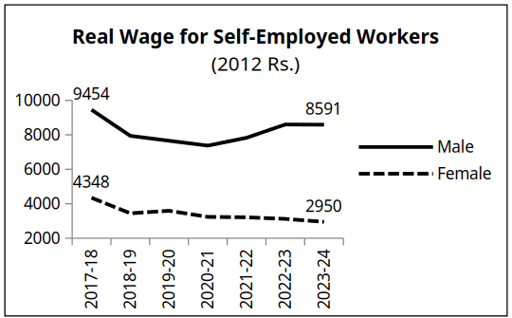
    rupeindia.wordpress.com /2025/06/19/the-depression-of-mass-consumption/
  • History @hexbear.net

    How Sheikh Mujibur Rahman Ignored Fidel Castro’s Friendly Advice and Paid the Price

    thewire.in /history/sheikh-mujibur-rahman-fidel-castro-advice-book-excerpt
  • Games @hexbear.net

    How Slow is the Nintendo Switch 2 Display?

  • Chapotraphouse @hexbear.net

    Another Nate Plastic L

  • Chapotraphouse @hexbear.net

    George W. Trump

  • Chapotraphouse @hexbear.net

    The US dollar is losing importance in the global economy – but there is really nothing to see in that fact

    billmitchell.org /blog/
  • Chapotraphouse @hexbear.net

    South Korean military suspends loudspeaker broadcasts aimed at North Korea

    www.reuters.com /business/media-telecom/south-korean-military-suspends-loudspeaker-broadcasts-aimed-north-korea-2025-06-11/
  • Chapotraphouse @hexbear.net

    Could You Prove You’re a Citizen?

    nymag.com /intelligencer/article/trump-ice-detained-citizenship-proof.html