

1·
4 days agoTresorit
Tresorit
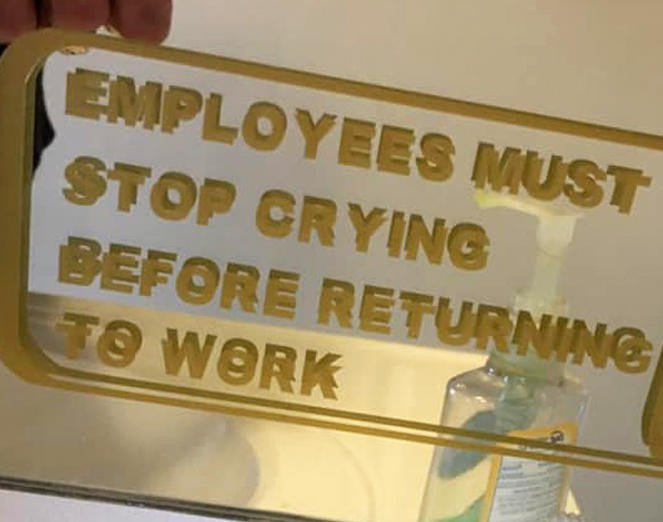
It did, actually

I was starting to feel like the joke was played out after a minute and a half, but boy am I glad I stuck with it.

“If you plug Claude into Omarchy…”
Let me stop you right there.

In what way? What is “Leo” implying abkut leadership?
And on CachyOS I often do “upgrade my system at least twice a day, I’m strictly plug and play”
Good luck OP. I did this and now I’ve been married for 3 years and life is awesome. High risk, high reward.
You’re welcome. If you remember, let me know.
I’m a little bit embarassed that it took me so long to switch to Linux. Even macOS is better for most use cases these days…
Who are you concerned about the data going to? Intercepting a Bluetooth signal is not really a thing anymore. Your phone OS has plenty of ways to know what you’re listening to without Bluetooth itself being thr vector. If you use GrapheneOS and Linux, you’re good there. The headphones themselves aren’t going to have a Sim card that is phoning home.
So then you’re left with third party software being the attack vector. For this reason, I would not install headphone apps, and ESPECIALLY not earbuds that require connecting/registering to a third party account like Amazon Echo buds.
This unfortunately means no custom EQ. For my open ear headphones, I tried out my top 4 choices without downloading the app, and picked the best sounding & most comfortable pair. That happened to be the Nothing Ear Open. My over ear Sony XM4 headphones that I already own are amazing but needed EQ badly, so I installed the app on an old Android, tweaked the EQ, and it saved the EQ information to the headphones themselves. Not all headphones can do this, however.

Aurora auto update works on normal Android but not GrapheneOS which is odd. Same for Obtanium. Droid-ify, GrapheneOS App Store, and Play Store work just fine.
Material Files supports integration with FTP, SFTP, SMB, and WebDAV servers.
I’ve found Here We Go to be nearly as good as Google Maps. It is also proprietary & dependent on the Play Store (not even Aurora if you want to use Android Auto), but with a better privacy policy than Google.
I haven’t gotten rid of all proprietary stuff either, but you know, it takes time sometimes. And right now, GrapheneOS is a pretty good solution. If the Play Store access does disappear, like you said you’ll have alternatives even if they’re not as good.
Privacy.com is not a VPN service.
Yes, that combo is usually how I get masked cards to work. You might try using a different device too if that doesn’t work; it could be possible that your device info was flagged.
What is your plan? Are you going to stop using Play Store on lockdown day? If so, why? Just trying to Degoogle in general? Why are you worried about lockdown day? You can still install apps outside the Play Store, even on stock Android, which you don’t appear to be using. If I am inferring correctly, you’re using GrapheneOS, which is entirely unaffected.
Alternatives (from top of list towards the bottom)
Dr app>website (I dont see why not)
Play Store>Aurora Store (doesn’t auto update apps in GrapheneOS though)
aCalendar>Proton Calendar (encrypted, cloud sync)
Obsidian>Notesnook (encrypted, cloud sync, can link notes similar to Obsidian, albeit not as advanced)
Xplore>Fossify File Manager or Material Files (not sure why you want X specifically though)
Google Camera is not distributed by GrapheneOS actually. They have their own app. If you disable network and download from the Play Store it might be fine? I’m OK with the GrapheneOS Camera app though, I don’t like unattural Ai filtering anyway.
What do you use Wireguard for that isn’t covered by Mullvad? Tailscale may be an option, depending.
Tidal>Metrolist (YouTube Music client, FOSS and free with no ads.) OR SoundCrowd (FOSS client for multiple sources including Tidal. Pretty barebones though)
Discord>Element X (if you can convince people to move…)
YouTube>WizeStream (YouTube, PeerTube, SoundCloud, Material Design)
WhatsApp>Signal (if you can convince people to move…)
SMS backup: I would recommend against doing this at all, actually
Personally, I need Play Store for Here We Go, as CoMaps is useless in my area. It doesn’t work through Aurora. And I think I prefer it this way, having auto updates is more convenient and secure enough of a tradeoff for me with sandboxes Play Services. Google just knows someone somewhere with a burner Google account downloaded a few Play Store apps. I don’t use any more of their stuff so who cares? I also still use Tidal. They’ve massively decreased the trackers in their app over the years, and I prefer paying artists over not. Tidal pays the most in the biz except maybe Qobuz. Plus the lossless audio of course…
Might be unpopular in this sub, but I don’t think that’s that big of a deal. Sites get hacked sometimes. It happens, especially 11 years ago, especially on a site that stores financial info.
I think your problem is not the masked card, but the VPN. i could be wrong, but I bet if you don’t use a VPN, it will probably let you use a service like Privacy.com. There is very little way to detect it. Unless Patreon is selling your data, them having your IP once or twice for logging in isn’t the biggest issue. And their privacy policy states that they never sell any data to third parties for any reason, and do not share any data besides:
Up to you if you believe them, but Patreon tends to be uncontroversial as far as payment systems go.
It is also pretty common to have your site behind Cloudflare since Ai became a thing, especially for VPNs.
I’'m not saying any of this SHOULD be normal, or that you NEED to accept it. If your limit is being able to use a VPN, you do you. But if I were in your position and wanted to donate, I would just do it. Privacy is never perfect. If you believe strongly in independent financial support, I think that’s reasonable, especially if you end up being able to use a masked card without a VPN. You may also consider contacting the creators. Hard to ignore “hey I want to give you free money please”

Unless OP is into that kind of thing…

Yes, I’m sure THAT’S the reason, and not that Bioware has been dead in the water for 12 years at minimum

Linux is nothing. My grandma can use Linux. The only complicated things about Linux are when I choose to make it so, because it’s cool that I can change things. If that’s your draw to Linux, you may be into programming also, and far be it from me to discourage you. But it is exponentially harder to program, a lot of work for games specifically, especially as a single dev, and you are unlikely to make any money from it unless you get good marketing. It’s got to be for the love of the game (literally) and of learning stuff. There’s no way to know if you have what it takes besides trying.
Can’t you already do that? Just make a second profile and have that be thr last one you logged into.





This is my personal opinion, but I’m seeing it as a trend: stable distro are an outdated concept for desktop use. Ubuntu was revolutionary when it came out 20+ years ago, because Linux hardware compatibility was ass, UX was not even considered most of the time, and updates broke things all the time. So for a long time, it made a lot of sense to be an Ubuntu fork since they already fixed the hardest problems to overcome, and then remove the stuff that’s too Ubuntu-y while adding your own features. Nowadays, a full-on rolling release is less likely to break things over an entire 2 year period than upgrading between one full release of Debian Stable to another is. Security flaws are found much more frequently now, and while Debian Stable et al do push security updates reliably & quickly because they have to, there’s nothing to say THAT couldn’t accidentally break something either. Less likely, but in my opinion, it makes more sense for everything to be more or less up to date. Not to mention, users expect feature parity compared to Windows or macOS, which you can’t have if your version of the app is 2 years old.
TuxedoOS is taking the most balanced approach: they’re based in Debian Testing, which already made it through a bit of testing, but not much more than Debian Unstable. Testing is still not meant for regular use, but then Tuxedo does their own testing to make sure it doesn’t break anything while releasing updates infinitely faster than a stable release would. So now they’re a lot closer to Fedora in practice, in terms of being up to date while not relying on community ran rolling updates, which is a solid position for a hardware manufacturer to be in. Theknly downside being that they mat have to port in security fixes from Debian Stable if the Debian team doesn’t get them to Testing fast enough, since Testing is not prioritized for that.