

4·
1 day agoLiberals and fantasizing about losing (“I dissent.”), name a more iconic duo.
Liberals and fantasizing about losing (“I dissent.”), name a more iconic duo.

A worker dust [sic] the purple fur of a car decorated to look like a purple unicorn at the BYD booth during Auto China 2026 in Beijing, Friday, April 24, 2026.
Um, ackshually, she’s an alicorn, not a unicorn.
(more pictures of the car/booth on Equestria Daily)
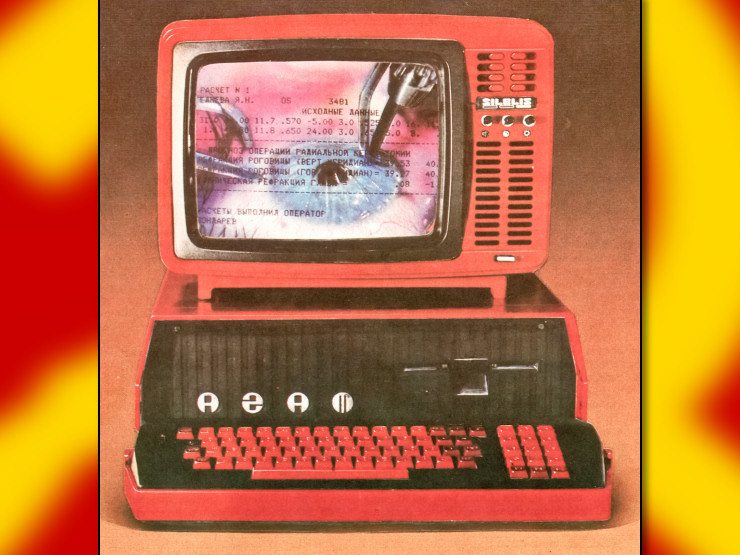
Well, the first step is already covered, at least.

I honestly don’t remember anything about this game besides the land shark gun, but if that isn’t an indication of quality I don’t know what is.

A YouTube thumbnail from a channel called “Study Juche” which shows a brunette VTuber with a bob cut, glasses, and a five-petaled burgundy flower hair ornament reading a book. The text on the thumbnail reads:
On Expanding and Strengthening Party Ranks and Promoting the Role of Party Organisations
Kim Il Sung
Read by Namgung Mi-hi
There is a circular logo in the center in the DPRK’s colors (red, white and blue) with a red star atop a book with the words “Study Juche” written on the upper half of the perimeter.
Link to the channel introduction and the video in the image. The channel is a repository of English audiobooks of short Juche texts (at time of commenting, all by Kim Il-Sung) read by the channel operator.
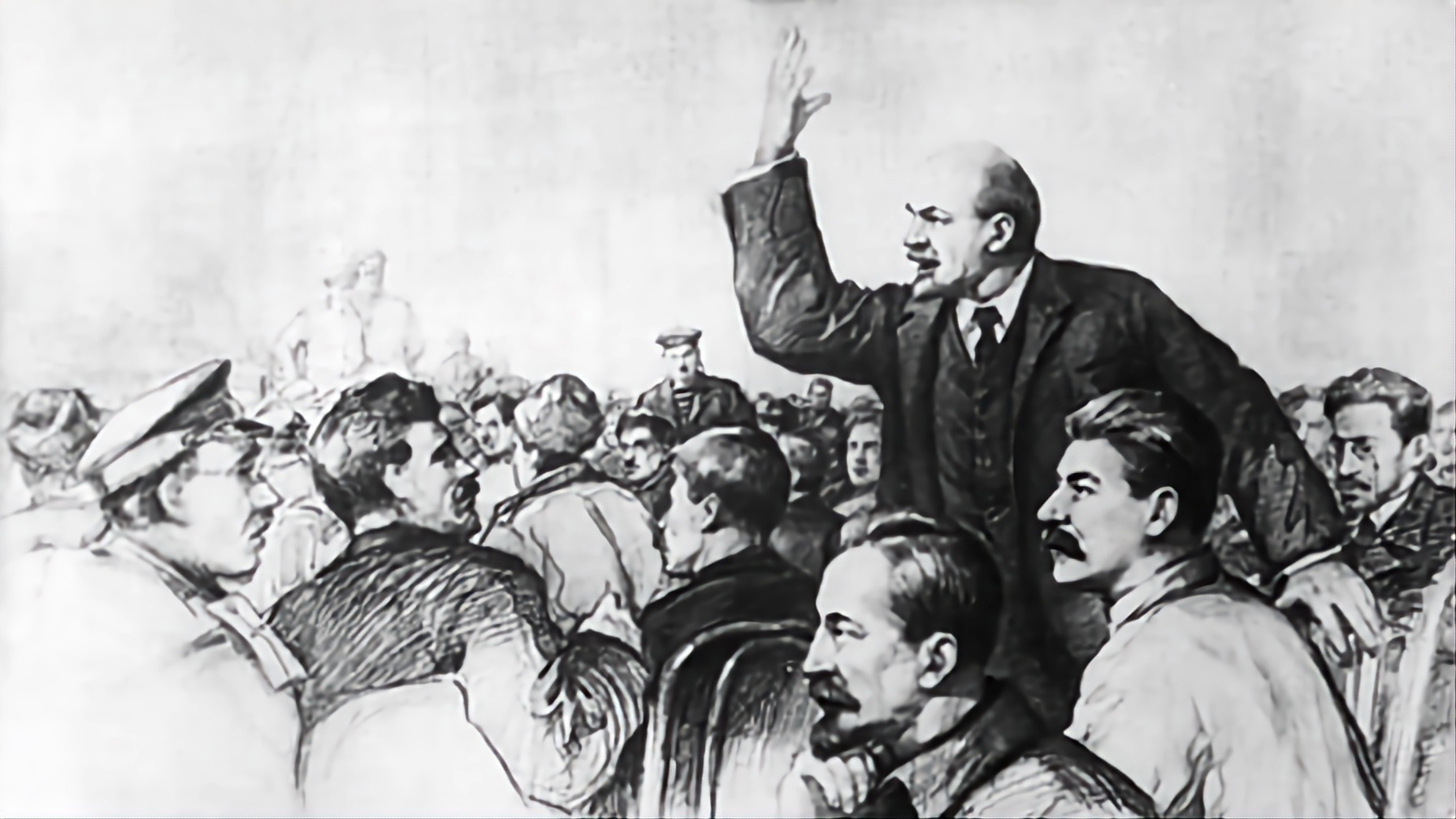
Applying a word typically used by the paper to describe political appointees being dismissed to also describe an abduction in flagrant violation of international law (that also involved killing dozens of people) is actually incredibly honest, how dare you imply otherwise!

Robert, a divorced father
That poster (as well as the poster in the upper-right) are made by an artist named Valeriy Barykin (Валерий Барыкин) who makes American-style pin-up art with the framing of Soviet propaganda posters:

The Hexbear CECOT meetup draws ever closer
Ooh, thanks for the tip—never heard of that book, but I’ll have to check it out! I always loved reading his Iwata Asks roundtable discussions with developers. The fact that he was still pitching in on programming efforts while he was President of HAL Laboratory is a testament to him never losing sight of his game developer roots. Polar opposite of someone like Reggie Fils-Aime—I guess we can thank for some good memes, but I watched a long-form interview with him recently and he comes off as a total business ghoul.
In the meantime, I can recommend these two shmuplations interviews with Satoru Okada[1]:
https://shmuplations.com/satoruokada/
https://shmuplations.com/okada2022/
I think I’d only ever heard of him in passing, but he’s quite the character! The first interview will give you a sense about his personality and background (and I think is a prime example of “If you want to create things, you should go out and experience life!”), while the second one is chock full of interesting anecdotes about his time at Nintendo.
Bio blurb: “Although his name is not well-known here, Satoru Okada designed (or co-designed with Gunpei Yokoi) every Nintendo handheld from the Game & Watch to the Nintendo DSi XL” ↩︎
Even if it’s not perfect, it’s heartening to see that a game can chug along for a few decades without making a billion dollars a year.
He’s exacting his revenge for not getting with that ethereal bisexual back in college.
Looking back, it’s embarrassing to recognize the degree to which my intellectual curiosity those first two years of college paralleled the interests of various women I was attempting to get to know: Marx and Marcuse so I had something to say to the long-legged socialist who lived in my dorm; Fanon and Gwendolyn Brooks for the smooth-skinned sociology major who never gave me a second look; Foucault and Woolf for the ethereal bisexual who wore mostly black. As a strategy for picking up girls, my pseudo-intellectualism proved mostly worthless; I found myself in a series of affectionate but chaste friendships.
–Barack Obama, A Promised Land, Chapter 1
Wow, LOTRO is still running? That’s impressive! I think I participated in the beta but didn’t get hooked.
…Dungeons & Dragons Online is also still running? And it got an expansion less than a year ago?? Damn, what a throwback. I think I had a demo disc, and I remember this weird bug where it would chug horribly unless I held down the right mouse button to free look, which would then cause the game to run perfectly smoothly.
I love to see in-depth interviews like this! Some of it is lost on me because I haven’t played the original Paper Mario (I’ll get around to it Someday™), but it’s still interesting to learn about the long design process and the refining of the different mechanics. Also, I just learned about kamishibai a few weeks ago so I was like, “Ooh, I know what that is!!”
Shumplations is such a wonderful resource—I was just reading this great Iwata interview from 1999 the other day, which I was turned onto by Part 1 of They Create Worlds Nintendo Wii two-parter (fascinating look at the business and inner politics of Nintendo, by the way!). The whole interview is full of great information, from the early history of HAL to Iwata’s personal philosophy, but this excerpt from his final remarks rings even truer today:
I think it’s amazing that the biggest hit the game industry has ever had, Pokemon, was a Gameboy game. I think there’s so much to learn from that. Cutting-edge graphics and impressive CGI are tools, but they aren’t the only tools we have. Of course there are some players who really want to see the latest and greatest in graphics and technology, and there isn’t anything wrong with that. But I definitely think there are other avenues of approach. I don’t want every game developer to do the same thing; it will be a richer, more diverse, more enjoyable industry if we’re all moving along different vectors, don’t you think?
I’m at the Fiction
I’m at the Sci-Fi
I’m at the Philosophy
I’m at the New age
I’m at the Unexplained
I’m at the Fantasy
I’m at the Restroom
I’m at the combination Fiction Sci-Fi Philosophy New age Unexplained Fantasy Restroom
The article makes it seem a bit more mystical than it actually is. 酷暑 (kokusho) isn’t a neologism or anything—it’s a normal word for “severe heat”, and you can find it in Japanese-English or Japanese-Japanese dictionaries. All they’re doing is sticking the kanji for “day” on the end to make it “[brutally hot]-[day]”. The runner-up simply adds the intensifier 超 to the term for 35+ C° days (猛暑日).
Here are the full results[1] of the poll, all of which employ existing words for extreme heat, although some of the ones listed in the “others” section after the quantified results get a bit more creative (such as サウナ日 (“sauna day”) and 自宅待機日 (“staying at home day”)):
最高気温が 40℃以上の日の名称に関するアンケート結果
今般の名称検討にあたって行われたアンケート結果は以下のとおりです。
実施期間: 令和 8 年 2 月 27 日(金)~3 月 29 日(日)
総回答数: 478,296
| 候補名 | 得票数 |
|---|---|
| 酷暑日 | 202,954 |
| 超猛暑日 | 65,896 |
| 極暑日 | 25,638 |
| 炎暑日 | 22,292 |
| 烈暑日 | 21,930 |
| 激暑日 | 20,282 |
| 厳暑日 | 9,219 |
| 熱暑日 | 8,782 |
| 甚暑日 | 4,595 |
| 劇暑日 | 4,396 |
| 大暑日 | 3,341 |
| 盛暑日 | 1,478 |
| 繁暑日 | 865 |
また、「その他」のご意見として、以下のような名称案も寄せられました。 「汗日暑日暑」、「灼熱日」、「激アツ日」、「危険猛暑日」、「自宅待機日」 「極猛暑日」、「サウナ日」、「鬼暑日」、「沸騰日」、「熱盛日」など
なお、「酷暑日」は一般財団法人日本気象協会において日最高気温 40℃以上 の日を指す用語として 2022 年から独自に使用されています。
As funny as this would be, I don’t think he actually pissed himself. Here’s the video:
https://www.youtube.com/watch?v=4oDHyj7_QyA&t=14
You can see that it seems to suddenly appear when he sits down, but I think it’s a reinforced crotch that’s a darker shade than the rest of the pants—weird design choice, for sure, but I’m always blowing out the crotch of my pants so I can empathize. You can see that the edges are sharply defined, running down the inseam, and they don’t change over the course of the video. When he stands up, you see that the front of his pants are still completely dry, and there’s just no way that would be true if he pissed his pants.
Gonna be fleeing the country on a steamboat


















They’re listed separately in the source, although I still think there’s some missing historical context (probably a strong link between “gaming” and the other two activities banned, as has been said elsewhere in the thread).
https://en.prolewiki.org/wiki/Library:Report_on_an_Investigation_of_the_Peasant_Movement_in_Hunan#9._PEASANT_BANS_AND_PROHIBITIONS