

2·
10 hours ago“Stank” is to “scent” what “full-scale invasion” is to “military action”
“Stank” is to “scent” what “full-scale invasion” is to “military action”
Cool, how about instead of maintaining a stigma around body odour, we understand different peoples’ needs and sensibilities? As much as you and others have a tendency towards overstimulation with smells, (which you can mitigate wearing a facemask), many others have different bodies and skins which smell more, smell less, and are more or less sensitive to different products designed to neutralize and contain smells.
I fully agree against the use of strongly scented perfumes in enclosed spaces, but you’re mixing it up with normal bodily functions.
Again, I’m not arguing for a shower ban. Big part of the reason why you’re sensitive in particular to body odour is social conditioning, and IG you hadn’t been conditioned against it you’d likely find it much more tolerable.
I gave you a well-reasoned comment regarding social conditioning of smells. Living in community implies a ton of impositions, such as being subjected to seeing how people choose to dress and cut their hair, which I hope you don’t see as annoying too. If the best response you have is “but I’ont wanna”, I don’t have much else to reply to you. Keep complaining about how ugly ripped jeans are or something.
Fortunately for you, human bodies don’t naturally spontaneously play music out loud
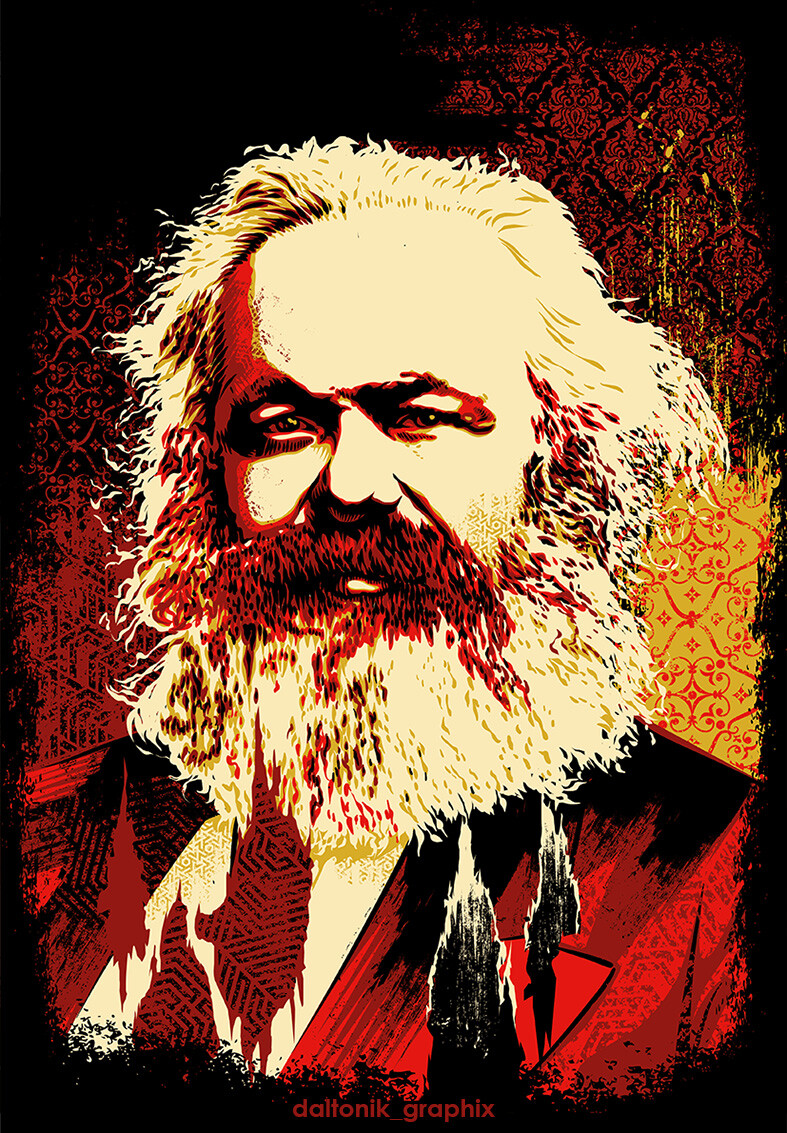
I read whatever book regarding the topic that interests me the most at one given time, and I follow Marxist agitators and educators on social media, mainly YouTube
Don’t make me tap the sign:
whoever disagrees because “ew” is a child who refuses to critically examine social conditioning on themselves.

Shit, I’m really sorry. I hope you get a lot better very soon, comrade
Does everyone here genuinely dislike the scent of their partners? I really don’t get it
There is a very good reason that we still read Marx directly: the long and unfortunate history of revisionism among Marxists
Yet Trots consistently read OG Marx texts and end up rejecting the later revolutionary theory stemming from the past century of socialist praxis because they also swallow cold-war propaganda. The issue with revisionism as of 2026, with the scientific and historical evidence at our disposal, has a lot more to do with losing the propaganda war against the western empire regarding the last century of Actually Existing Socialism than against well-meaning communists who read the wrong revisionist summary of Marx’s texts.
students ought to read the original papers early on, because the popularization of topics like quantum mechanics and relativity causes no small amount of confusion
That’s almost impossible, a physicist who doesn’t spend several years specializing into either quantum mechanics or relativity doesn’t have the mathematical tools available to understand the early papers. It makes a LOT more sense starting with classical mechanics, then explaining electromagnetism, then the theoretical and experimental divergence between Galilean frames of reference and Maxwell’s equations, and finally bringing those up to explain why light-speed is a constant in all frames of reference and how this implies most of special relativity, and then proceed once you learned the hardcore maths required for general relativity
I have a lot of criticism against modern academia (not that it was ever great) and I left science myself because of my issues with it, but pedagogically designed incremental breakdowns that first lay the building blocks and then use them to advance more difficult concepts are a wonderful way of learning things that I don’t think we should disregard when it comes to the science of Marxism.
what’s the pH compared to the general population though, does it enter the 99th percentile?
I haven’t eaten that many different puss, so I don’t have a statistically significant sample that would allow me to perform such judgement.
ok, but also, ew
Fair’nuff
Paul Cockshott has a YouTube channel where he explains his findings in much more clarity and rigor than I can. He’s a bit of a queerphobe, probably due to him being ancient, and the format of the videos is a poor sound quality voiceover of a slideshow, but they’re there if you want a more accessible entrypoint. His papers are very readable though, he’s fortunately a good communicator in that sense who doesn’t abuse jargon and high register. But if you’re really interested, you can write a followup to this comment. It could be fun to summarize some of his videos in a series of posts to c/Marxism.

“Nazi apartheid country sanctions itself again, confirming its ‘chihuahua of the empire’ status”
Thanks for the source!! I’ll make sure to check that out.
While I agree that the underlying principles of capitalism haven’t changed over time, it’s definitely seen quantitative changes. Moreover, modern statistics and computing allow us to obtain, interpret and visualize data on scales incomprehensible back then. As an example, Paul Cockshott has published scientific articles numerically demonstrating the labor theory of value. That’s something Marx inferred logically and supported with limited evidence, but now we have actual statistical evidence applied to entire sectors of the economy proving that law of supply and demand is mostly shit at predicting prices, whereas labour theory of value consistently provides great estimations, and this should be mentioned to someone learning Marxism: “this isn’t true because Marx was very smart and you should believe it, Marx simply predicted it and further evidence has corroborated it beyond doubt”.
You can find also egregious examples in Europe. 100 years ago there were about a million speakers of Occitan, down to 100k now (so 90% lost in a century), and Occitan still doesn’t enjoy any degree of recognition institutionally, of which the Wikipedia article on Vergonha does a surprisingly good job of portraying.
Estonia is another example, with a language police (Keeleinspektsioon, or “language inspection”, recently renamed to “language board” or Keeleamet) which goes to public institutions and businesses and fines them if there are workers which they determine have a lower than C1 level of Estonian, and even has the capability of enforcing terminations of employment for said people, normally ethnic Russians descending from soviet migrants who moved to Estonia because, contrary to popular belief, it was coddled and investment was huge in it and it was one of the richest republics in the USSR.
We could do this collective effort beforehand, I didn’t try to imply that this “textbook Marxism” approach should be conceived by a single individual, of course it should also be a collective and critical effort with a lot of resources and time put into it. Arguably as problematic as that are for example the translations of Marx’s capital, many of them outdated, pompous and with translation errors because they were translated by one person, and in many cases translated twice removed (as in German -> French -> Spanish).
A private company’s policy during capitalism?
So Russia hit a warehouse (in retaliation to Ukraine doing the same) and it happened to have Ukrainian books (wow, Ukrainian books in Ukraine!) so they’re making a hit piece about the existential danger to Ukrainian language?
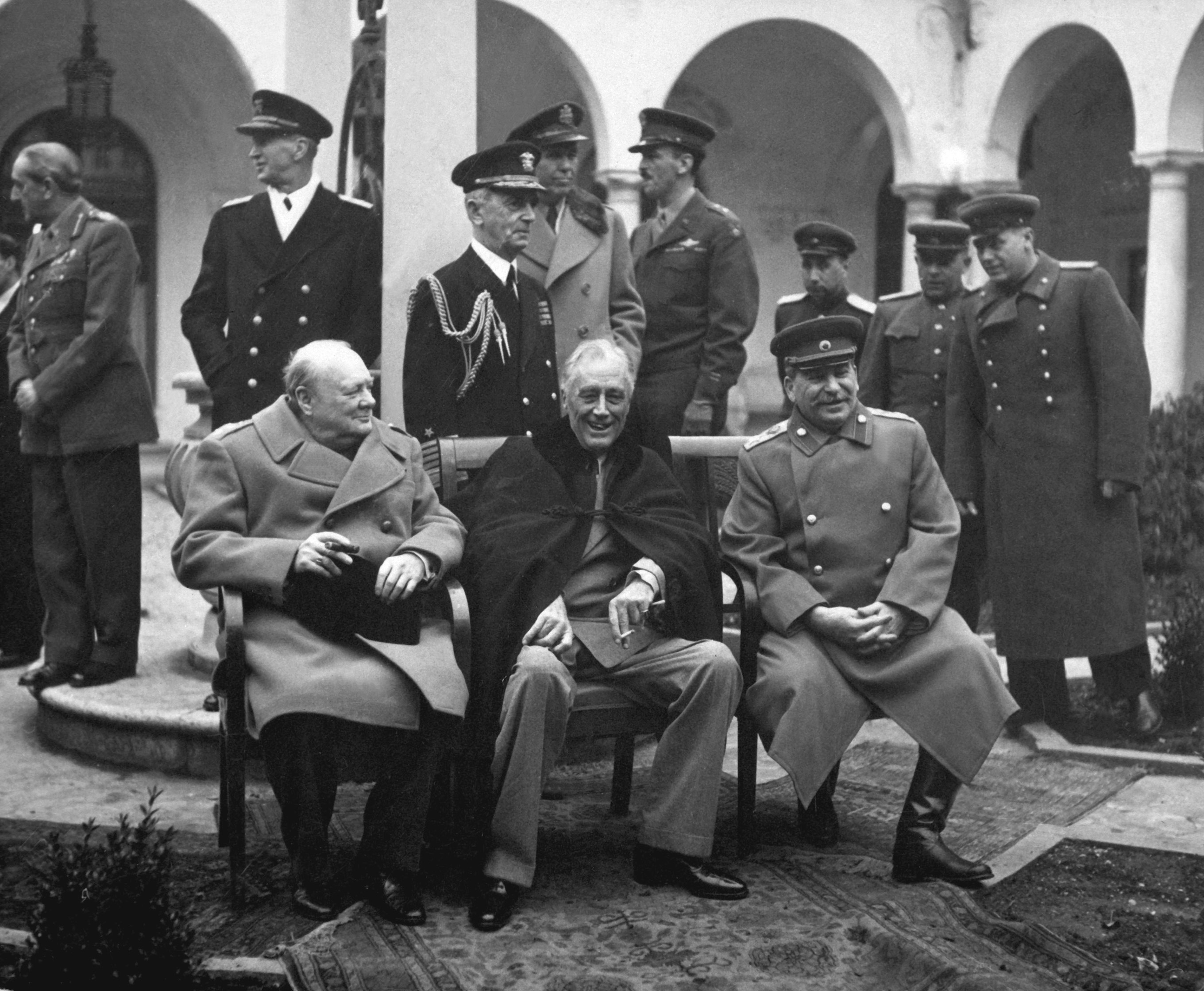
Kinda telling how everyone in Europe thinks of guillotining the French royal family as dope, but killing Nazis is a no-no.




Yeah yeah I’m not blaming it on running, I’m blaming it on my undiagnosed knee pains that set in after 4 minutes of jogging.