

…
One of the most consequential parts of the new energy agreement between Ottawa and Alberta has little to do with crude oil, pipelines, or even the endlessly litigated West Coast tanker ban.
It concerns electricity.
If done right, it presents a GDP-boosting opportunity for genuine nation-building that doesn’t alienate parts of British Columbia. Quite the opposite, in fact.
And it could lower emissions at the same time, even without the nudge or shove of carbon pricing and sequestration.
…
Last week’s federal-provincial memorandum of understanding (MOU) paves the way for [an electricity intertie system that allows Alberta and B.C. (and beyond) to share power, balance their grids, and make better use of each province’s strengths]. It does so first by effectively putting a stop to a policy that critics say would’ve disproportionately disadvantaged Alberta—one that the province had criticized, through an $8-million campaign and court challenge, as leaving its citizens to “freeze in the dark.”
…
Specifically, the document [MOU] spells out a vision to construct “large transmission interties with British Columbia and Saskatchewan to strengthen the ability of the Western power markets to supply low-carbon power to oil, LNG, critical minerals, agricultural, data centres and CCUS industries in support of their sustainability goals.”
…
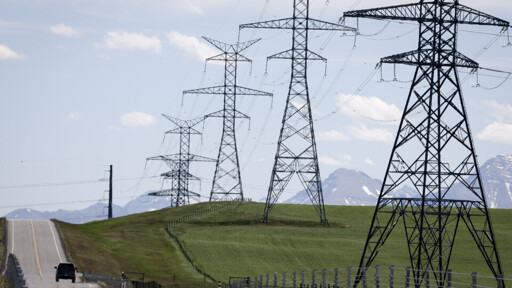
A transmission intertie is a long-distance, high-voltage line that links two provincial grids, enabling them to share electricity in real time, balance supply and demand, and support each other during peak periods or outages.
Such interties already exist between all the Western provinces, but most of them are either small, weak, or technically constrained.
The MOU envisions building on this patchwork to create a true chain of interties from B.C. through Saskatchewan, effectively asking the three provinces to hold hands across the Prairies and mountains to convert a set of isolated provincial systems into a coordinated regional grid.
The idea has its supporters, who believe such a connection could even extend through Manitoba.
…
The economic benefits are threefold.
For households and businesses, a stronger intertie helps dampen price spikes and lower costs over time.
For the wider economy, it provides the dependable electricity supply needed to attract capital-intensive industries, from petrochemicals to AI.
And finally, it materially improves the region’s ability to reduce emissions naturally by easing the physical limits on how much hydro, wind, and solar each province can integrate into its system.
…
Unlike pipelines, interties do not trigger B.C.’s coastal opposition, concerns about marine traffic, or the same level of land-use controversy.
Strengthening the tie to B.C. also does not restrict Alberta’s ability to build up natural gas (especially with the CER suspended), renewables, or any future behind-the-fence projects.
If anything, it expands the range of options available for everyone.
…
“What you get is a more productive economy,” [Kent Fellows, an economist with the University of Calgary’s School of Public Policy] said. “That’s true with electricity as well [because] we can do more with the resources we have right now.”
…
Who would actually build this intertie system? The MOU doesn’t say.
Unlike the pipeline section of the document, the language around electricity does not even name Alberta as the temporary proponent. It contains no details about ownership, funding, or construction timelines.
…
The benefits of lower prices, better reliability, and improved competitiveness don’t necessarily result in a revenue stream large enough for any single transmission company to justify billions in capital spending.
…
“A lot of the goals here are public goals, not private goals,” Fellows said.
That mismatch is precisely why he argues that “the public sector and particularly governments really need to get moving and start motivating some conversations on this.”
Any line crossing a provincial boundary also triggers federal jurisdiction, adding a layer of oversight that private proponents are unlikely to navigate alone. For that reason, Fellows believes any such proposal would fit squarely within Ottawa’s new Major Projects Office mandate.
“I would think that this is… if not a prime candidate for a C-5 major project, definitely something industry and government should be looking at and taking seriously,” Fellows said.
In the end, transmission interties may not be the sexiest part of the MOU, but they check many of the boxes the Carney government has laid out for Canada to “build again.”
…